Info
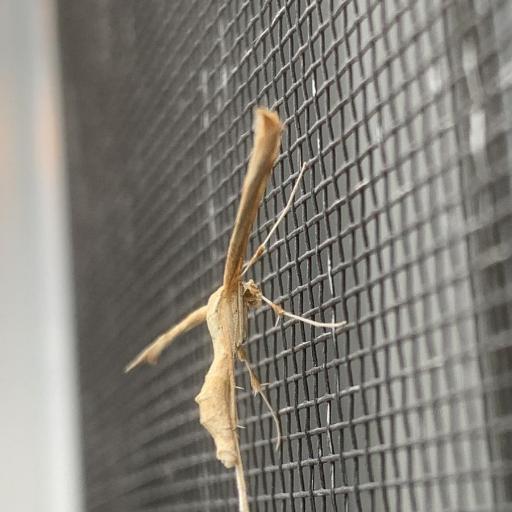
Meet the origami artist of the insect world. Often mistaken for a stray piece of dried grass or a tiny twig, Bertram’s Plume Moth is a master of camouflage that looks more like a piece of debris than a living creature. This gentle flyer is a common sight in meadows and gardens, where it lives a quiet life as a specialized pollinator.
🔍 How to Identify
- 📐 The "T" Posture: Its most striking feature is its resting position; it holds its long, narrow wings at a perfect right angle to its slender body, forming a distinct "T" shape.
- 🪶 Plumed Wings: Unlike the solid wings of most moths, its wings are deeply cleft into narrow, feathery lobes that look like delicate plumage when viewed under a magnifying glass.
- 🎨 Ochre Coloring: The body and wings are a soft, pale ochre or sandy brown, often marked with subtle dark dots that help it blend into dried vegetation.
🌲 Habitat & Ecology
- 🌼 Yarrow Specialist: You are most likely to find this moth near Yarrow (Achillea millefolium) or Sneezewort. These plants serve as the "nursery," where the caterpillars burrow into the stems and flower heads to feed.
- 🌙 Crepuscular Habits: While it is most active during the twilight hours of dusk, it is easily disturbed from tall grass during the day, where it flies with a distinctive, somewhat clumsy fluttering motion.
⚠️ Safety & Toxicity
- ✅ Completely Harmless: Bertram’s Plume Moth is a "friend" to the gardener. It does not bite, sting, or carry any toxins.
- 🐾 Pet Friendly: It poses no threat to cats or dogs who might be tempted to chase it through the grass. It is a neutral inhabitant of the ecosystem that focuses entirely on reproduction and nectar.
✨ Fun Fact
The "Plume Moths" are so unique that they belong to their own specialized family, Pterophoridae. Their "feathers" aren't just for show—the split wing design actually helps them stay aerodynamic despite their unusual, stick-like appearance!
More Details








