Info
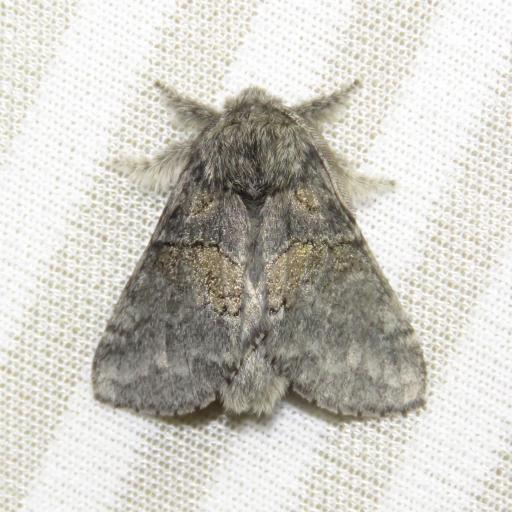
Commonly known as the Common Gluphisia, this moth is a master of disguise, often looking more like a piece of lichen or bark than a living creature. Found widely across North America, it spends its days hiding in plain sight on the trunks of deciduous trees. While it may appear modest, it belongs to the "Prominent" family, a group of moths known for their unique resting postures and intriguing survival strategies.
🔍 How to Identify
- 🎨 Mottled Forewings: The wings are typically a mix of gray and brown, often featuring a pale, yellowish, or orange-tinted band across the middle that helps break up its silhouette.
- 🪵 Tent-Like Posture: When at rest, it folds its wings steeply over its back like a tiny pup tent, perfectly mimicking a broken twig or a piece of wood.
- 🐛 Translucent Larvae: The caterpillar is a vibrant, almost glowing green with thin yellow or white longitudinal stripes and tiny red dots, designed to blend into the veins of a leaf.
🌲 Habitat & Ecology
- 🌳 Tree Specialists: These moths are almost exclusively found near poplars, aspens, and cottonwoods. The caterpillars are "specialist feeders," relying on these specific leaves to grow.
- 🧂 The Puddling Habit: Male Gluphisia moths are often spotted at the edges of puddles or damp soil. They "puddle" to drink water rich in sodium and minerals, which they later pass to the female to help ensure the survival of their eggs.
- 🌙 Nocturnal Life: As a strictly nocturnal species, they are frequently drawn to porch lights or UV traps, where they sit perfectly still, relying on their camouflage to stay safe.
⚠️ Safety & Toxicity
- 🦋 Harmless Friend: The Common Gluphisia is entirely safe for humans. They do not bite, sting, or carry any known diseases.
- 🐾 Pet Friendly: Unlike some "hairy" caterpillars that can cause irritation, the larvae of this moth are smooth and non-toxic, making them a harmless find for curious dogs or cats.
✨ Fun Fact
The Common Gluphisia is incredibly efficient; in warmer climates, they can complete their entire lifecycle—from egg to moth—multiple times in a single summer, allowing for several "generations" to emerge before the first frost!
More Details








