Info
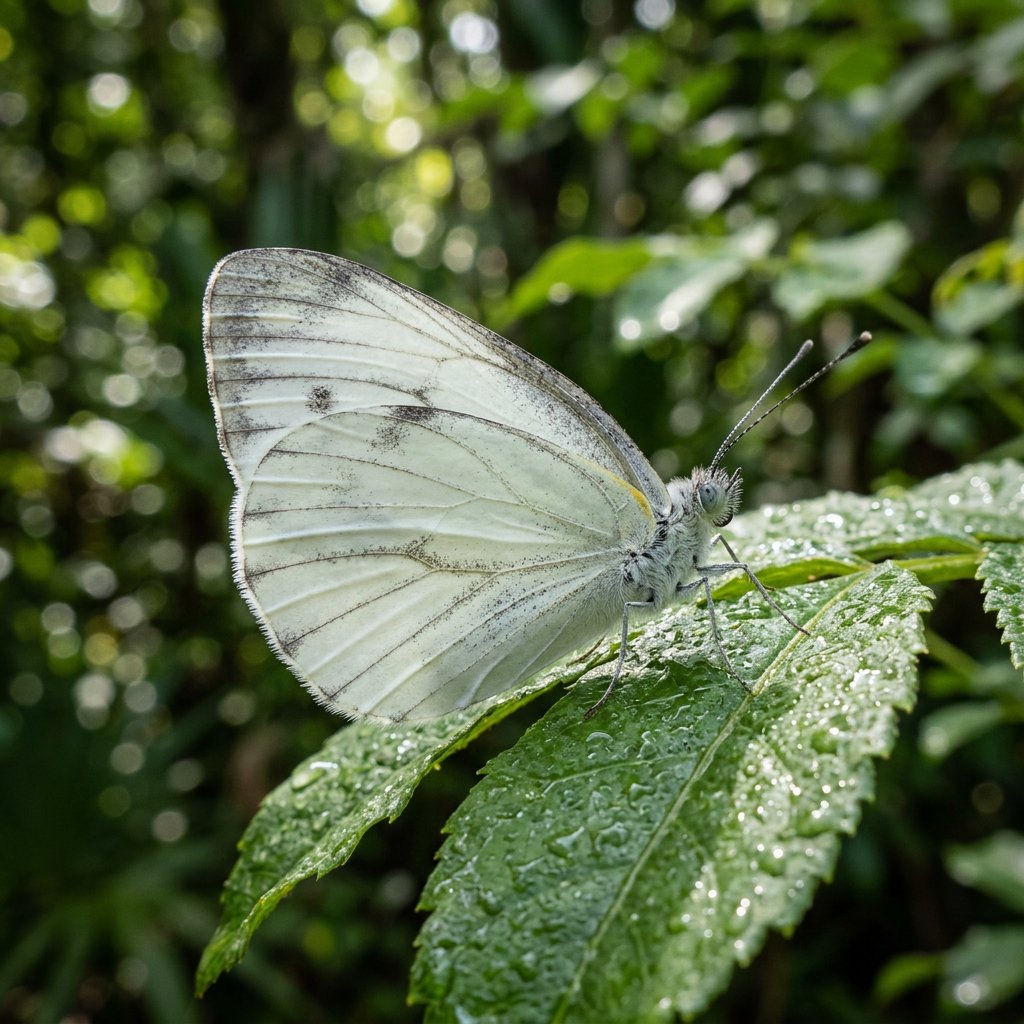
The Florida White (Glutophrissa drusilla) is often mistaken for a drifting blossom or a stray piece of white paper caught in the breeze. Known for its pristine, snowy appearance, this tropical traveler is a common sight in the southern United States and throughout the Caribbean, adding a touch of elegance to sun-drenched gardens and forest edges.
🔍 How to Identify
- 🦋 The Wings: Broad, bright white wings with a subtle pearly sheen. The forewings have a notably sharp, pointed tip (falcate) compared to other common white butterflies.
- 🌓 Gender Differences: While males are almost entirely stark white, females often sport dark, smoky borders along the edges of their wings and a soft hint of yellow at the wing bases.
- 🍃 The Underside: When the butterfly rests with its wings closed, the underside appears a soft, creamy white or pale greenish-yellow, allowing it to "vanish" against the shade of tropical foliage.
🌲 Habitat & Ecology
- 🥤 Nectar Seekers: These are high-energy flyers that frequent flowers like Lantana, Shepherd's Needle, and Bougainvillea. Unlike some lazier species, they dart rapidly between blooms with a nervous, energetic flight pattern.
- 💧 Puddle Clubs: On hot afternoons, you might spot groups of these butterflies gathered around damp patches of earth or mud. They are "puddling"—sucking up essential salts and minerals from the wet soil that they can't get from nectar alone.
- 🌿 The Caper Connection: Their caterpillars are specialized feeders, dining almost exclusively on plants in the Caper family (Capparaceae). Because they rely on these specific tropical plants, you'll most often find them in hammocks or wooded residential areas.
⚠️ Safety & Toxicity
- ✅ Harmless: The Florida White is a "friend" in every sense. It is completely non-toxic and lacks any form of stinger, mandible for biting, or chemical defense.
- 🐾 Safe for All: They pose no threat to curious pets or children. Their only real defense mechanism is their impressive flight speed, which allows them to outmaneuver most garden predators.
✨ Fun Fact
Despite their delicate, "Great White" appearance, these butterflies are surprisingly strong migrants. In certain seasons, they participate in massive, directional flights, moving in shimmering white clouds toward the south to find better breeding grounds or to escape dry spells.
More Details








