Info
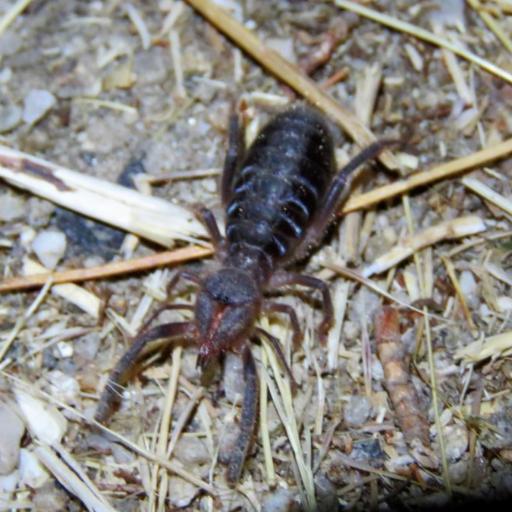
Often called the Mediterranean Camel Spider or Sun Spider, the Gluvia dorsalis is a creature of legend in the Iberian Peninsula. While its fierce appearance and lightning-fast movements might suggest a tiny monster from a sci-fi film, it is actually a shy, nocturnal arachnid that plays a vital role in controlling pest populations. Despite the names, it is neither a true spider nor a scorpion, belonging instead to its own unique order: the Solifugae.
🔍 How to Identify
- 🦂 The "Fifth Pair" of Legs: At first glance, it appears to have ten legs. However, the front pair are actually elongated "pedipalps" used as sensory organs and for climbing.
- ⚔️ Massive Jaws: It possesses disproportionately large, vertical chelicerae (mouthparts) that look like powerful pincers, designed for crushing prey.
- 🌾 Sandy Camouflage: Its body is typically a pale yellowish-brown or tan color, covered in fine, sensitive hairs that help it detect vibrations in its arid environment.
🌲 Habitat & Ecology
- 🏜️ The Dry Life: This species is a specialist of the Mediterranean scrubland, particularly in Spain and Portugal. It thrives in hot, dry, and rocky terrains where it can hide under stones during the heat of the day.
- 🐜 A Voracious Hunter: Known as a "wind scorpion" due to its incredible running speed, it doesn't spin webs. Instead, it actively hunts down ants, beetles, and small lizards, using its sheer speed and jaw strength to overwhelm them.
⚠️ Safety & Toxicity
- 🛡️ Status: Non-venomous and generally harmless to humans.
- 🦷 Details: While they lack venom glands, they can deliver a "mechanical" bite if handled or provoked. Because of their powerful jaws, the bite can be painful and might break the skin, but it is not medically significant. They are much more interested in running away from you than attacking!
✨ Fun Fact
Unlike true spiders, Gluvia dorsalis possesses unique adhesive organs on the tips of its pedipalps called "suctorial vesicles." These allow them to climb perfectly smooth vertical surfaces and even grab onto fast-moving prey with a "sticky" grip!
More Details








