Info
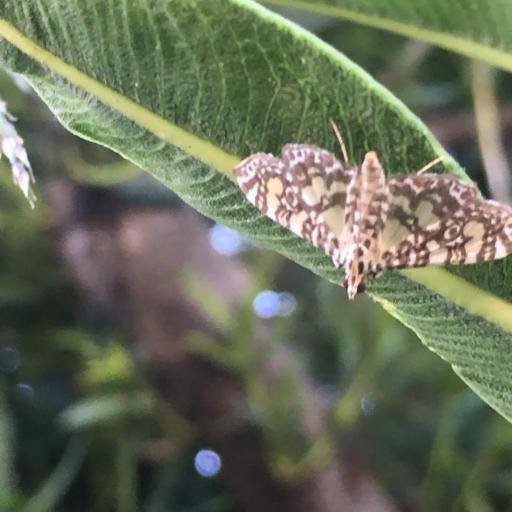
Often mistaken for a stray jasmine petal or a scrap of fine lace, moths of the genus Glyphodes are among the most elegant "snout moths" you will encounter. Known primarily as the Mulberry Leaftier or Pearl Moth, they are frequently searched for by gardeners who notice their striking, translucent wings resting on the underside of leaves. While the adults are ethereal garden visitors, they are often the first sign that their industrious "architect" caterpillars are nearby.
🔍 How to Identify
- 🦋 Pearly Wings: The most striking feature is their translucent, iridescent white or pale cream wings, which often have a "stained glass" appearance.
- 🤎 Bold Margins: Most species feature a crisp, dark chocolate-brown or golden border that perfectly outlines their triangular wing shape.
- 📐 Geometric Resting Pose: When at rest, they hold their wings in a very neat, flat isosceles triangle, making them look like a tiny, high-fashion paper airplane.
🌲 Habitat & Ecology
- 🌿 Host Plant Preference: They are highly selective. You will most often find them near Mulberry, Fig (Ficus), Hibiscus, or Banyan trees, where the females lay their eggs on the tenderest new growth.
- 🏠 The Leaf-Roller Habit: The larvae are "leaf-rollers." They use high-strength silk to zip a leaf shut into a protective tube or "sleeping bag." This creates a humid, safe microclimate where they can eat the leaf from the inside out, hidden from hungry birds.
⚠️ Safety & Toxicity
- ✅ Status: Completely harmless to humans and pets. They do not possess a sting or a bite, and unlike some "hairy" caterpillars, Glyphodes larvae do not have irritating or stinging bristles.
- 🍂 Garden Health: While they are a "foe" to the aesthetic of a plant—often causing leaves to look tattered or skeletonized—they rarely cause long-term health issues for established trees. They are a natural part of the garden ecosystem and provide food for local predatory wasps and birds.
✨ Fun Fact
- 🧶 Scientific Origami: To create their silk homes, Glyphodes caterpillars use a specialized silk that shrinks as it dries. By spinning lines across a leaf, the drying silk naturally pulls the heavy leaf edges together, allowing the tiny insect to "fold" a leaf many times its own size!
More Details








