Info
Known as the "Grit-Headed Flies" or Cutworm Tachinids, the Gonia genus consists of robust, bristly flies that act as the secret agents of the garden. While they might look like common houseflies at first glance, they are specialized parasitoids that play a vital role in keeping caterpillar populations in check. Often seen basking on low-lying leaves or visiting spring wildflowers, these flies are a gardener's best friend in the fight against nocturnal pests.
🔍 How to Identify
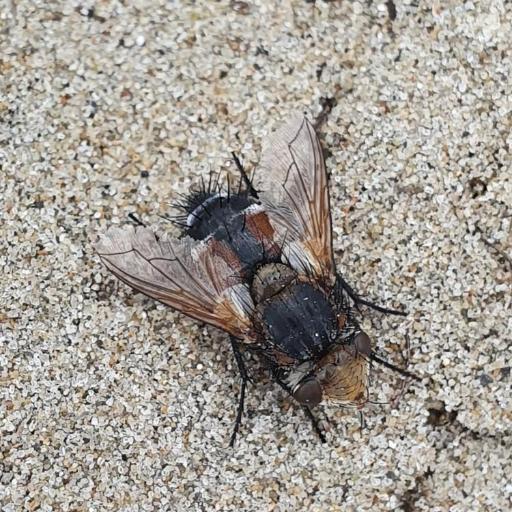
- 🪰 The Wide Head: Their most distinctive feature is an unusually broad, puffy head that is often wider than their thorax, giving them a slightly "boxy" appearance.
- 🖌️ Bristly Armor: Their bodies are covered in thick, stiff black hairs (macrochaetae) that look like tiny spikes, especially on the abdomen.
- 🎨 Golden Hues: Many species feature a abdomen with striking orange or reddish-brown sides and a dark central stripe, though some are entirely slate-gray or black.
🌲 Habitat & Ecology
- ⚔️ Caterpillar Control: Gonia flies are biological warriors. They primarily target cutworms and armyworms—pests that typically hide during the day and destroy crops at night.
- 🍃 The Trojan Horse Strategy: Unlike other parasitoid wasps that sting their prey, Gonia flies lay thousands of tiny "microtype" eggs on foliage. When a hungry caterpillar eats the leaf, it accidentally swallows the egg, which then hatches inside the host's gut.
- 🌼 Nectar Lovers: As adults, they are frequent visitors to open-faced flowers like daisies, yarrow, and wild carrots, where they feed on nectar to fuel their egg-laying missions.
⚠️ Safety & Toxicity
- 🛡️ Harmless to Humans: Despite their "spiky" appearance, Gonia flies have no stinger and no interest in biting humans or pets.
- 🏠 No Indoor Nuance: Unlike common houseflies, they do not spread diseases to human food and rarely enter homes. If one gets inside, it is likely lost and looking for a way back to the garden.
✨ Fun Fact
The Gonia larva is a patient roommate. Once inside a caterpillar, it waits for the host to grow and eventually form a pupa (cocoon). Only then does the fly larva finish its meal, eventually emerging from the moth’s own cocoon as a fully formed fly!
More Details








