Info
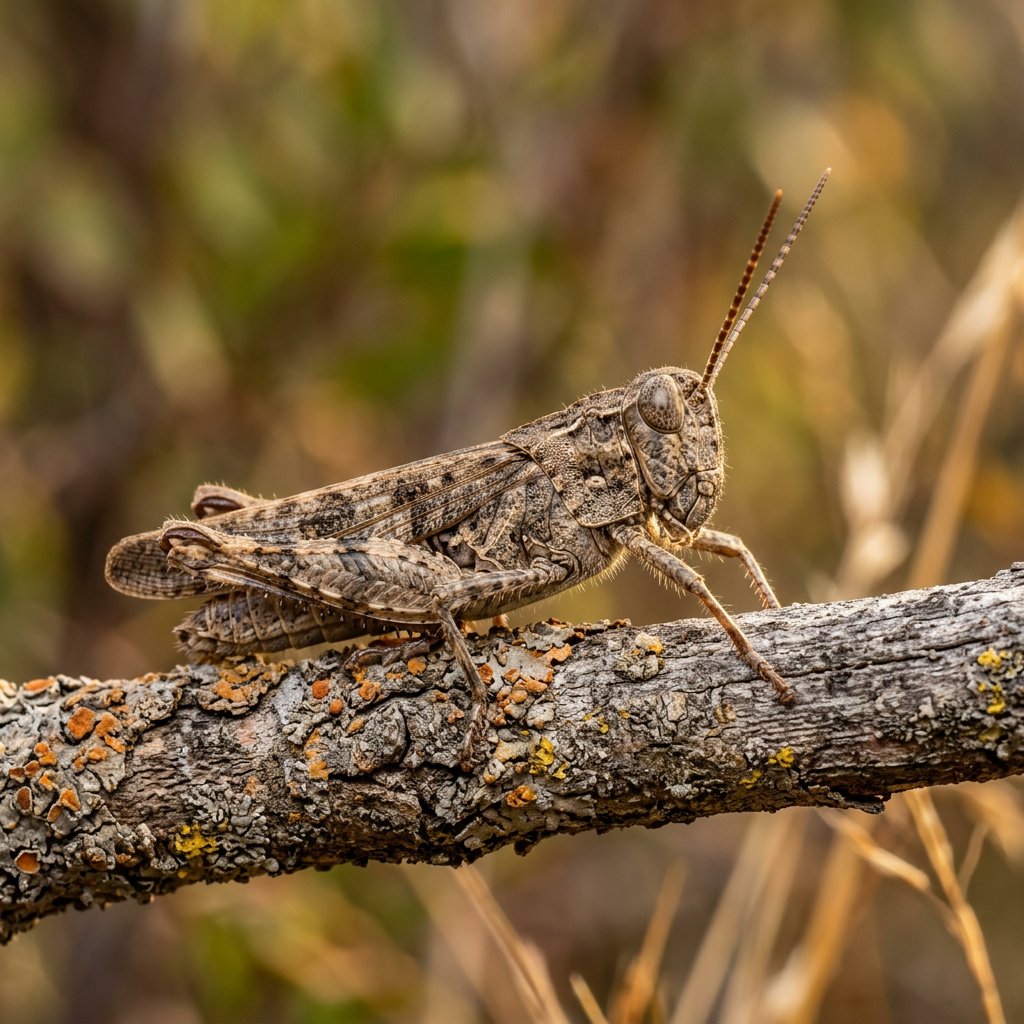
Often called the Common Gumleaf Grasshopper, this insect is a true masterpiece of evolutionary camouflage. Native to Australia, it has perfected the art of looking exactly like a dried Eucalyptus leaf to avoid becoming a snack for birds. It is a gentle giant of the grasshopper world, often startling hikers when a "dead leaf" suddenly leaps into the air.
🔍 How to Identify
- 🍂 The Arched Crest: Its most striking feature is a high, sharp ridge (called a pronotum) on its back that perfectly mimics the curved edge or midrib of a leaf.
- 🤎 Ligneous Coloring: Its body is usually a mottled brown, grey, or tan, textured to match the dry, crunchy litter found on the forest floor.
- 🧡 Hidden Flash: When it spreads its wings to fly, it reveals vibrant, hidden shades of orange or yellow on its hind wings to confuse predators.
🌲 Habitat & Ecology
- 🍃 Eucalyptus Enthusiast: These grasshoppers are almost exclusively found near Eucalyptus trees, as their diet consists primarily of gum leaves.
- 🎭 Master of Disguise: Unlike many grasshoppers that hop away immediately, the Gumleaf Grasshopper relies on its "stay still" defense. It will remain motionless even if you are just inches away, trusting its leaf-like silhouette completely.
- 🌳 Bushland Resident: While common in the Australian bush, they frequently wander into suburban gardens that have native gum trees, resting quietly on the ground or among low-hanging branches.
⚠️ Safety & Toxicity
- ✅ Completely Harmless: The Common Gumleaf Grasshopper is non-venomous and does not have a stinger. It is a "friend" to have in the garden.
- 🤏 Handle with Care: While they are safe to observe, they have strong back legs for jumping; if handled roughly, their tiny claws might feel scratchy on the skin, but they are not dangerous to humans, dogs, or cats.
✨ Fun Fact
The Gumleaf Grasshopper is so specialized in its camouflage that its body is "laterally compressed" (flattened side-to-side). This makes it virtually invisible when viewed from the side, as it lacks the rounded shadows that usually give away an insect's position!
More Details








