Info
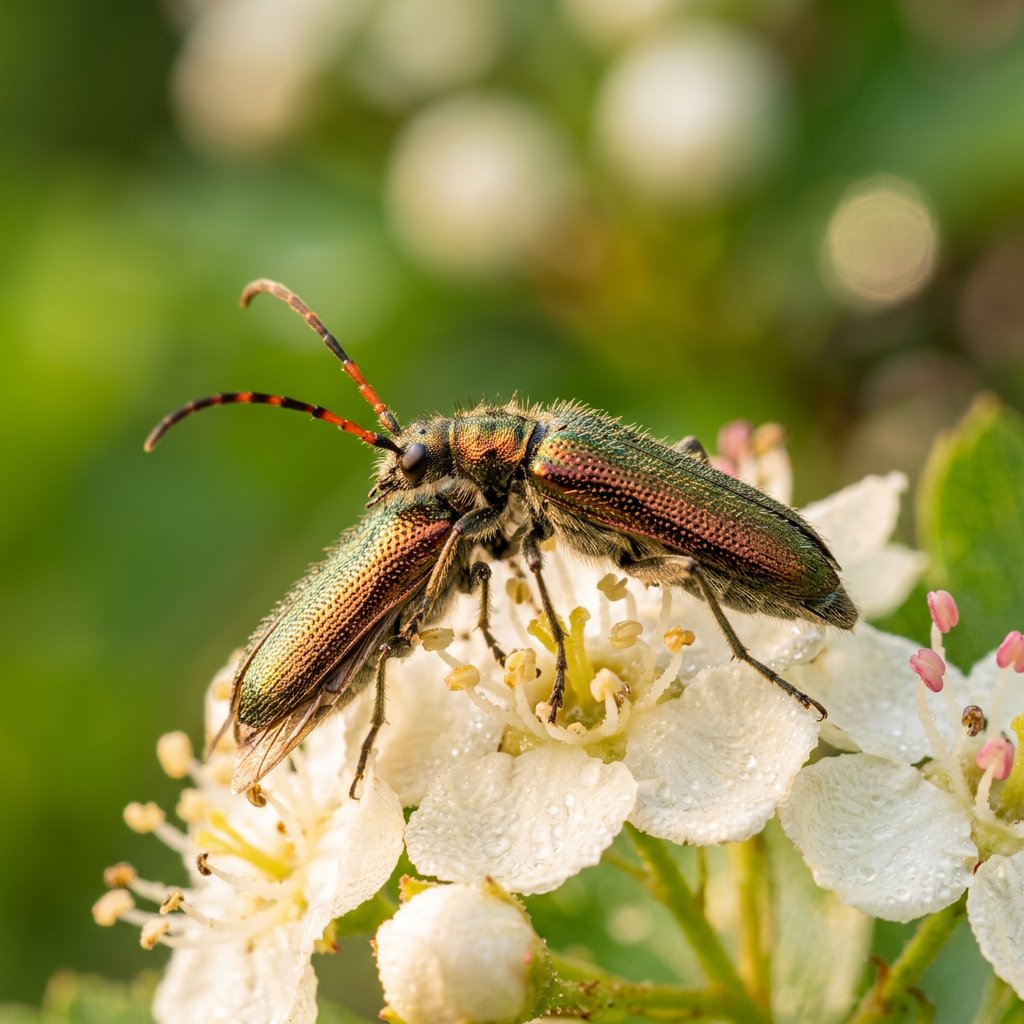
Known as the Common Grammoptera, this tiny, elegant beetle is a classic sign that spring is in full swing. Often found dusted in pollen atop white blossoms, it belongs to the Longhorn beetle family, though it lacks the "scary" size of its larger cousins. These little pollinators are essential workers in the garden, bridging the gap between the forest and the flowerbed.
🔍 How to Identify
- 🪲 The Body: A slender, elongated shape measuring only 3 to 7 millimeters. Its body is primarily black but is covered in dense, golden-yellow hairs that give it a shimmering, velvety appearance in the sunlight.
- 🦵 The Legs: Unlike many other dark beetles, its front legs and the base of its middle/hind legs are a distinct reddish-orange or tawny color (hence the name ruficornis, meaning "red-horned").
- 📡 The Antennae: Long and delicate, as expected of a Longhorn, with the first segment usually being reddish, matching its legs.
🌲 Habitat & Ecology
- 🌼 The Flower Buffet: You are most likely to spot these beetles on "umbellifers" (flat-topped flower clusters like Cow Parsley) or Hawthorn hedges. They are frantic foragers, feeding heavily on pollen and nectar to fuel their short adult lives.
- 🪵 The Nursery: While the adults love the sun and flowers, the larvae are forest-dwellers. They develop in the decaying wood of thin, fallen branches or dead twigs of deciduous trees like Oak, Hazel, and Hawthorn. They help break down dead wood, returning nutrients to the soil.
⚠️ Safety & Toxicity
- ✅ Friend: This beetle is completely harmless to humans and pets. It does not possess a stinger, and its mandibles are far too small to bite a person.
- 🌱 Garden Impact: They are not considered pests. They do not attack living garden plants or structural timber; they only seek out small, rotting twigs that are already on the ground or dying back.
✨ Fun Fact
Despite its tiny size, the Common Grammoptera is one of the most successful beetles in Europe and the UK. Because it mimics the movement of small flies or wasps while crawling on flowers, it often tricks predators into leaving it alone while it enjoys its nectar meal!
More Details








