Info
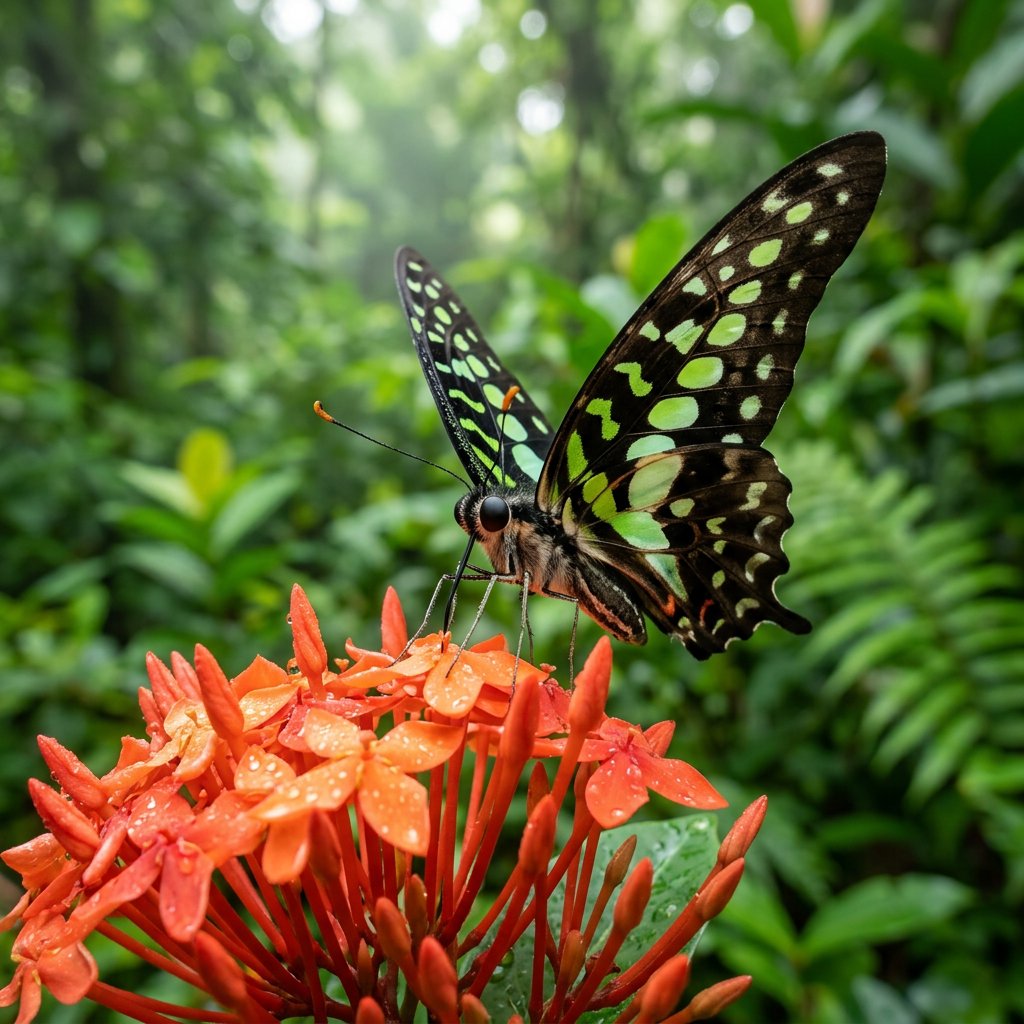
Known as the Tailed Jay or Green-spotted Triangle, this butterfly is a vibrant, neon-green marvel often found darting through tropical gardens. Though you may have searched for it as a "plant," it is most famous for its inseparable relationship with specific garden trees like the Soursop and Ashoka. It is one of the fastest fliers in the butterfly kingdom, appearing as a green blur as it zips from flower to flower.
🔍 How to Identify
- 🦋 Neon Patterning: The wings are deep black or dark brown, covered in a striking mosaic of bright apple-green spots and streaks that look almost like glowing camouflage.
- 📐 Pointed Silhouette: It possesses a distinctively triangular wing shape, built for high-speed flight and quick maneuvers to dodge predators.
- 📏 Stubby Tails: Unlike the long, elegant tails of other Swallowtails, this species has short, pointed protrusions on the hindwings that look like small spikes.
🌲 Habitat & Ecology
- 🍃 The Host Tree Connection: You will almost always find this insect near its favorite "nurseries"—plants like the Custard Apple, Soursop, or the Polyalthia (Mast Tree). It relies on these specific plants to lay its eggs and feed its larvae.
- ⚡ Nervous Feeding: Unlike many butterflies that rest calmly while drinking nectar, the Tailed Jay is "restless." It often keeps its wings vibrating rapidly even while feeding, ready to launch into the air at the slightest vibration.
⚠️ Safety & Toxicity
- ✅ Completely Harmless: The Tailed Jay is a gentle visitor. It does not bite, sting, or possess any chemical defenses that are harmful to humans or curious pets.
- 🐛 Hungry Caterpillars: While the adult is a beneficial pollinator, the caterpillars are voracious leaf-eaters. If you find "dragon-like" green caterpillars on your fruit trees, they are likely Tailed Jays! They may eat some foliage, but they rarely cause enough damage to kill a healthy plant.
✨ Fun Fact
✨ Mineral Cocktails: Male Tailed Jays engage in a behavior called "puddling." They congregate on damp sand or mud to suck up mineral-rich water. They extract the sodium and amino acids, which they later "gift" to the female during mating to ensure the health of their future eggs!
More Details








