Info
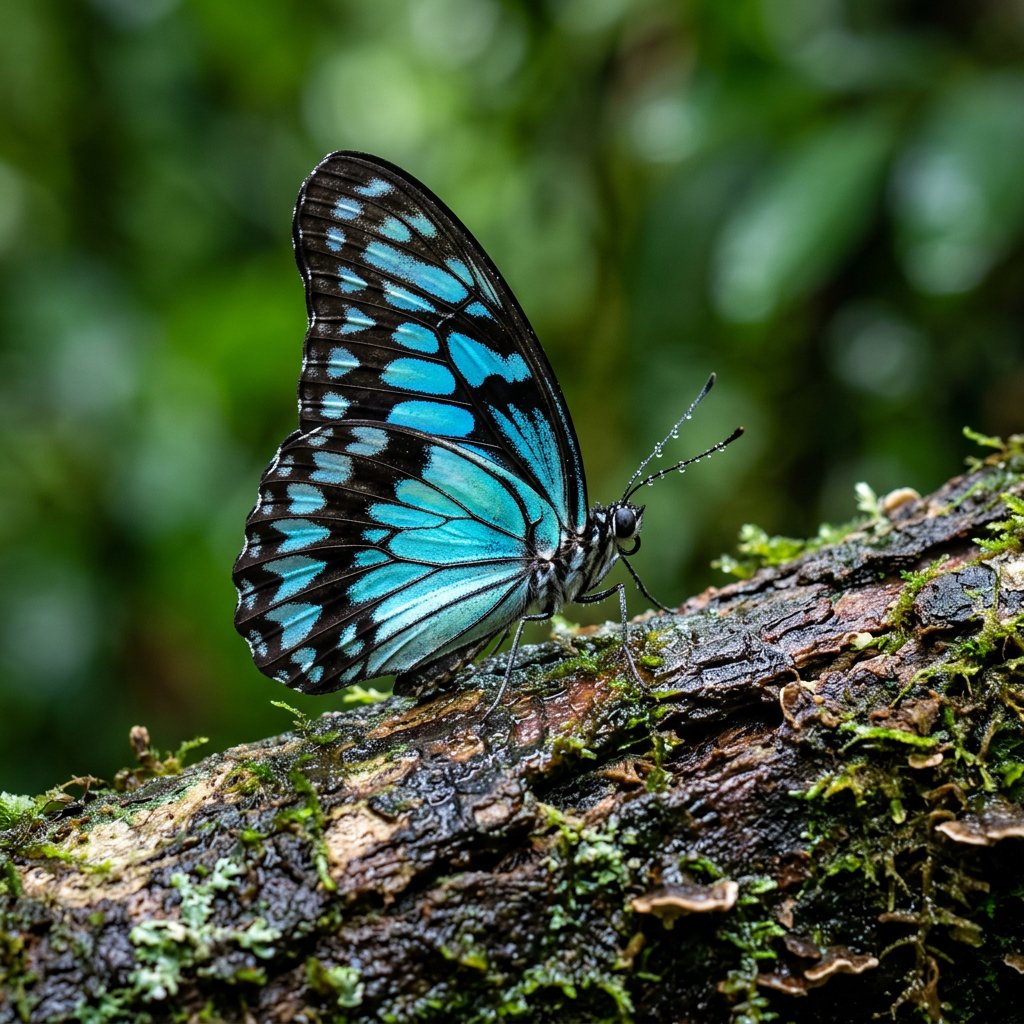
Commonly known as the Great Jay or Pale Green Triangle, this butterfly is a high-speed gem of the tropical canopy. Known for its electrifying "electric blue" or sea-foam green spots set against a velvet black background, it is a favorite among nature photographers in Southeast Asia and Australia. These butterflies are famous for their restless energy, rarely staying still for more than a few seconds as they zip through gardens and forests.
🔍 How to Identify
- 🦋 Wing Pattern: The upper side features a stunning chain of pale blue or greenish-yellow semi-transparent spots that form a "triangle" shape toward the wing tips.
- 🎨 The Underside: Unlike the bright top, the underside is a complex mosaic of chocolate brown, white, and distinct red spots near the base of the wings.
- 🚫 No Tails: While it belongs to the Swallowtail family (Papilionidae), the Great Jay lacks the long "tails" seen on many of its cousins, giving it a sleek, aerodynamic silhouette.
🌲 Habitat & Ecology
- 💧 Mud-Puddling: You will often find large groups of males congregating on damp sand or riverbanks. They "puddle" to suck up essential minerals and salts from the wet earth, which they later pass to females during mating.
- 🍃 Host Plants: The caterpillars are particularly fond of plants in the Custard Apple family (Annonaceae). In urban gardens, they are frequently seen hovering around Soursop or Champaca trees.
- 🚀 Erratic Flight: They are incredibly fast fliers. Unlike the lazy float of a Monarch, the Great Jay moves in a jagged, zig-zag pattern that makes it very difficult for birds (and photographers!) to catch.
⚠️ Safety & Toxicity
- ✅ Harmless: The Great Jay is a "friendly" insect in every sense. It does not bite, sting, or possess any chemical defenses that could harm humans.
- 🐾 Pet Friendly: They are non-toxic to cats and dogs. However, their fast movements might trigger a predatory chase instinct in high-energy pets!
✨ Fun Fact
The Great Jay is considered one of the fastest-flying butterflies in the world. It spends most of its life in the high rainforest canopy, only descending to ground level when it needs to "recharge" its mineral levels at a muddy puddle or find a quick snack of nectar.
More Details








