Info
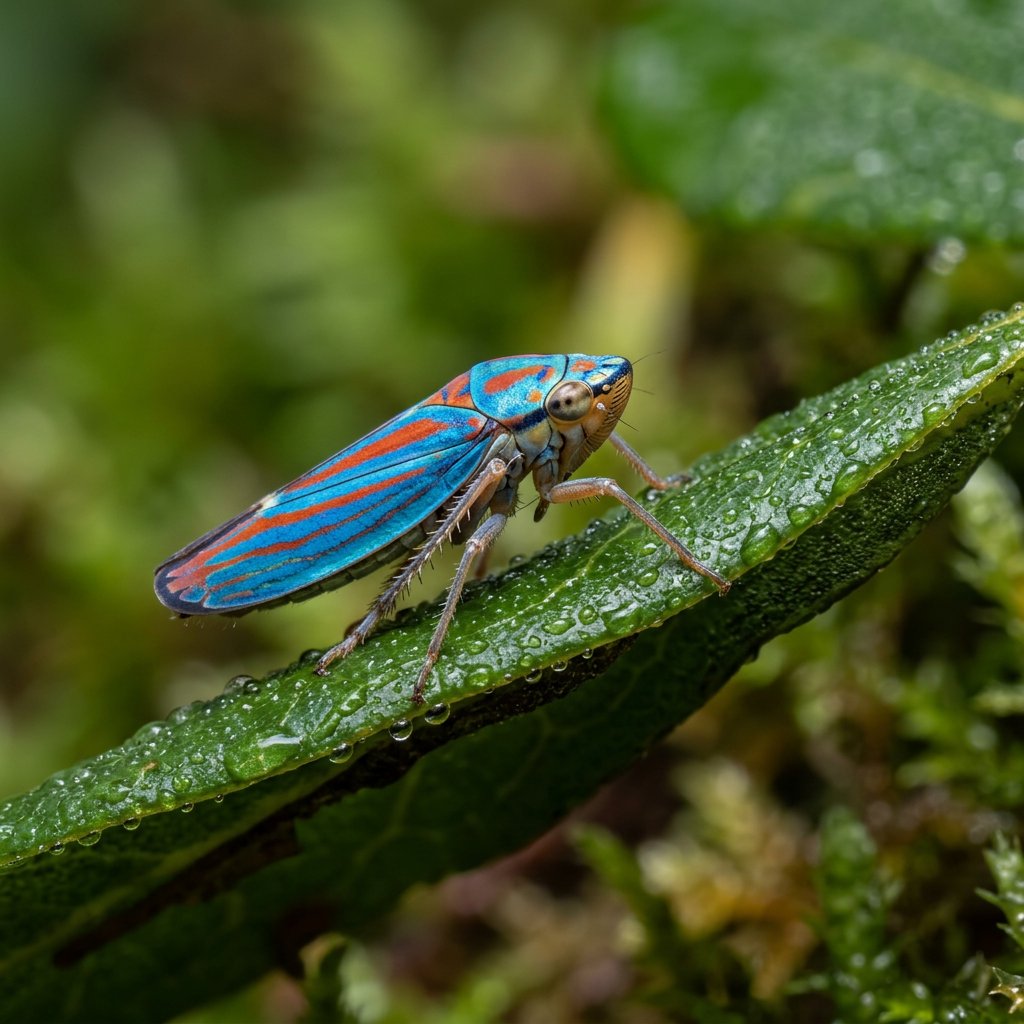
Often mistaken for a tiny neon jewel, the Versute Leafhopper (Graphocephala versuta) is one of the most colorful residents of North American gardens and meadows. Known for its "candy-striped" appearance, this little insect is a master of hide-and-seek, often darting to the opposite side of a stem the moment it feels watched. While they are visually stunning, they are "sap-suckers" that play a complex role in the garden ecosystem as both prey and potential plant-pathogen spreaders.
🔍 How to Identify
- 🎨 Neon Stripes: Their slender bodies are adorned with vibrant, longitudinal stripes of orange, yellow, and deep turquoise or lime green.
- 📐 Wedge Shape: They possess a classic "sharpshooter" silhouette, with a broad head that tapers sharply toward the back, with wings folded like a steep tent.
- 🏃 The Sideways Shuffle: One of their most identifying traits isn't visual, but behavioral—they move with a unique "shifty" horizontal scuttle to stay hidden behind branches.
🌲 Habitat & Ecology
- 🍴 Liquid Diet: These insects are specialists that feed on xylem sap. They use piercing-sucking mouthparts to tap into the "plumbing" of a wide variety of plants, including roses, sunflowers, and fruit trees.
- 🍃 Generalist Residents: You will find them in high-moisture environments, ranging from forest edges to suburban backyard gardens, where they prefer the succulent new growth of shrubs.
- 🦠 Ecological Impact: While they rarely cause direct physical damage through feeding, they are known vectors for certain bacterial plant diseases, making them a "foe" for vineyard owners and commercial growers.
⚠️ Safety & Toxicity
- 🛡️ Completely Harmless: The Versute Leafhopper is a "friend" to humans in terms of safety. They do not possess a stinger and their mouthparts are not designed to bite people or pets.
- 🐾 Non-Toxic: They are not known to be toxic if accidentally ingested by a curious cat or dog, though their quick hopping usually prevents them from being caught.
✨ Fun Fact
Leafhoppers like the Versute are often called "Sharpshooters" because of the way they dispose of excess waste. Because they drink so much watery sap, they must constantly "flick" tiny droplets of liquid away from their bodies with an audible click, appearing to shoot tiny crystals of "honeydew" through the air.
More Details








