Info
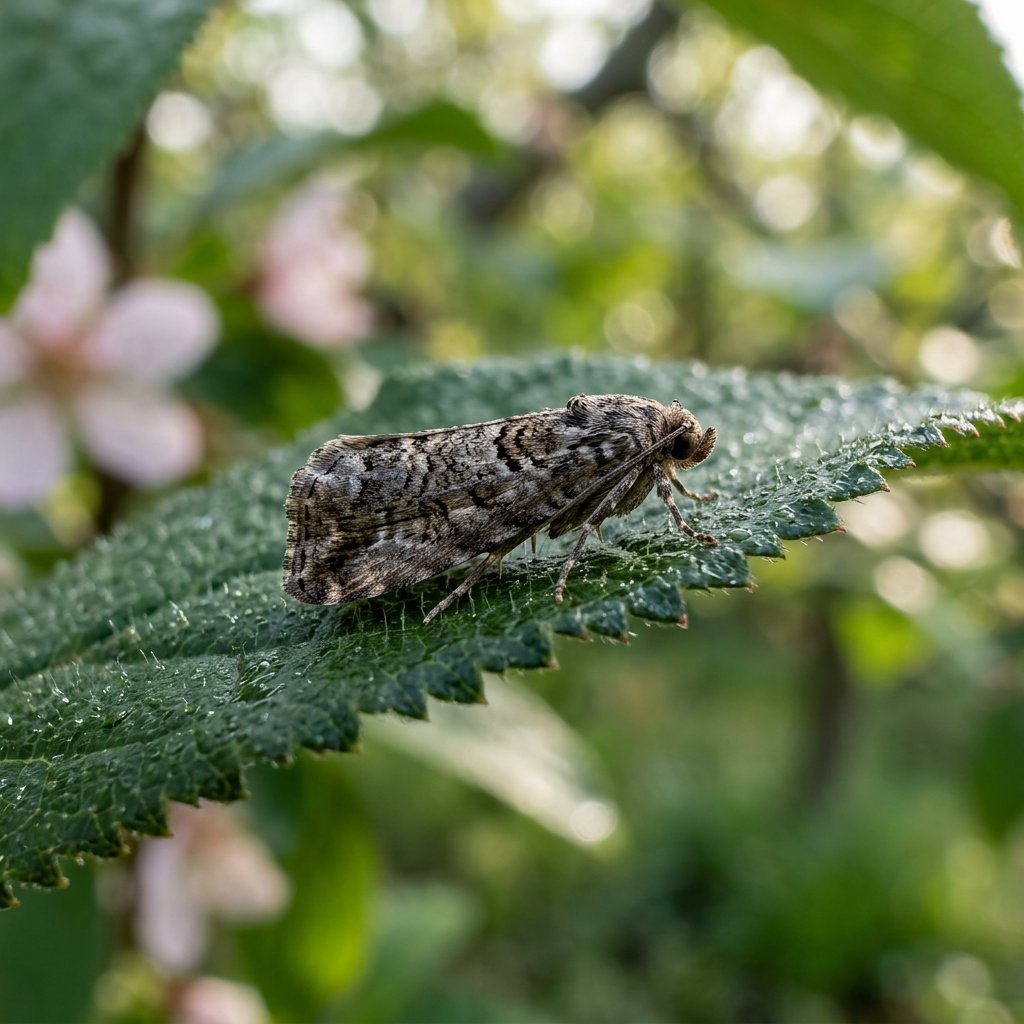
Often called the "Plum Maggot" in its larval stage, this moth is the most common reason for a disappointing harvest of wormy fruit. It is a sneaky orchard visitor that remains nearly invisible during the day, waiting for the twilight hours to search for the perfect ripening plum. While the adult moth is a master of camouflage, its bright pink offspring are the real stars of the show—much to the frustration of gardeners everywhere.
🔍 How to Identify
- 🦋 The Adult Moth: A small, inconspicuous flyer with a wingspan of about 12–15 mm. Their wings are a somber, purplish-grey or "sooty" brown with subtle, wavy dark lines that help them blend perfectly into tree bark.
- 🐛 The Larva: This is the stage most people encounter. Young caterpillars are pale white, but they turn a distinct, vibrant pink or reddish color as they grow, featuring a dark brown or black head.
- 💧 The "Gum" Spot: You can often identify an infested fruit by a tiny hole on the skin accompanied by a small, clear droplet of oozing resin or "gum," which the tree produces to try and plug the wound.
🌲 Habitat & Ecology
- 🍑 Fruit Preference: They are specialists of the Prunus genus. While they are famous for ruining plums and damsons, they are also frequently found in apricots, cherries, and wild blackthorn (sloes).
- 🏠 Winter Hideouts: During the winter, the larvae spin tough, silken cocoons and hide deep within the crevices of the tree's bark or in the leaf litter at the base of the trunk, waiting for the warmth of spring to pupate.
- 🍎 Internal Damage: Once the egg hatches on the fruit's surface, the larva tunnels directly to the stone. It feeds around the pit, filling the cavity with dark brown droppings (frass), which causes the fruit to ripen prematurely and drop early.
⚠️ Safety & Toxicity
- ✅ Status: Harmless to humans and pets. These moths do not bite, sting, or carry any known pathogens.
- 🤢 The "Ick" Factor: While finding a pink caterpillar in your snack is unpleasant, they are not toxic if accidentally consumed. The primary risk is secondary brown rot; the tunnels created by the larvae allow fungi to enter, which can make the fruit taste bitter and cause it to decay.
✨ Fun Fact
- 🎓 A Gloomy Name: The species name funebrana is derived from the Latin word for "funereal." It was named for its dark, somber-colored wings, which early entomologists thought resembled the dark robes worn during mourning ceremonies.
More Details








