Info
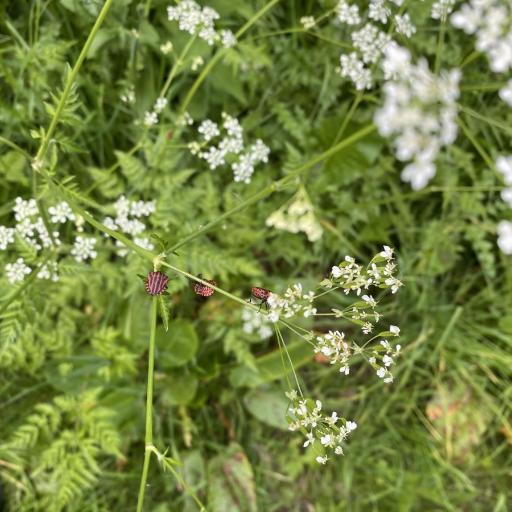
Dressed in what looks like a classic Italian soccer jersey or a medieval performer’s costume, the Minstrel Bug (Graphosoma italicum) is one of nature's most fashionable shield bugs. Often found lounging on white umbel flowers, its bold red-and-black stripes aren't just for show; they serve as a loud, visual warning to any bird thinking about a snack. This Mediterranean native has been expanding its range across Europe, bringing a splash of theatrical color to gardens and wild meadows alike.
🔍 How to Identify
- 🛡️ The Shield Shape: It features a broad, flat, shield-shaped body where the "scutellum" (the back plate) is so large it covers almost the entire abdomen and wings.
- 🎨 Signature Stripes: It is famous for its six thick, black longitudinal stripes set against a vibrant red or orange-red background.
- 🦵 Black Boots: A key way to distinguish it from its close cousins is its legs, which are almost entirely black, contrasting sharply with its colorful body.
🌲 Habitat & Ecology
- 🍽️ The Umbel Obsession: You will almost exclusively find these bugs on plants in the carrot family (Apiaceae), such as Fennel, Dill, Wild Carrot, and Hogweed. They love to climb to the very top of the flower clusters to feed on developing seeds.
- ☀️ Sun Worshippers: These insects are "heliophilic," meaning they crave sunlight. They spend their days basking in the heat on top of flowers to regulate their body temperature and energy levels.
- 🤝 Strength in Numbers: It is common to see several Minstrel Bugs crowded onto a single flower head. This "group signaling" makes their bright warning colors even more obvious to predators.
⚠️ Safety & Toxicity
- ✅ Harmless to Humans: The Minstrel Bug is completely non-aggressive. It does not bite, sting, or carry diseases.
- 👃 The Stink Factor: Like all shield bugs, it possesses scent glands. If you pick it up or disturb it, it may release a pungent, bitter-smelling liquid. While it’s harmless to skin, you’ll definitely want to wash your hands afterward!
- 🐾 Pet Safety: It is not toxic to pets, though the foul taste and smell will usually discourage a curious dog or cat from trying to eat one twice.
✨ Fun Fact
The bold red-and-black pattern is a biological defense strategy called aposematism. It’s nature’s way of saying, "I taste terrible!" Scientists have found that birds quickly learn to associate these specific stripes with a very bad culinary experience, leaving the bug to sunbathe in peace.
More Details








