Info
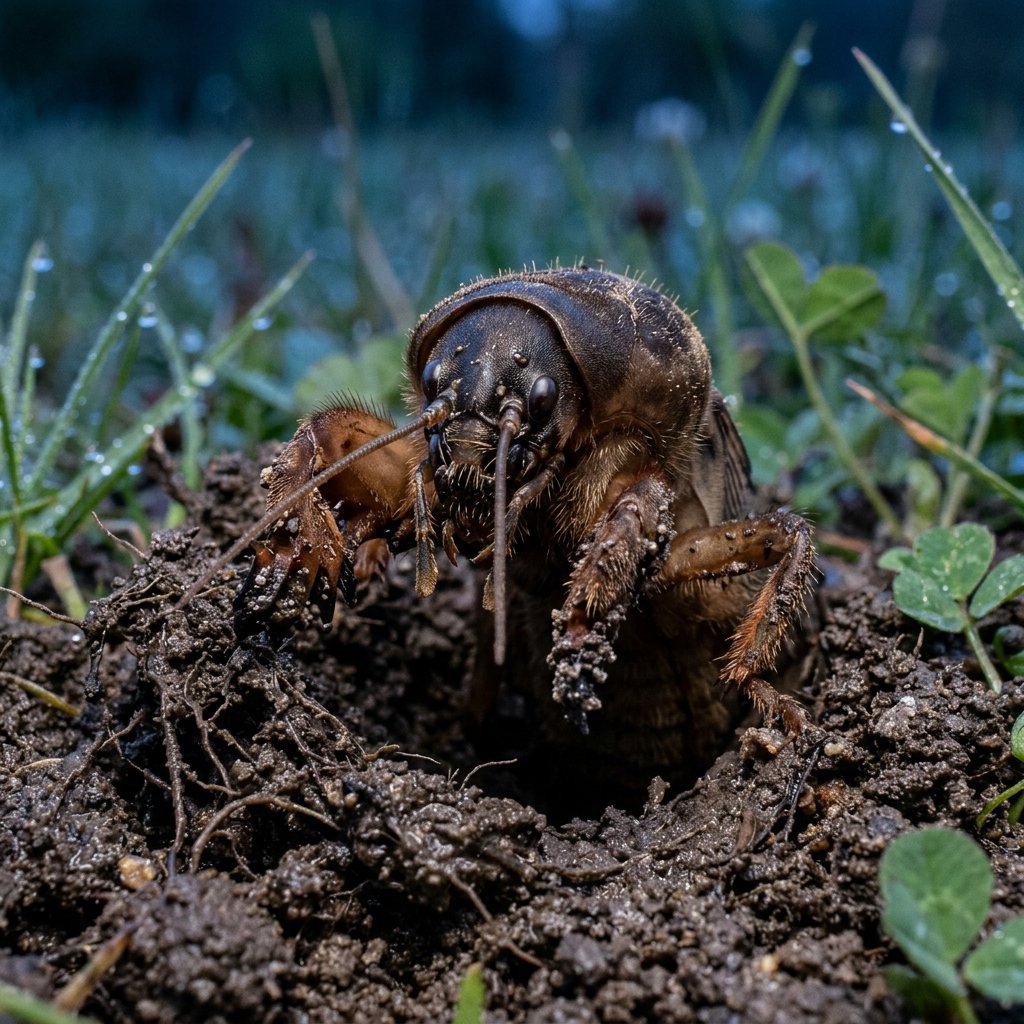
Looking like a miniature escapee from a prehistoric era, the European Mole Cricket is a master of the underworld. Often referred to as the "Earth-dog" in various European cultures, this insect is a fascinating hybrid of forms, possessing the tunneling power of a mammal and the vocal talents of a cricket. While their alien appearance can be startling, they are one of nature's most specialized soil engineers.
🔍 How to Identify
- 👐 Digging Forelimbs: Their most striking feature is the pair of heavily armored, shovel-like front legs designed specifically for "swimming" through dense soil.
- 🧸 Velvety Body: They have a robust, cylindrical body covered in fine, downy hairs that repel water and dirt, usually appearing in shades of tawny brown or grey.
- 🛡️ Pronotum Shield: The segment behind the head is exceptionally hard and rounded, acting like a subterranean helmet as they push through the earth.
🌲 Habitat & Ecology
- 💧 Moisture Seekers: You will most likely encounter them in damp, friable soil near ponds, streams, or in well-irrigated garden patches and peat bogs.
- 🎶 Acoustic Engineering: Males are famous for digging specialized, horn-shaped burrows that act as natural amplifiers. They sit inside and "sing" a loud, continuous drone that can be heard from over 600 meters away.
- 🍽️ Mixed Diet: They are omnivores that act as both a gardener's friend and foe; they eat harmful grubs and larvae, but their tunneling can inadvertently disturb the roots of young seedlings.
⚠️ Safety & Toxicity
- ✅ Harmless to Humans: Despite their intimidating "claws" and large size, mole crickets are not venomous and do not possess a stinger.
- 🤏 The Pinch Factor: If handled roughly, a large adult might give a tiny, non-toxic pinch with its mandibles or scratch you with its powerful digging legs, but they generally prefer to play dead or burrow away from contact.
✨ Fun Fact
The male mole cricket is a literal acoustic engineer; he meticulously shapes the entrance of his burrow into a double-ended megaphone (a parabolic shape) to ensure his mating song reaches the maximum number of females possible!
More Details








