Info
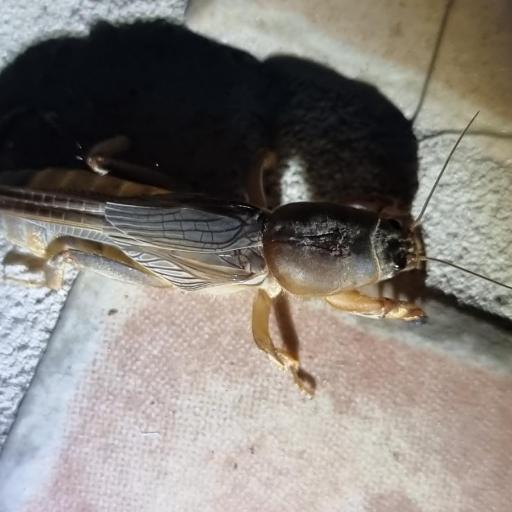
Meet the subterranean bulldozer of the insect world! Often called the "Earth-Crab" or "Oriental Mole Cricket," this fascinating creature looks like a cross between a cricket and a miniature lobster. While its powerful front claws might look intimidating, it spends most of its life hidden beneath your feet, orchestrating complex tunnels in the damp soil.
🔍 How to Identify
- 🦡 Digging Forelegs: The most striking feature is its thick, spade-like front legs, specifically evolved for "swimming" through dense soil.
- 🧥 Velvety Body: Its entire body is covered in fine, dense hairs that give it a soft, velvety brown appearance—this helps prevent dirt from sticking to its shell.
- 🛡️ Protonum Shield: It possesses a large, hard, oval-shaped shield behind its head that protects its vital organs while it rams through the earth.
🦗 Behavior & Ecology
- 🎶 Subterranean Serenade: During the night, males create horn-shaped tunnels that act as natural megaphones, amplifying their "chirping" song to attract females from long distances.
- 🍴 Underground Diet: They are opportunistic feeders; while they mostly munch on plant roots and tubers (sometimes annoying gardeners), they also hunt for earthworms and small soil-dwelling larvae.
- 💧 Moisture Seekers: You are most likely to find them in moist areas like riverbanks, rice paddies, or well-watered lawns, as they require damp soil to keep their tunnels from collapsing.
⚠️ Safety & Toxicity
- 🛡️ Harmless to Humans: Despite their "scary" claws and alien-like appearance, mole crickets are not venomous and do not have a stinger.
- 🤏 The "Nip": If you pick one up, it may try to push your fingers apart with its strong legs or give a very weak, harmless nip, but they are generally shy and prefer to escape.
- 🌱 Garden Impact: While safe for people and pets, they can be a "foe" to your lawn, as their tunneling can dry out grass roots and cause yellow patches.
✨ Fun Fact
The Oriental Mole Cricket is a master of acoustics! It constructs its burrow in the shape of a "double exponential horn"—the same shape used in high-end speakers—to ensure its song carries as far as possible through the ground and into the air.
More Details








