Info
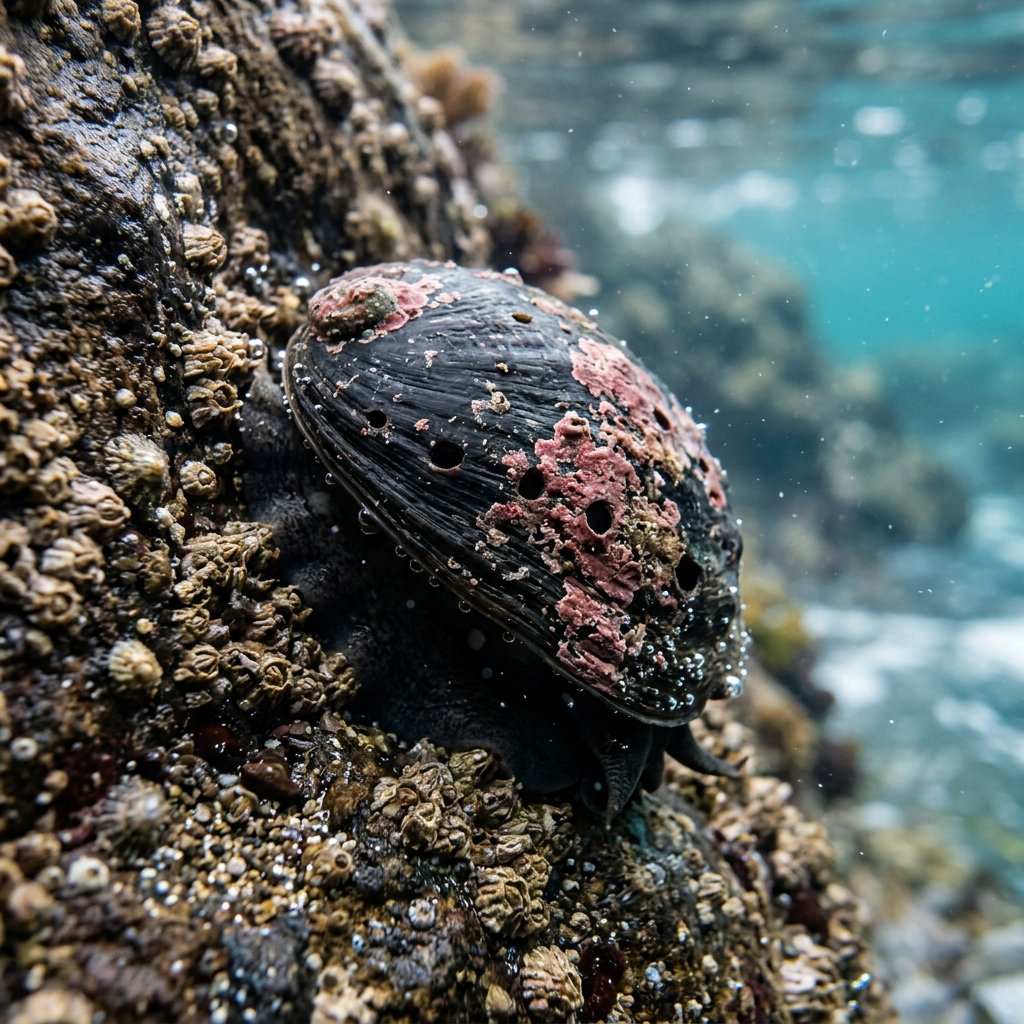
While your search mentioned an "insect," Haliotis cracherodii is actually one of the most famous residents of the Pacific coastline: the Black Abalone. This marine snail is often called the "dark jewel of the tide pools" because of its smooth, ink-colored shell. Once incredibly abundant, they are now a rare and protected sight along the rocky shores of North America.
🔍 How to Identify
- 🐚 The Smooth Shell: Unlike its bumpy cousins, the Black Abalone has a very smooth, oval shell that ranges from deep midnight black to a dark, mossy green.
- 🕳️ Respiratory Pores: Look for a row of small holes (usually 5 to 9) along the edge of the shell. These stay flush with the surface and are used for breathing and discharging waste.
- 🌈 Nacre Interior: While the outside is dark and camouflaged, the inside of the shell is lined with a stunning, iridescent "mother-of-pearl" that reflects silver, pink, and green.
🌊 Habitat & Ecology
- 🦀 The Intertidal Zone: You will find these mollusks tucked into deep rock crevices or under ledges where the waves crash. They use a powerful muscular "foot" to suction themselves to rocks so tightly that even a storm can't move them.
- 🌿 Kelp Catchers: They are passive feeders. Instead of hunting, they wait for pieces of giant kelp or bull kelp to drift by, snagging the seaweed with their foot and pulling it under their shell to eat.
⚠️ Safety & Toxicity
- 🚫 Critically Endangered: The Black Abalone is strictly protected under the Endangered Species Act. It is illegal to harvest, disturb, or remove them from their habitat.
- 🛡️ Handle with Care: They are not toxic or venomous to humans, but trying to pry one off a rock can fatally injure the animal’s soft tissue. It is best to observe them with your eyes, not your hands.
✨ Fun Fact
Black Abalones are the "engineers" of the tide pools! By grazing on algae, they keep the rock surfaces clean, which allows other sea life, like corals and anemones, to find a place to grow and thrive.
More Details








