Info
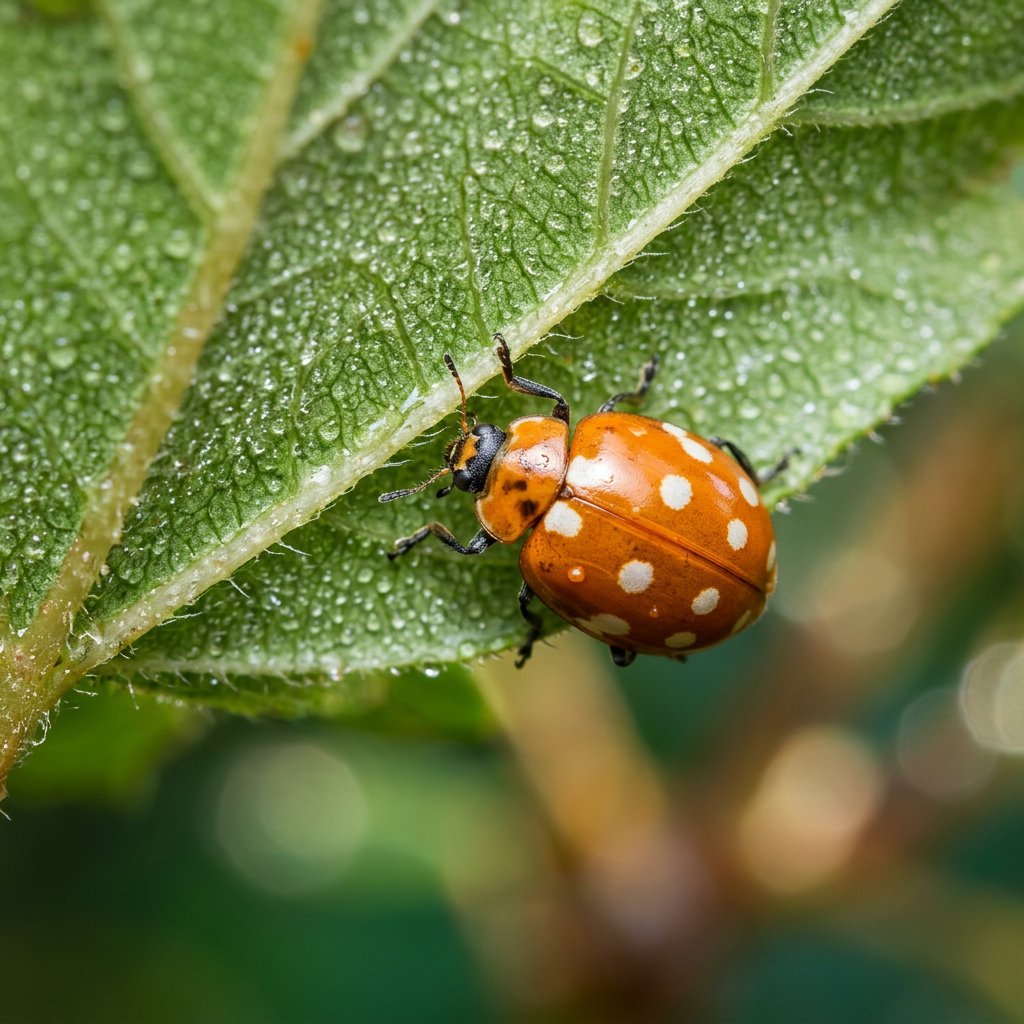
Often called the Orange Ladybird, this vibrant little beetle looks like it was painted for a sunny garden party. While its name might sound like a plant, Halyzia sedecimguttata is actually a beneficial insect known for being a "cleaner" of trees. Unlike the more common red ladybirds that hunt aphids, this species is a specialist that spends its life high up in the canopy of deciduous forests.
🔍 How to Identify
- 🐞 The Color Palette: A brilliant, deep orange or lemon-yellow body that contrasts sharply with the green leaves it inhabits.
- ⚪ Sixteen Spots: Its Latin name sedecimguttata means "sixteen-spotted." It features exactly 16 creamy-white spots (8 on each wing cover).
- 🪟 Glassy Borders: The edges of its wing covers (elytra) and the shield over its head are slightly translucent or "glassy," which helps distinguish it from other yellow ladybirds.
🌲 Habitat & Ecology
- 🍄 The Mildew Hunter: This beetle is a "mycophagist," meaning it feeds almost exclusively on powdery mildew (a type of fungi) that grows on leaves. It is a natural fungicide for your garden!
- 🌳 Canopy Dweller: You are most likely to find them on Sycamore, Ash, and Oak trees. Because they prefer the high canopy, they were once thought to be rare, but they are actually quite common—just high up!
- 🌙 Night Moves: Unlike many other ladybirds, the Orange Ladybird is strongly attracted to ultraviolet light and is a frequent visitor to porch lights or moth traps at night.
⚠️ Safety & Toxicity
- ✅ Friendly Resident: This insect is entirely harmless to humans and pets. It does not bite, sting, or carry any diseases.
- 🧪 Reflex Bleeding: If it feels threatened, it may secrete a tiny drop of bitter-smelling yellow fluid from its leg joints. This is a harmless defense mechanism meant to tell birds that it tastes bad.
- 🐶 Pet Safety: It is non-toxic to dogs and cats, though the bitter fluid might cause a bit of lip-smacking if a curious pet tries to taste one.
✨ Fun Fact
The Orange Ladybird is a survivor! While many ladybirds have struggled with the invasion of the "Harlequin Ladybird" (which eats other ladybirds), the Orange Ladybird has thrived because it eats fungi rather than the insects the invaders are hunting.
More Details








