Info
Often called the "Lynx Spiders" of the tree canopy, members of the Hamataliwa genus are the high-speed acrobats of the spider world. Unlike their cousins who wait patiently in sticky webs, these spiders are active, daytime hunters that stalk their prey across leaves and bark. They are vital "garden guardians" that keep pest populations in check without ever cluttering your plants with messy webbing.
🔍 How to Identify
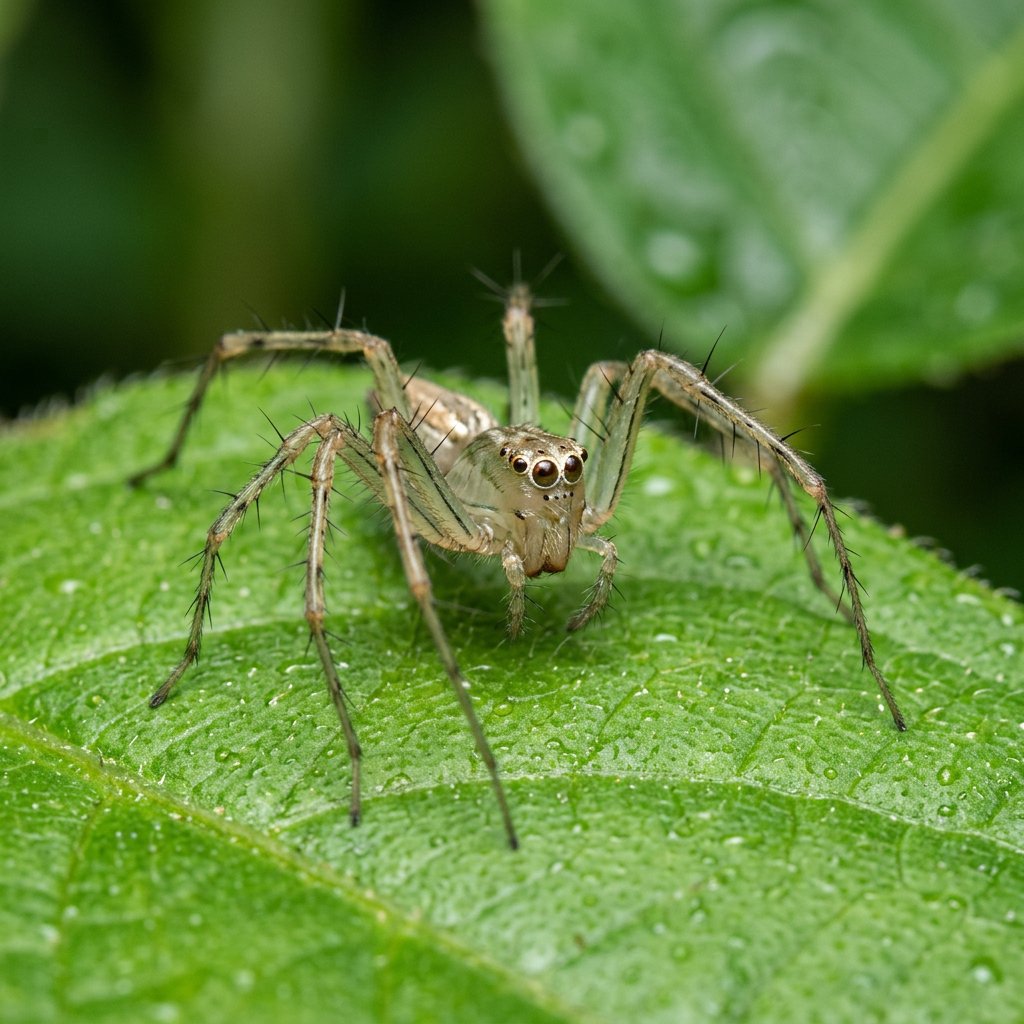
- 🌵 Spiny Legs: One of their most striking features is the presence of long, prominent black spines (macrosetae) projecting from their legs, giving them a "thorny" appearance.
- 👀 The Lynx Gaze: They possess eight eyes arranged in a distinct hexagonal pattern on a high, rounded "forehead," providing them with excellent vision for spotting movement.
- 🍂 Master of Disguise: Unlike the bright green Lynx Spiders often seen on flowers, Hamataliwa are usually mottled with shades of brown, gray, and white to perfectly mimic tree bark or dried leaves.
🌲 Habitat & Ecology
- 🐜 The Ambush Expert: These spiders are beneficial predators. They spend their days patrolling foliage to hunt for aphids, small moths, and flies, pouncing on them with cat-like speed.
- 🌳 Arboreal Lifestyle: You are most likely to find them on the undersides of leaves or camouflaged against the stems of woody shrubs and trees rather than in open grassy areas.
⚠️ Safety & Toxicity
- 🟢 Status: Harmless and Non-Aggressive.
- 🛡️ Details: While they are technically venomous (as almost all spiders are), their venom is not medically significant to humans or pets. They are very shy and will almost always choose to sprint away rather than bite. They pose no threat to your garden plants; in fact, they help keep them healthy by eating leaf-munching insects.
✨ Fun Fact
The genus name Hamataliwa is actually derived from a Taulipang (indigenous South American) word for a "large, fierce spider"—a nod to their impressive hunting prowess despite their relatively small size!
More Details








