Info
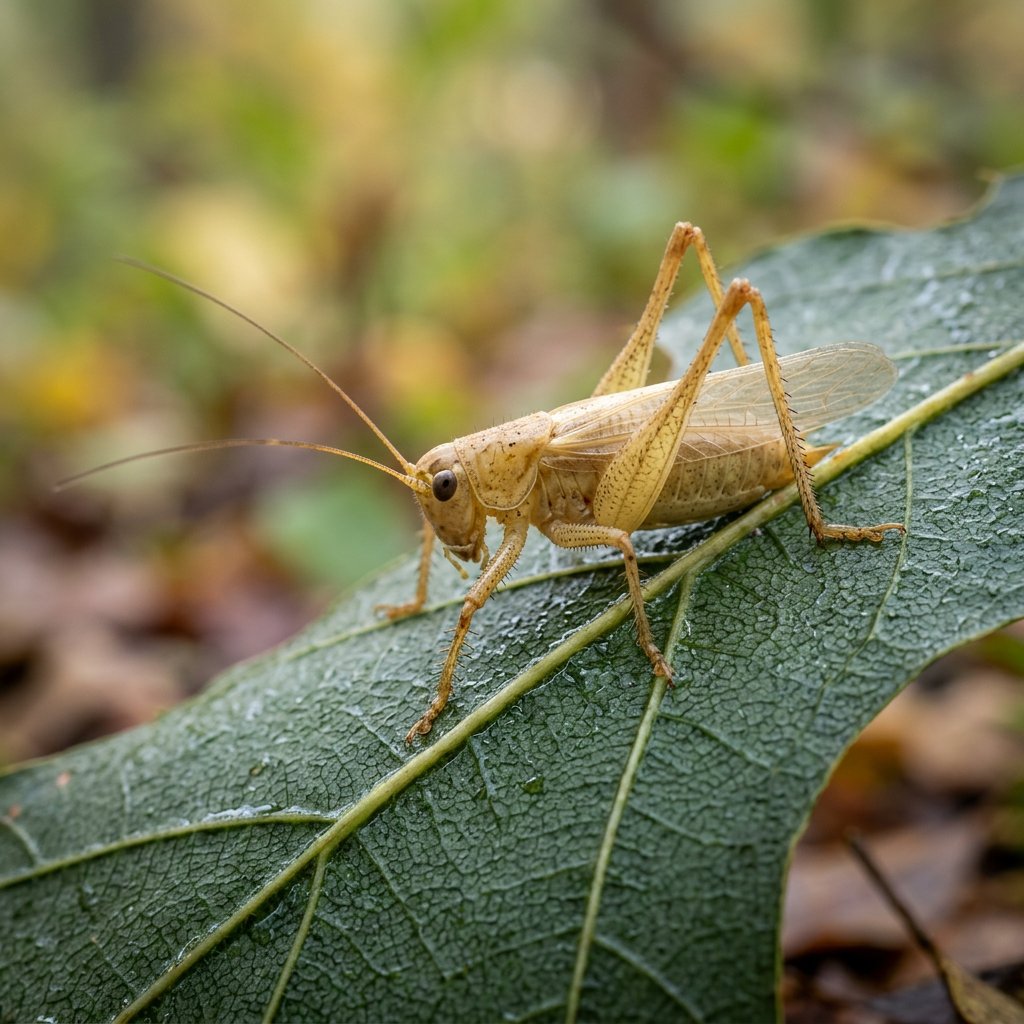
Meet the Restless Bush Cricket, a shy but vocal resident of the late-summer garden. Often heard before it’s seen, this pale, straw-colored insect gets its name from its incredibly jittery behavior—it is always ready to leap away at the slightest vibration. While it might startle you with a sudden hop, it is a harmless member of the cricket family that adds a soothing, rhythmic soundtrack to warm twilight hours.
🔍 How to Identify
- 🎨 Pale Coloration: They are typically a uniform tan or dull yellowish-brown, a perfect camouflage for hiding among dried leaves and stems.
- 📏 Long Antennae: Look for exceptionally long, thread-like antennae that often stretch out much further than the length of their own bodies.
- 🦗 Body Shape: They have a slightly flattened, elongated body compared to the stout, "armored" look of common black field crickets.
🌲 Habitat & Ecology
- 🌿 The High Life: Unlike their ground-dwelling cousins, Restless Bush Crickets prefer "vertical" living, spending most of their time in tall weeds, shrubs, and the lower branches of trees.
- 🍂 Dietary Habits: They are generalist feeders, nibbling on a variety of organic matter including foliage, flowers, and occasionally small, soft-bodied insects.
- 🌙 Nighttime Serenaders: They are strictly nocturnal; males produce a rhythmic, pulse-like chirping by rubbing their wings together to attract mates under the cover of darkness.
⚠️ Safety & Toxicity
- 🛡️ Status: Completely harmless. They are "friends" of the gardener and do not possess a stinger or any form of chemical defense.
- 🚫 Low Bite Risk: While they have mandibles for eating plants, they are not aggressive and will almost always choose to jump away rather than bite if handled.
- 🐾 Pet Safety: They are non-toxic to cats and dogs who might enjoy a game of "catch and release" in the backyard.
✨ Fun Fact
- 🎶 The "Restless" part of their name is no exaggeration; they are one of the most sensitive crickets in North America, often leaping into the air before a human or predator even gets within three feet of their hiding spot!
More Details








