Info
Meet the Ribbed Woodlouse, a tiny, pale architect of the soil that looks more like a prehistoric fossil than a modern garden resident. While often called an insect, this little creature is actually a land-dwelling crustacean. It is a dedicated "friend" to any gardener, working tirelessly behind the scenes to turn dead leaves into gold-standard compost.
🔍 How to Identify
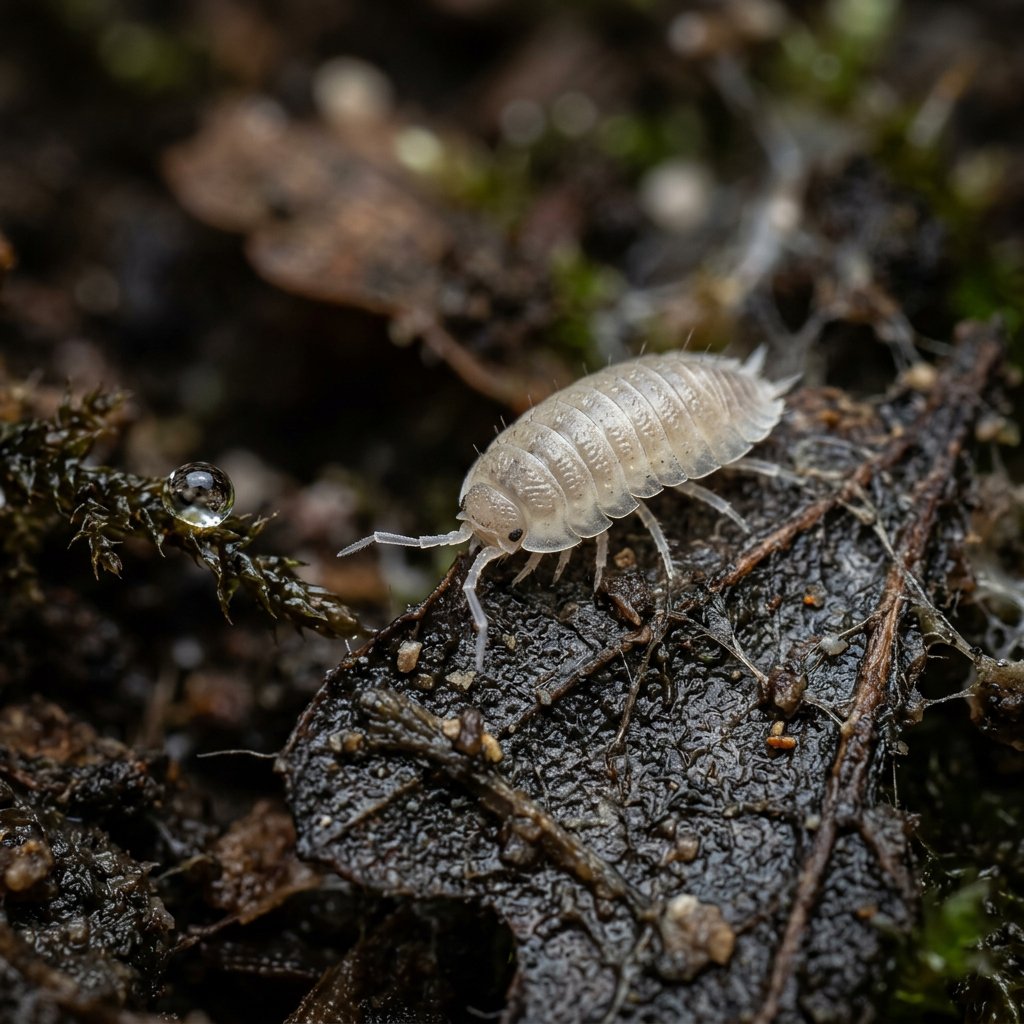
- 🦴 Distinct Ribs: Unlike the smooth surface of common pill bugs, this species features several prominent longitudinal ridges (ribs) running down its back.
- 🎨 Ghostly Color: It typically sports a pale, creamy-white or light orange-grey hue, which helps it blend into the fungal mycelium it often lives near.
- 📏 Micro Size: It is much smaller than the average woodlouse, usually reaching only 3–4 millimeters in length, making it a "hidden gem" for sharp-eyed nature lovers.
🌲 Habitat & Ecology
- 🍂 The Ultimate Recycler: This woodlouse is a detritivore, meaning its entire life mission is to eat decaying organic matter, helping to cycle nutrients back into your garden soil.
- 💧 Humidity Specialist: Because it breathes through modified gills, it requires high humidity to survive. You will almost always find it in the deepest, dampest layers of leaf litter or buried inside soft, rotting logs.
- 🪵 Slow & Steady: Unlike its faster cousins, Haplophthalmus danicus is a slow mover. It doesn’t roll into a perfect ball when threatened; instead, it relies on its textured body to wedge itself into tiny crevices where predators can't reach.
⚠️ Safety & Toxicity
- ✅ Completely Harmless: This creature is non-toxic, does not bite, and does not sting. It is a "passive" inhabitant of the ecosystem.
- 🛡️ Eco-Indicator: Their presence is actually a good sign! They indicate that your soil is moist, organic-rich, and healthy. They pose no threat to your living plants, pets, or children.
✨ Fun Fact
Even though they live on land, these "insects" are technically crustaceans, making them more closely related to lobsters and crabs than to bees or butterflies! If you look at them through a magnifying glass, you can see they still carry their babies in a water-filled "brood pouch" on their underside.
More Details








