Info
Known as the Pennsylvania Ground Beetle, this scurrying "night-owl" is one of the most hardworking, invisible allies in the North American garden. While its dark, armored appearance might give some gardeners a fright when they flip over a rock, this beetle is a dedicated pest-control specialist that spends its life cleaning up unwanted insects and weed seeds.
🔍 How to Identify
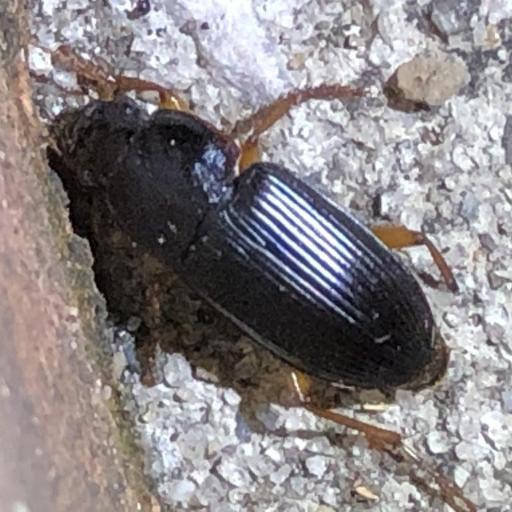
- 🪲 The "Tuxedo" Shell: A sturdy, slightly flattened body that is typically deep black or dark brown, often showing a subtle satiny sheen.
- 👢 Honey-Colored Legs: One of its most identifying features is its legs and antennae, which are a contrasting pale yellow or reddish-tan, making it look like it’s wearing tiny hiking boots.
- 📏 Grooved Back: The elytra (hard wing covers) feature fine, parallel vertical ridges that run perfectly straight from the "shoulders" to the tail.
🌲 Habitat & Ecology
- 🦗 The Generalist Predator: These beetles are voracious hunters of garden pests like slugs, snails, and caterpillars. However, they are also "weed managers"—they are famous for eating huge quantities of ragweed and giant foxtail seeds before they can sprout.
- 🌙 Night Shift Worker: You’ll rarely see them active during the day. They spend their daylight hours hiding in cool, moist spots like leaf litter, under logs, or deep in wood chips to avoid dehydration.
⚠️ Safety & Toxicity
- 🛡️ Harmless Ally: They have no stinger and do not produce toxic chemical sprays. They are completely safe to have around pets and children.
- 🤏 Pinch Potential: While they aren't aggressive, if you squeeze one in your hand, it might give a tiny, harmless pinch with its mandibles. They much prefer running away to fighting.
✨ Fun Fact
- 💡 The Light Trap: Despite being nocturnal and living on the ground, Pennsylvania Ground Beetles are famously obsessed with artificial lights. If you see a dark, fast-moving beetle scurrying across your porch at night, it’s likely this beetle looking for a snack near your "artificial sun!"
More Details








