Info
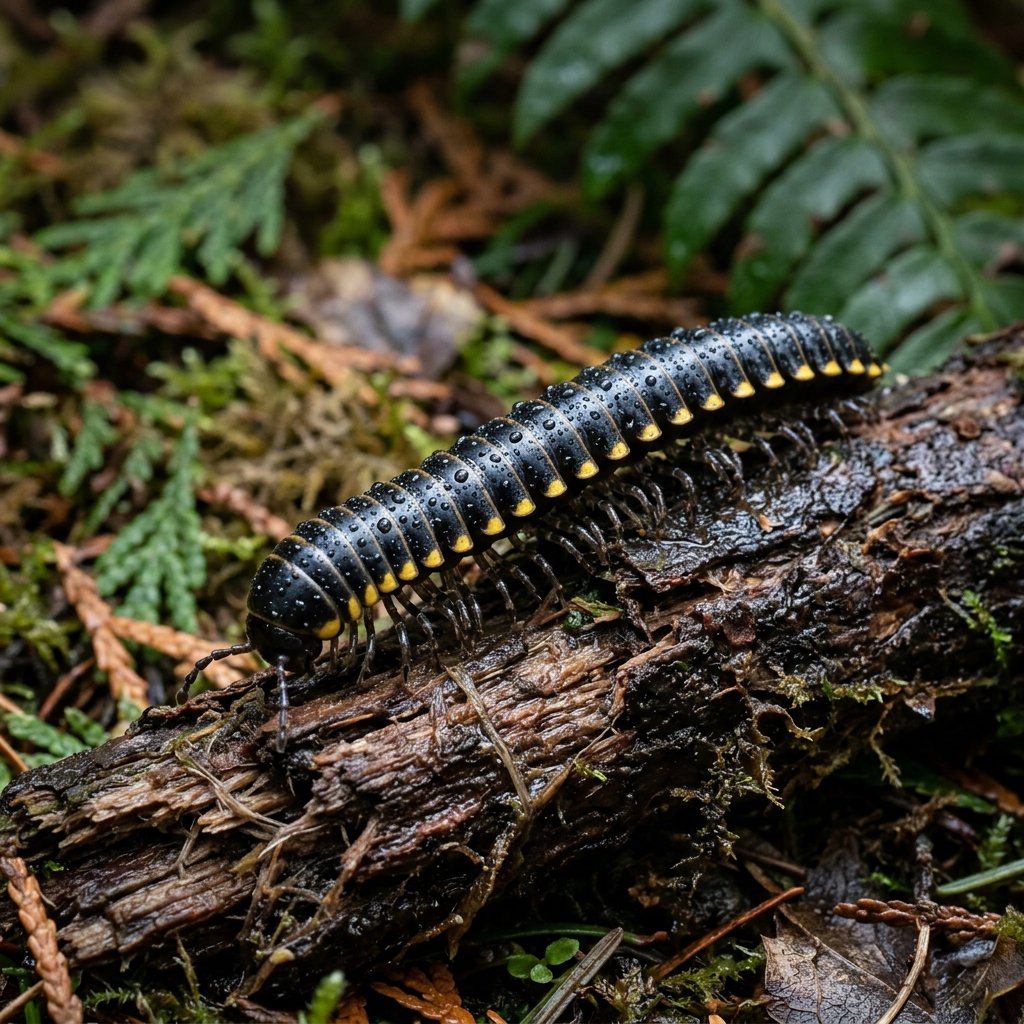
Often called the Almond-scented Millipede or the Cyanide Millipede, this striking arthropod is a gentle giant of the Pacific Northwest forest floor. While its bold yellow spots are designed to look intimidating, it is actually a peaceful "recycler" that plays a vital role in turning fallen leaves into rich soil. If you pick one up, you might notice a distinct aroma that smells exactly like marzipan or almond extract!
🔍 How to Identify
- 🎨 High-Contrast Armor: They possess a flat-backed, segmented body that is deep matte black or dark brown, making the bright yellow (sometimes orange) spots on the edges of each segment pop vividly.
- 🏃 Leggy Movement: Like all millipedes, they have two pairs of legs per body segment. Their legs are typically a pale cream or yellow color and move in a mesmerizing, wave-like motion.
- 👃 The Scent Test: The most reliable way to identify them is by their smell; when they feel threatened, they release a chemical that smells strongly of bitter almonds.
🌲 Habitat & Ecology
- 🍂 Nature’s Janitor: These millipedes are detritivores, meaning they spend their entire lives eating decaying organic matter. They are essential for forest health because they break down tough leaf litter that other insects can't digest.
- 💧 Moisture Seekers: You will almost always find them in damp, shaded environments. They love hiding under rotting logs, deep within moss, or beneath thick layers of damp maple leaves where they can stay hydrated.
⚠️ Safety & Toxicity
- 🛡️ Chemical Defense: While they do not bite or sting, they defend themselves by secreting small amounts of hydrogen cyanide gas. For a human, the amount is tiny, but it is enough to discourage a bird or a shrew from eating them.
- 🖐️ Skin Sensitivity: If you handle one, the secretions might cause a mild burning sensation or temporary skin discoloration (similar to a walnut stain) for people with sensitive skin. Always wash your hands thoroughly after a forest encounter and keep them away from your eyes and mouth.
✨ Fun Fact
Despite producing a chemical as "scary" as cyanide, these millipedes have a very high tolerance for it themselves. They store the precursor chemicals in separate "reaction chambers" in their bodies and only mix them to create the toxic gas when a predator tries to take a bite!
More Details








