Info
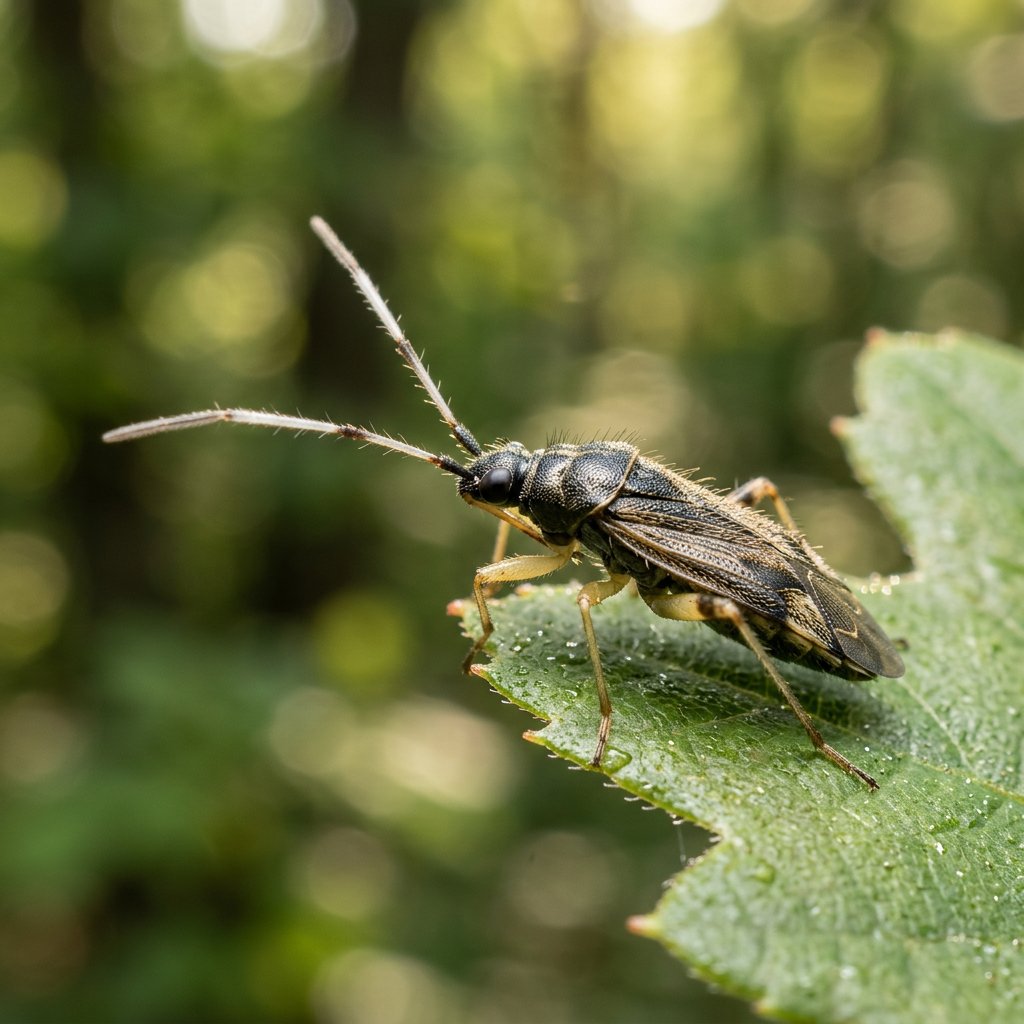
Often called the Oak Plant Bug, Harpocera thoracica is a tiny, specialized traveler that appears in a flurry for only a few weeks each year. This insect is a master of timing, synchronizing its entire life cycle with the blooming of oak trees. While they might look like ordinary "gnats" to the untrained eye, their intricate anatomy makes them a favorite for backyard naturalists.
🔍 How to Identify
- 📡 Clubbed Antennae: The most striking feature is found on the males; the second segment of their antennae is thick, black, and flattened, looking almost like a tiny paddle or club.
- 🎨 Warm Tones: They sport a mottled reddish-brown or tan color palette, which provides excellent camouflage against the bark and catkins of their host trees.
- 🧥 The "Thorax" Hump: As their name suggests, they have a very pronounced, slightly arched thorax, giving them a "hunched" appearance when viewed from the side.
🌲 Habitat & Ecology
- 🌳 The Oak Connection: These bugs are almost exclusively found on Oak trees (Quercus). They emerge exactly when the oak catkins (flowers) begin to droop, providing them with a feast of pollen and nectar.
- 🍴 Omnivorous Habits: While they love oak sap and pollen, they aren't strictly vegetarian. They are opportunistic hunters that will snack on aphids or other tiny soft-bodied insects they encounter on the leaves.
- 🗓️ A Spring Ghost: They are famous for their "boom and bust" presence. They hatch, mate, and die within a very narrow window in late spring (usually May and June), disappearing entirely for the rest of the year.
⚠️ Safety & Toxicity
- ✅ Friendly Neighbor: Harpocera thoracica is completely harmless to humans and pets. They do not possess a stinger and their mouthparts are not designed to bite people.
- 🌿 Tree Health: Even if you see a large number of them on your oak tree, do not panic! They do not cause significant damage to the tree's health or foliage; they are simply temporary guests enjoying the spring bloom.
✨ Fun Fact
The males are significantly more active flyers than the females. If you see a cloud of tiny brown bugs dancing around the tips of oak branches in May, you are likely witnessing a "bachelor party" of males searching for females tucked away in the leaves!
More Details








