Info
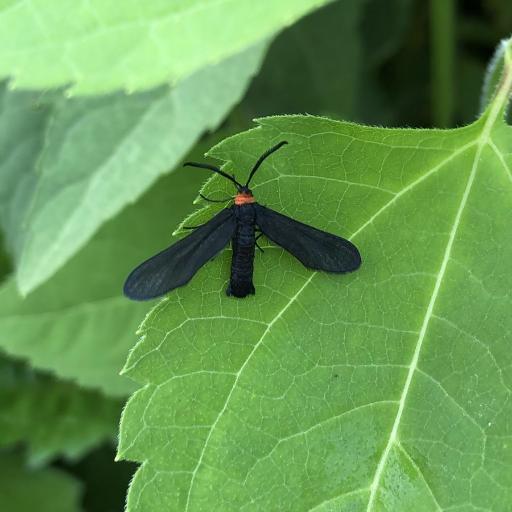
Often called the Grapeleaf Skeletonizer, this moth is a master of destruction in the vineyard. While the adult moth is a sleek, dark beauty, its larvae are famous for their "synchronized eating" habits, lining up side-by-side to devour leaves until only the delicate veins remain. They are common sights in North American gardens wherever grapevines or Virginia creepers climb.
🔍 How to Identify
- 🦋 Adult Appearance: The adult moth is surprisingly elegant, featuring solid smoky-black or deep metallic blue wings and a distinctive "tufted" tail that it often fans out.
- 🐛 The "Yellow Jacket" Larva: The caterpillars are bright yellow with several bold black bands or rows of spots running across their bodies.
- 🍂 Damage Pattern: You’ll likely spot their work before you see them; they leave behind "skeletonized" leaves that look like brown lace or translucent parchment.
🌲 Habitat & Ecology
- 🍇 Vineyard Villains: Their primary diet consists of wild and cultivated grapes, but they are also frequently found on Virginia creeper and Boston ivy.
- 👥 Social Eaters: Young larvae are highly gregarious. They feed in neat rows on the undersides of leaves, moving backward in a phalanx as they consume the plant tissue.
- 🏠 Cocooning: When ready to transform, they leave the plant to spin tough, papery cocoons in the leaf litter or soil at the base of their host vine.
⚠️ Safety & Toxicity
- 🚫 Stinging Hazard: Use caution when handling these caterpillars! The black bristles on the larvae are "urticating hairs" that can break off in the skin.
- 🩹 Skin Irritation: Contact often results in a painful, itchy rash or dermatitis that can last for several days. It is best to use gloves if you need to remove them from your garden.
- 🐾 Pet Safety: While not deadly, pets that try to eat or sniff the larvae may experience oral irritation or swelling.
✨ Fun Fact
The Grapeleaf Skeletonizer larvae are so organized that if one caterpillar in the feeding line moves, the others often adjust their positions to maintain their perfect "shoulder-to-shoulder" formation!
More Details








