Info
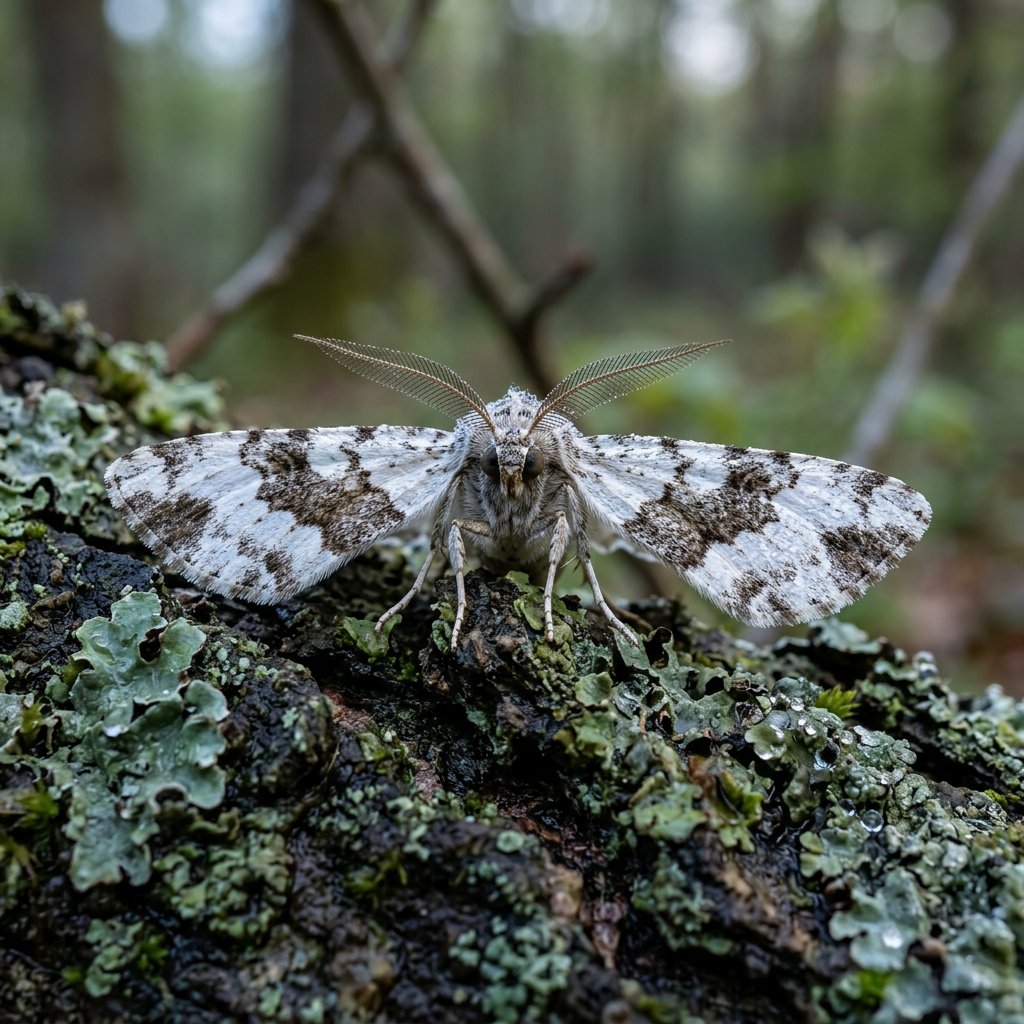
The Broad-barred White (Hecatera bicolorata) is a small, striking moth that often looks more like a piece of intricate marble or a splash of lichen than a living creature. Known for its distinct high-contrast pattern, it is a frequent visitor to suburban gardens where it hides in plain sight during the day. While many moths are dull brown, this species stands out with its crisp, tuxedo-like coloring.
🔍 How to Identify
- 🦋 The "Broad Bar": Its most defining feature is the wide, dark grayish-black band that runs horizontally across the center of its otherwise snowy-white forewings.
- 🎨 Jagged Edges: The edges of the dark band are often wavy or jagged, helping to break up its silhouette against tree bark or stone.
- 👀 Resting Posture: When at rest, it holds its wings in a flat, roof-like triangle, often pressing itself tightly against a wall or fence to minimize shadows.
🌲 Habitat & Ecology
- 🌼 The Night Shift: As adults, they are nocturnal pollinators that fuel up on nectar from garden flowers. During the day, they are often found "sleeping" on pale-colored walls or wooden fences.
- 🍃 Dietary Habits: The caterpillars are quite picky; they prefer to eat the flower heads and developing seeds of plants in the daisy family, particularly Sow-thistles (Sonchus) and Hawkweeds.
- 🗺️ Urban Resident: Because their host plants are often considered "weeds," these moths thrive in urban wastelands, verges, and untidy garden corners.
⚠️ Safety & Toxicity
- ✅ Status: Completely harmless.
- 👐 Details: This moth does not bite, sting, or possess irritating hairs. It is a "friend" to the garden and is safe for children to observe closely. It is not a known pest of indoor fabrics like clothes moths.
✨ Fun Fact
The Broad-barred White is a master of "disruptive coloration." Its stark black-and-white pattern is designed to mimic bird droppings—a clever evolutionary trick that makes hungry birds look right past them!
More Details








