Info
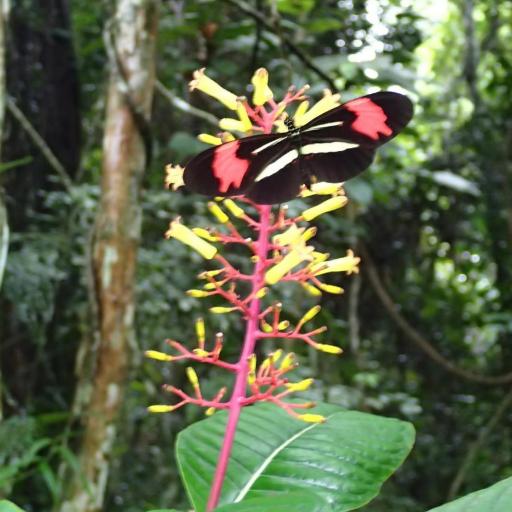
Known as the Red Postman, this butterfly is a living masterpiece of the Neotropics. It earns its charming nickname from its remarkably predictable "trap-line" flight paths; these butterflies visit the same flowers at the same time every single day, just like a mail carrier making their rounds. Beyond their beauty, they are famous in the scientific world for their intelligence and long lifespans.
🔍 How to Identify
- 🦋 Elongated Wings: Unlike the broad wings of a Monarch, the Red Postman has narrow, "longwing" shapes that allow it to glide effortlessly through dense tropical foliage.
- 🎨 High-Contrast Patterns: They feature deep, velvety black wings slashed with brilliant crimson-red bands on the forewings and often delicate white rays on the hindwings.
- 📡 Long Antennae: Look for exceptionally long, thin antennae that they use to detect the faint scent of specific pollen sources in the humid air.
🌲 Habitat & Ecology
- 🌻 The Pollen Power: The Red Postman is a rare "super-butterfly" because it eats pollen, not just nectar. This high-protein diet allows them to live for up to 6 months, whereas most butterflies live only a few weeks.
- 🌿 Passionflower Partners: They are inextricably linked to Passionflower vines (Passiflora). The females carefully inspect the vines to lay eggs, and the caterpillars eventually absorb toxins from the leaves for their own defense.
- 🗺️ Spatial Memory: They are among the few insects proven to have a "map" in their heads. They remember the exact locations of high-quality food sources and return to them with mathematical precision.
⚠️ Safety & Toxicity
- 🟢 Harmless to Humans: The Red Postman is a "friend" of the gardener. They do not bite, sting, or carry diseases, and they are excellent indicators of a healthy, pesticide-free environment.
- 🚫 Toxic to Predators: Their bright red color is an aposematic warning (a "stay away" sign). They store cyanide-like compounds in their bodies, making them taste bitter and toxic to birds or lizards that might try to eat them.
✨ Fun Fact
The Red Postman and the "Common Postman" (Heliconius melpomene) look almost identical and live in the same areas. They aren't closely related, but they evolved to mimic each other’s patterns so that predators only have to learn one "don't eat this" lesson to leave both species alone!
More Details








