Info
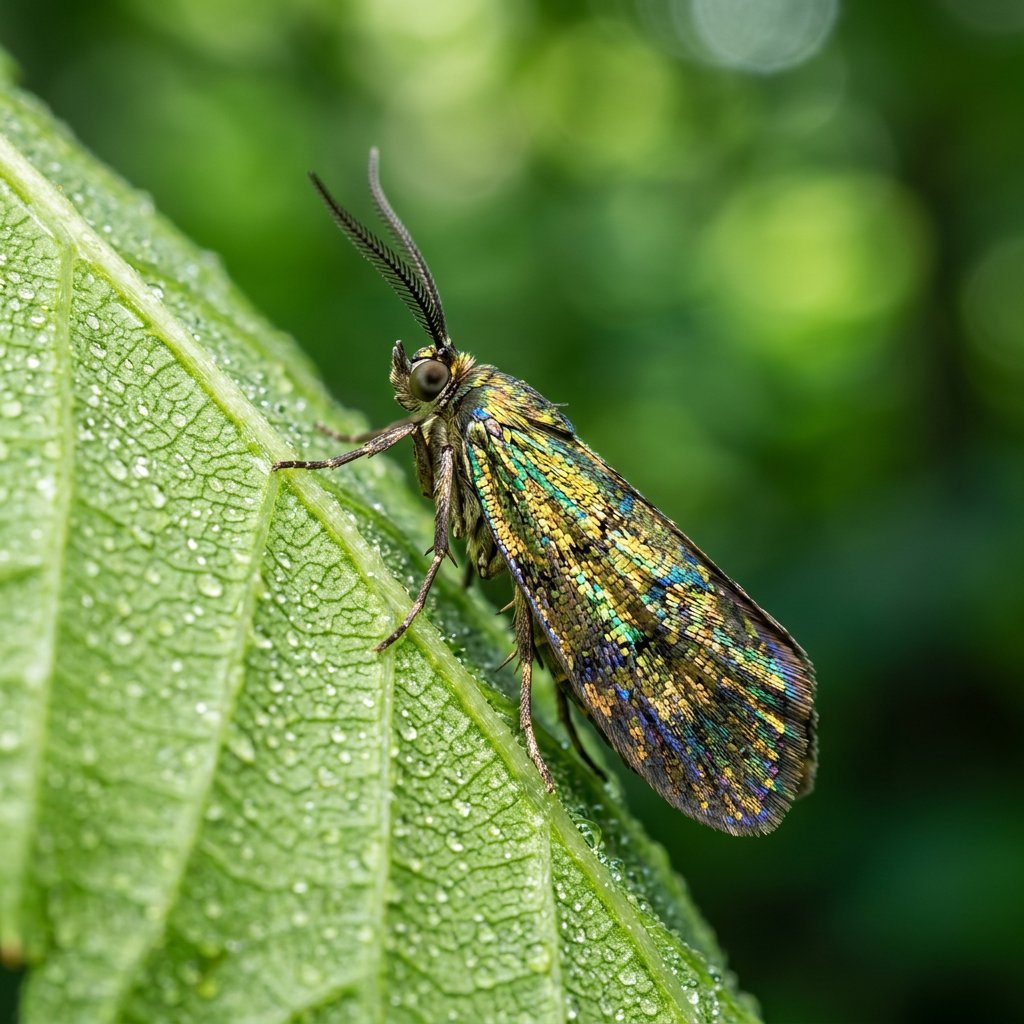
Small, shiny, and acting more like a tiny metallic beetle than a typical moth, members of the Heliodinidae family are often called "Sun Moths." These shimmering insects are the hidden jewels of the garden, frequently mistaken for wasps or flies because of their narrow wings and brilliant colors. They are "friends" of the ecosystem, serving as specialized pollinators that prefer the brightest, warmest hours of the day.
🔍 How to Identify
- ✨ Metallic Sheen: Their forewings are typically long, narrow, and adorned with brilliant metallic spots or bands in shades of bronze, gold, and deep orange.
- 🦵 The "Kickstand" Pose: In a very unusual habit, these moths often hold their long hind legs out to the side or tilted upwards while resting, making them look like they have extra antennae.
- 📏 Diminutive Scale: They are exceptionally small, usually sporting a wingspan of only 10mm to 15mm, requiring a keen eye to spot among the foliage.
🌲 Habitat & Ecology
- ☀️ Sun Seekers: Unlike their nocturnal cousins, Heliodinidae are diurnal. They are most active during peak daylight, darting through sunny meadows, open woodlands, and gardens rich in wildflowers.
- 🌿 Plant Specialists: The larvae (caterpillars) are often highly specialized, feeding primarily on plants in the Four O'Clock family (Nyctaginaceae). Depending on the species, they may bore into stems or create "mines" inside leaf tissue.
⚠️ Safety & Toxicity
- 🛡️ Harmless Gardeners: These moths are completely non-threatening. They do not possess stingers, biting mouthparts, or irritating hairs.
- 🐾 Pet & Child Friendly: They are safe to have around the home. Because they are so small and delicate, they pose no risk to curious pets or children, though their wings are easily damaged if handled.
✨ Fun Fact
Heliodinids are masters of "wasp mimicry." By waving their metallic legs and moving with jerky, fast motions in the sunlight, they trick birds into thinking they are aggressive wasps rather than a defenseless, tasty snack!
More Details








