Info
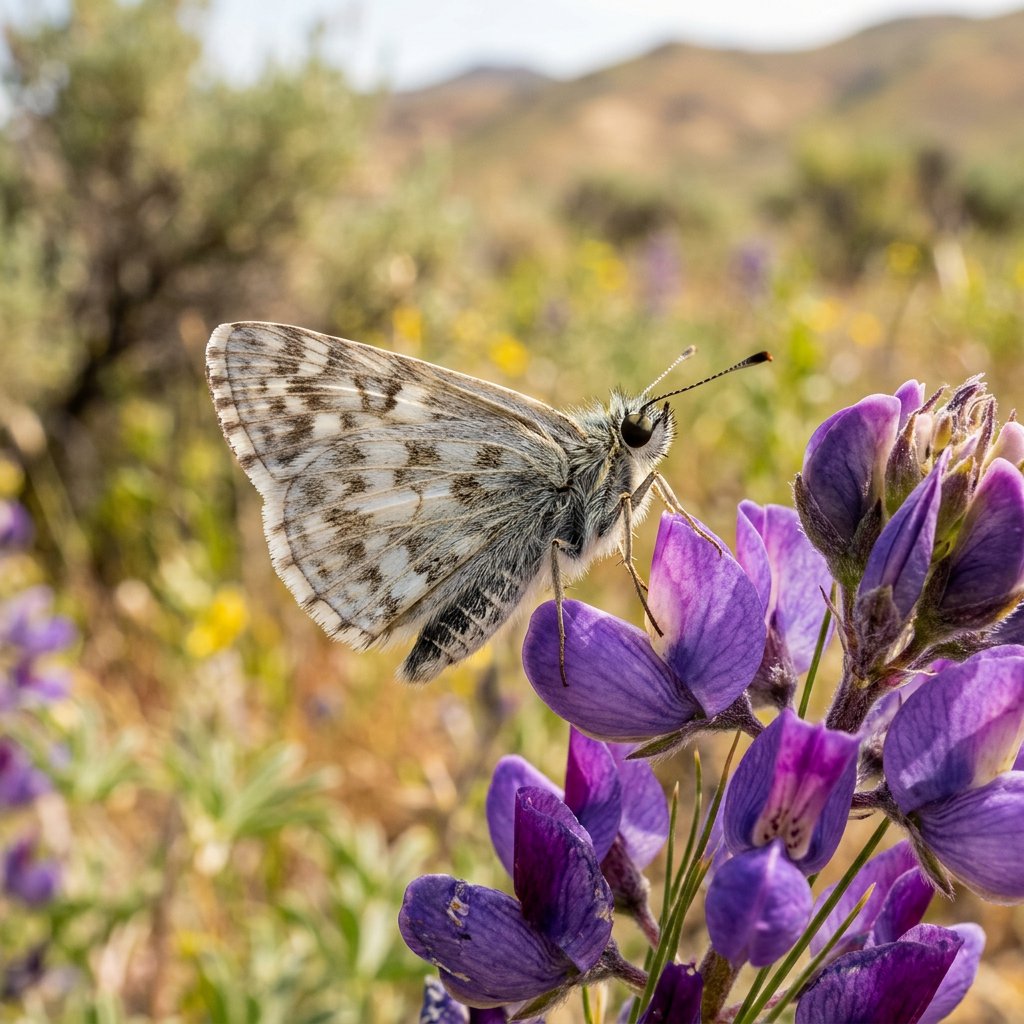
Often called the Northern White Skipper, this butterfly looks like a delicate piece of animated lace fluttering through sun-drenched fields. Found primarily in the Western United States and Mexico, it is a prominent member of the "spread-wing" skippers, often seen basking with its wings wide open to soak up the heat. While many skippers are dull brown, this species stands out like a bright beacon against the earthy tones of its arid habitat.
🔍 How to Identify
- 🦋 The Wings: The upper wings are a brilliant, snowy white, framed by a distinct "sawtooth" or checkered black border along the edges.
- 🌫️ The Underside: When the wings close, they reveal a more muted palette of blurred olive, tan, or grayish-brown patches that help the insect blend into dried grass.
- 👀 The Build: Like all skippers, it has a thick, moth-like body, a large head, and widely spaced antennae that end in tiny "hooks" or clubs.
🌲 Habitat & Ecology
- 🌿 Host Plants: The Northern White Skipper is a specialist when it comes to nursery care; females lay their eggs exclusively on plants in the Mallow family (Malvaceae), such as Hollyhocks and Globemallows.
- ☀️ Sun-Seeking: You will rarely find them in deep shade. They prefer open, dry areas like canyons, desert washes, and even dusty roadsides where they can maintain the high body temperature needed for their fast flight.
- 💧 Puddling Behavior: Males are often spotted "puddling"—gathering in groups around damp soil or mud to drink mineral-rich water, which helps them during the mating process.
⚠️ Safety & Toxicity
- ✅ Status: Completely harmless and a welcome "friend" to any nature lover.
- 🛡️ Non-Aggressive: They lack any ability to bite or sting. While they are very fast and may "buzz" past you if you enter their territory, they pose no threat to humans, pets, or children.
✨ Fun Fact
The Northern White Skipper is a bit of a tiny "gladiator." Males are fiercely territorial and will perch on a tall leaf or rock, darting out to aggressively chase away other butterflies—even those much larger than themselves—to defend their favorite sunny spot!
More Details








