Info
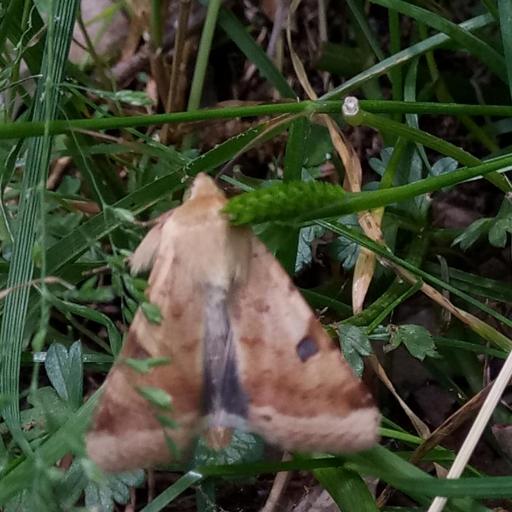
Often called the Bordered Straw, this moth is a master of camouflage and a tireless world traveler. While it may look like a simple dried leaf when resting, it is one of nature’s most successful nomads, often crossing entire continents and seas to find the perfect garden or field to call home for a season.
🔍 How to Identify
- 🦋 Forewings: These are sandy or ochre-colored, featuring a very distinct dark, kidney-shaped spot near the center and a wavy line near the edge.
- 📉 Hindwings: When they take flight, you’ll see pale whitish wings with a strikingly broad, smoky-dark border that gives the moth its common name.
- 🧶 Thorax: The body is "fuzzy" or "furry," covered in thick, pale-brown scales that help it retain heat during long-distance night flights.
🌲 Habitat & Ecology
- 🍽️ A Global Appetite: As caterpillars, they are not picky eaters. They are "polyphagous," meaning they feed on a huge variety of plants, including marigolds, geraniums, tomatoes, and chickpeas.
- 🌍 The Great Migration: This insect is a famous migrant. It doesn't handle cold winters well, so it breeds in Africa and Southern Europe before flying thousands of miles north during the summer to colonize new territories.
⚠️ Safety & Toxicity
- 🛡️ Status: Completely harmless to humans and domestic pets.
- 🚫 No Threat: They do not sting, bite, or carry diseases. While the caterpillars can be a nuisance for gardeners growing vegetables or flowers, the adult moth is a gentle visitor that only seeks nectar.
✨ Fun Fact
- 🌡️ The Bordered Straw is considered a "biological thermometer." Because they are so sensitive to temperature, their sudden appearance in northern countries is often one of the first indicators of a particularly warm summer or a shifting climate pattern!
More Details








