Info
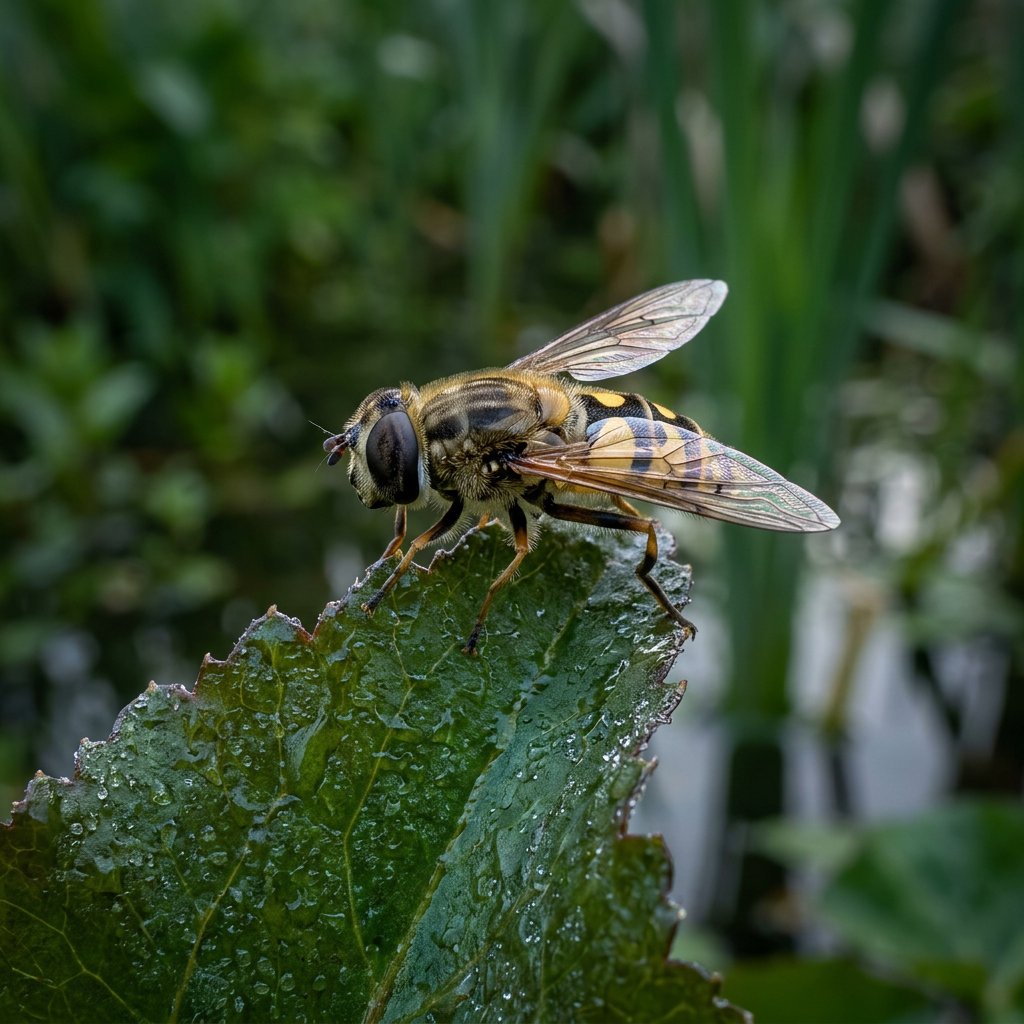
Often called the Marsh Tiger, Helophilus hybridus is one of the most striking hoverflies you’ll encounter near water. Despite its fierce, wasp-like appearance, it is a peaceful pollinator that spends its days darting between flowers with surgical precision. It is a master of "Batesian mimicry," wearing the bright warning colors of a stinging insect to trick predators into leaving it alone.
🔍 How to Identify
- 🐝 The "Footballer" Stripes: Look closely at the thorax (the middle section). It features bold, longitudinal yellow and black stripes, giving it the appearance of wearing a classic striped sports jersey.
- 🍋 Abdominal Crescents: The abdomen is adorned with pairs of bright yellow or pale orange markings. These often look like segments of a lemon or small crescents set against a deep black background.
- 🚁 Stationary Flight: Like a tiny, high-tech drone, this fly can hover perfectly still in mid-air for several seconds before darting away at incredible speeds—a feat true wasps can rarely pull off.
🌲 Habitat & Ecology
- 💧 Wetland Specialists: As the name "Marsh Tiger" suggests, these insects are rarely found far from water. They thrive in damp meadows, marshlands, and gardens featuring ponds or boggy areas.
- 🍽️ Nectar Seekers: Adult hoverflies are vital pollinators. They are particularly fond of flat-topped flowers (umbellifers) like Hogweed or Wild Carrot, where they can easily land and lap up nectar with their sponge-like mouthparts.
- 🧬 The Snorkel Larvae: Their life cycle is fascinating. The larvae, known as "rat-tailed maggots," live in stagnant, organic-rich mud. They use a long, telescopic breathing tube—resembling a tail—to reach the water's surface for air while they feed on decaying matter below.
⚠️ Safety & Toxicity
- 🛡️ Status: Completely harmless "Friend."
- 🚫 The Great Bluffer: While its yellow and black stripes might make you jump, Helophilus hybridus has no stinger and cannot bite. It is entirely safe for children and pets and is a beneficial guest in any garden.
✨ Fun Fact
✨ The "tail" of the Marsh Tiger’s larva is actually a biological snorkel! It can extend and retract like a telescope, allowing the larva to stay submerged in deep, murky puddles while still breathing fresh air from the surface.
More Details








