Info
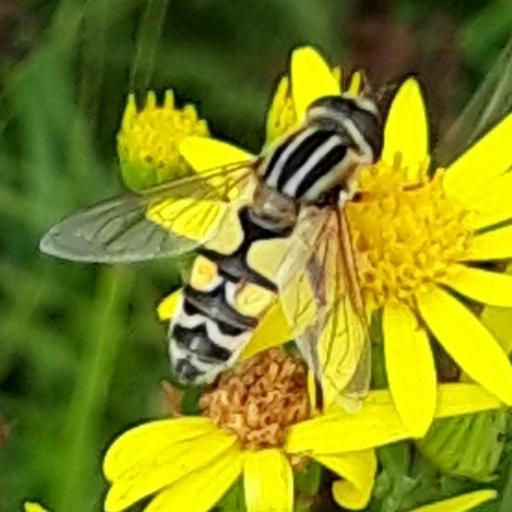
Meet the Large Tiger Hoverfly, a master of disguise often found patrolling sunlit gardens and damp meadows. While its bold yellow stripes might suggest a stinging wasp, this insect is a gentle pollinator and a dedicated "sun-lover" (its Greek name Helophilus literally means "sun-loving"). It is a favorite among wildlife photographers for its incredible ability to hang perfectly still in mid-air before darting away in the blink of an eye.
🔍 How to Identify
- 🐝 The "Tiger" Pattern: It features distinctive bright yellow and black longitudinal stripes on the thorax (the middle section) and bold, lemon-yellow "commas" on its dark abdomen.
- 🌞 The Yellow Face: A key ID feature for H. trivittatus is its face; unlike its close relatives, its face is entirely yellow or pale, lacking a dark central vertical stripe.
- 🪽 The Wings: It possesses clear, powerful wings that it uses to "hover" with precision. When resting, it often holds its wings swept back in a distinctive V-shape.
🌲 Habitat & Ecology
- 💧 Wetland Wonders: You are most likely to find them near ponds, marshes, or damp ditches. Their life cycle is deeply tied to water, as they prefer to stay near moisture to keep their cooling systems efficient.
- 🌼 Generalist Feeders: As adults, they are excellent pollinators. They are particularly fond of flat, open flowers like Daisies, Fennel, and Hogweed, which allow them to land easily and lap up nectar.
- 🐛 Underwater Snorkelers: Their larvae are known as "rat-tailed maggots." They live in stagnant, oxygen-poor water and use a long, telescopic breathing tube to reach the surface for air—a brilliant adaptation for survival in mucky environments.
⚠️ Safety & Toxicity
- 🛡️ Status: Completely harmless. They do not bite, and they do not have a stinger.
- 🎭 The Great Bluff: This fly survives by "Batesian mimicry." It mimics the colors and flight patterns of a wasp to scare off birds and other predators, even though it is entirely defenseless. It is safe to have around children and pets.
✨ Fun Fact
The Large Tiger Hoverfly is a sun-worshipper! If a cloud passes over the sun while they are feeding, they will often immediately stop moving or hide under a leaf, waiting for the direct sunlight to return before they resume their busy flight.
More Details








