Info
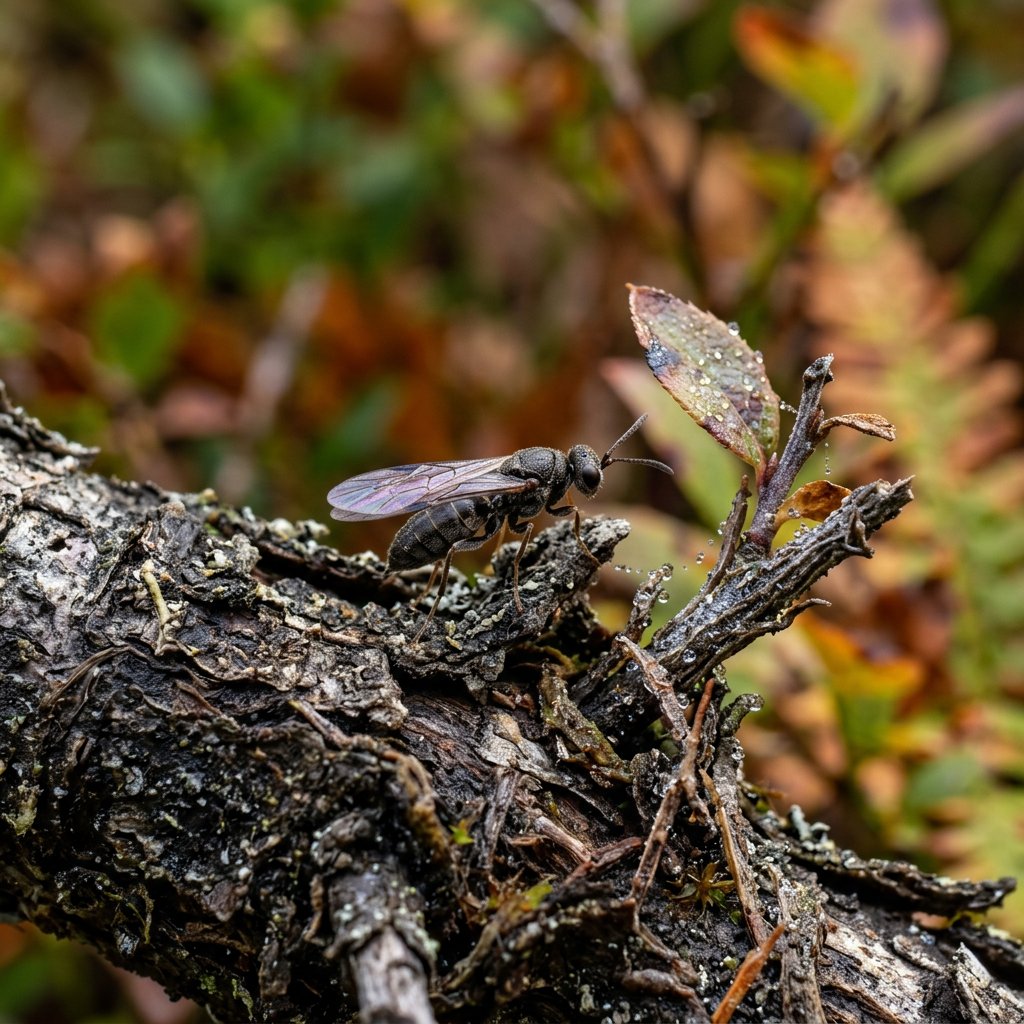
Often called the Blueberry Tip Gall Wasp, this tiny architect is more of a curiosity than a creature to fear. While many wasps trigger an immediate "flight" response, Hemadas nubilipennis is a miniature specialist that spends its life focused entirely on blueberry bushes. If you’ve ever noticed strange, lumpy swellings on the tips of your blueberry branches, you’ve likely seen the handiwork of this clever insect.
🔍 How to Identify
- 🪽 The Wings: True to its scientific name (nubilipennis means "cloudy wing"), this wasp features distinct dark, smoky patches on its otherwise clear wings.
- 🖤 The Body: They are incredibly small, usually only 2–3 millimeters long, with a shiny, metallic black or dark brown exoskeleton that glimmers in the sunlight.
- 🌱 The Galls: You are more likely to see their "houses" than the wasps themselves. Look for kidney-shaped, pithy swellings at the very tips of blueberry shoots that turn from green to reddish-brown as they age.
🌲 Habitat & Ecology
- 🫐 Blueberry Specialist: This wasp is host-specific, meaning it relies almost exclusively on plants in the Vaccinium genus (blueberries and huckleberries). It is a common resident of North American barrens and home gardens alike.
- 🏗️ Nursery Designer: The female wasp "stings" the soft tissue of a new blueberry shoot to lay her eggs. This process triggers the plant to grow an abnormal lump—the gall—which provides both a food source and a protective bunker for the developing larvae.
- ♻️ Ecosystem Role: While they are technically "pests" to the blueberry bush because they stunt terminal growth, they are also a food source for specialized parasitic wasps that hunt the larvae inside the galls.
⚠️ Safety & Toxicity
- ✅ Harmless to Humans: Despite being a wasp, Hemadas nubilipennis has no interest in humans. It does not possess a defensive stinger and cannot bite you.
- 🐾 Pet Safety: These insects are non-toxic and pose no threat to curious dogs or cats who might sniff around the bushes.
- 🌿 Plant Health: In a home garden, they are mostly a cosmetic issue. If you find the galls unsightly, you can simply prune them off in the spring before the adults emerge.
✨ Fun Fact
The galls created by this wasp act like a high-tech winter coat. The thick, woody walls of the gall insulate the larvae from sub-zero temperatures, allowing them to survive harsh northern winters while tucked safely inside the blueberry stem!
More Details








