Info
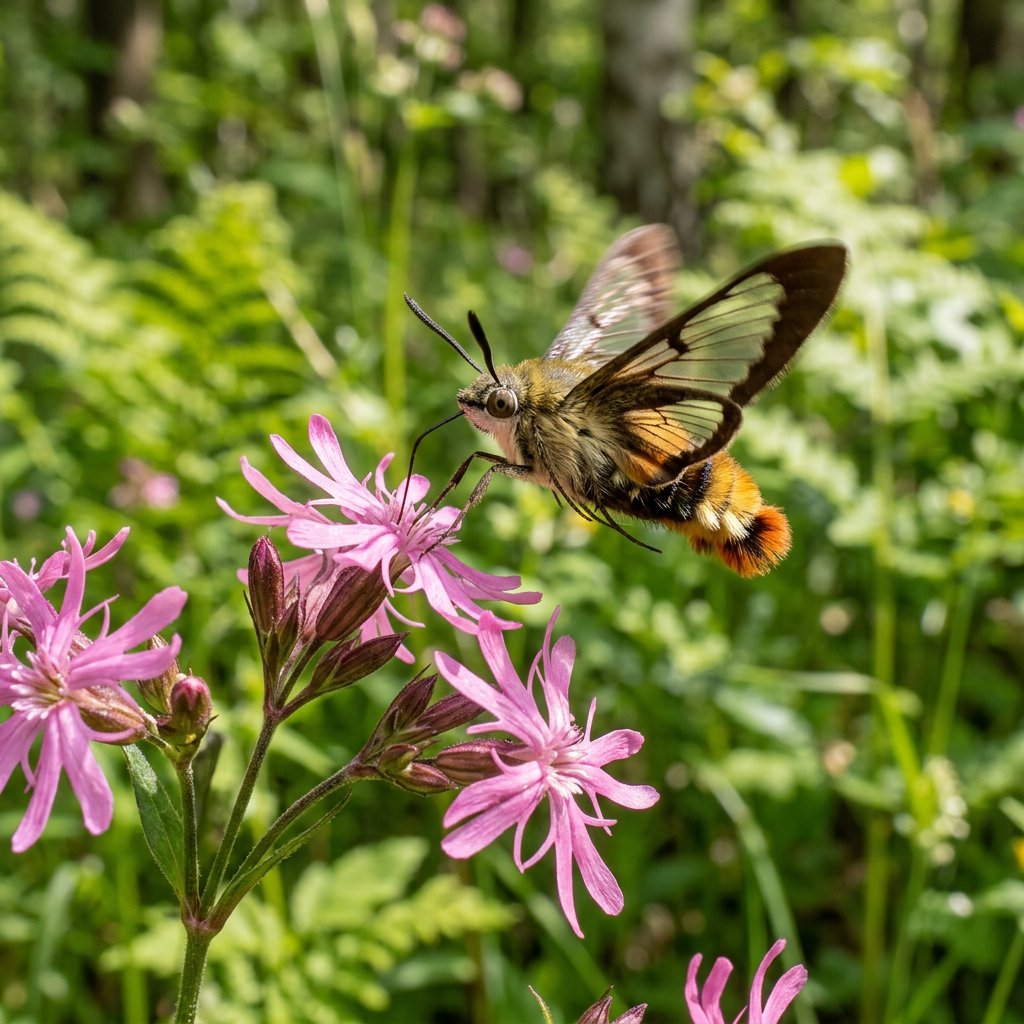
Often mistaken for a fuzzy bumblebee or even a tiny hummingbird, the Broad-bordered Bee Hawk-moth is one of nature’s most clever tricksters. This day-flying moth has evolved to look and act like a stinging insect to scare off hungry birds, but it is actually a gentle nectar-feeder. Watching one hover effortlessly in front of a flower is a highlight for any nature lover’s afternoon.
🔍 How to Identify
- 🦋 Transparent Wings: While most moths have dusty, scaled wings, this species has "clear" wings with a thick, dark-brown border along the edges.
- 🔴 Colorful Abdomen: It features a stout, furry body that is olive-green at the front, with a bold reddish-brown or dark band across the middle.
- 🚁 Hovering Habit: Unlike many insects that land on a flower to eat, this moth hovers mid-air with high-speed wing beats while using its long tongue (proboscis) to sip nectar.
🌲 Habitat & Ecology
- 🌸 Garden Guest: You will likely spot them in sunny woodland clearings, meadows, or gardens. They are particularly fond of purple and blue flowers like Bugle, Honeysuckle, and Aubrieta.
- 🍃 Honeysuckle Nursery: The female moth specifically seeks out Wild Honeysuckle or Snowberry plants to lay her eggs, as these are the only foods her green, "horned" caterpillars will eat.
- ☀️ Sun Seeker: While most moths are creatures of the night, the Broad-bordered Bee Hawk-moth is strictly diurnal, flying only during the warmest, brightest hours of the day.
⚠️ Safety & Toxicity
- ✅ Harmless Mimic: Despite its "bee-like" appearance and fuzzy tail that can look a bit like a stinger, it is completely incapable of stinging or biting.
- 🐶 Pet Safe: These moths are non-toxic and pose no threat to curious dogs or cats that might try to snap at them in the garden.
✨ Fun Fact
When the moth first emerges from its cocoon, its wings are actually fully covered in scales. However, during its very first flight, these scales vigorously vibrate off, leaving the wings transparent and completing its "bee" disguise in just a few seconds!
More Details








