Info
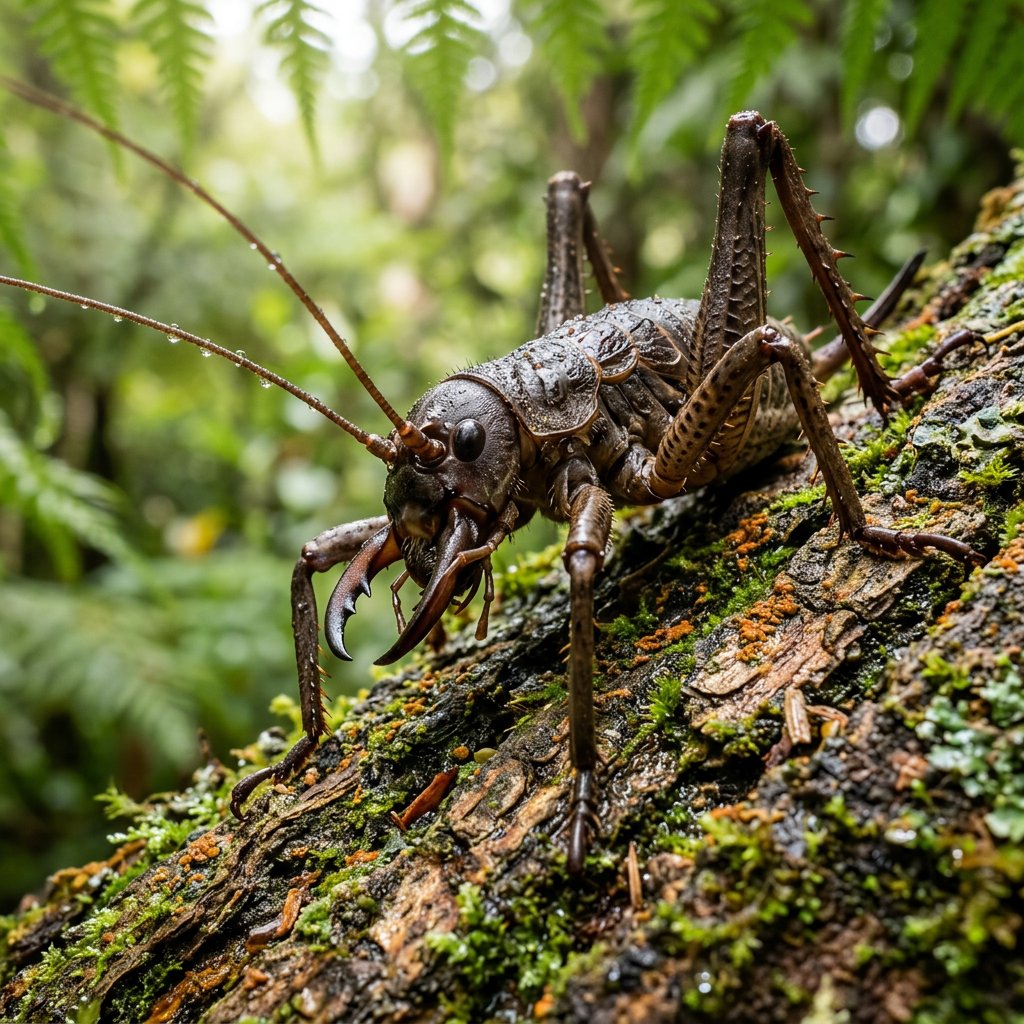
The Wellington Tree Weta (Hemideina crassidens) is a living fossil from New Zealand that looks like a prehistoric cricket on steroids. Often affectionately called the "God of Ugly Things," these flightless giants have remained largely unchanged since the time of the dinosaurs. While their spiny legs and massive jaws might look like something out of a creature feature, they are fascinating, gentle giants of the Southern Hemisphere.
🔍 How to Identify
- 🦵 Spiny Hind Legs: They possess large, powerful back legs lined with sharp-looking spines. When threatened, they raise these legs over their heads to ward off predators.
- 👹 Mighty Mandibles: Males are easily identified by their oversized heads and massive jaws, which they use like antlers to wrestle other males for control of their harems.
- 🛡️ Armored Body: Their robust, brownish-black exoskeleton is segmented and shiny, giving them the appearance of a small, walking tank.
🌲 Habitat & Ecology
- 🌙 Nocturnal Navigators: They are strictly nocturnal, emerging from their hiding spots at dusk to forage. During the day, they hide in "weta hotels"—naturally occurring hollows in trees or holes abandoned by beetle larvae.
- 🥗 Forest Clean-up Crew: As omnivores, they play a vital role in the ecosystem. They primarily eat leaves, flowers, and fruit, but they aren't above snacking on smaller insects, helping to balance the forest floor population.
⚠️ Safety & Toxicity
- 🦷 The Bite: While they are not venomous and possess no stinger, a Wellington Tree Weta can deliver a sharp, painful "pinch" with its mandibles if it feels cornered or is handled roughly.
- 🚫 The Kick: Their spiny legs can scratch human skin if they lash out. Generally, if you leave them alone or let them crawl onto your hand voluntarily, they are peaceful and curious.
✨ Fun Fact
The Wellington Tree Weta is a master of cryogenics! Because they live in alpine environments as well as forests, they have evolved a special protein in their blood that prevents ice crystals from damaging their cells, allowing them to literally freeze solid in winter and "thaw out" perfectly fine in the spring.
More Details








