Info
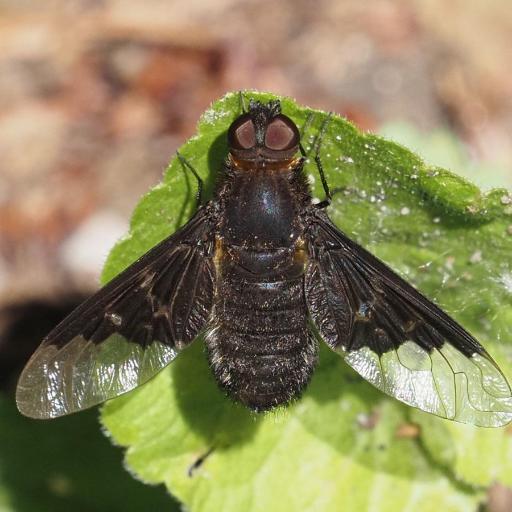
Meet the "Goth" of the fly world. The Hemipenthes morio, often called the Anthracine Bee Fly, looks as though it has been dipped halfway into a bottle of black ink. While its dark, shadowy appearance might seem a bit mysterious, this insect is a fascinating example of nature’s complex food web, acting as both a delicate pollinator and a ruthless biological strategist.
🔍 How to Identify
- 🖤 "Dipped" Wings: The most striking feature is the wing pattern. The front half (base) is a deep, opaque charcoal black, while the trailing half is perfectly transparent.
- 🧸 Stout, Fuzzy Body: It has a thick, hairy abdomen similar to a bumblebee, which helps it stay warm and carry pollen.
- 👁️ Large "Fly" Eyes: Unlike the bees it mimics, it has massive, wraparound compound eyes and very short, barely visible antennae.
🌲 Habitat & Ecology
- ☀️ Sun Seekers: You will typically find these flies in sunny, open areas like woodland clearings, meadows, and even sandy garden paths where they love to bask on warm stones.
- 🕵️ The Double Agent: While adults are peaceful nectar-drinkers, their larvae are "hyperparasitoids." This means they seek out the larvae of other parasitic wasps or flies. They are essentially a parasite of a parasite, playing a high-level role in balancing insect populations.
⚠️ Safety & Toxicity
- ✅ Safe to Handle: Despite its slightly "tough" or "stingy" appearance, the Anthracine Bee Fly is completely harmless. It has no stinger and does not bite humans or pets.
- 🕊️ Non-Aggressive: They are aerial acrobats and will usually dart away long before you can get close. They pose no threat to your garden plants; in fact, they help pollinate them!
✨ Fun Fact
The name Hemipenthes comes from the Greek words for "half" and "sorrow" or "mourning." This is a poetic reference to its wings, which look like they are draped in a black mourning veil.
More Details








