Info
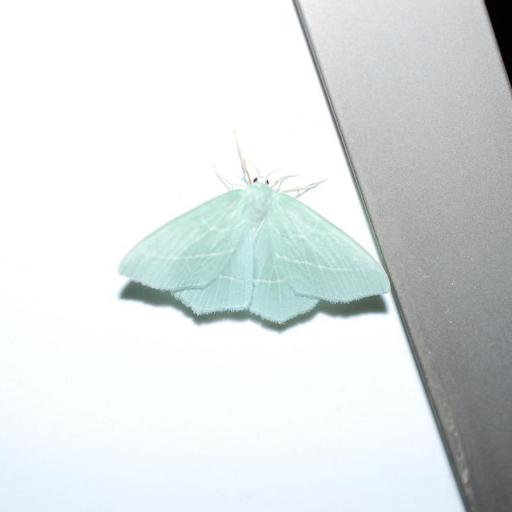
The Small Emerald (Hemistola chrysoprasaria) is a delicate, nocturnal gem often found fluttering near garden trellises and wild hedgerows. Resembling a fresh, tender leaf, this moth is a favorite among nature observers for its vibrant sea-foam hue and elegant, geometric posture. It is a specialized resident of chalky landscapes, where it spends its life dancing around its favorite climbing plants.
🔍 How to Identify
- 🦋 Lush Color: The wings are a distinctive pale emerald or mint green, though they are most vibrant when the moth has recently emerged from its cocoon.
- ⚪ Transverse Lines: Look for two thin, wavy white lines (cross-lines) on the forewings and a single matching line on the hindwings.
- 📐 Angular Wings: Unlike many rounded moths, the hindwings of the Small Emerald have a subtle but distinct "point" or angle in the middle of the outer edge.
- 🏁 Checkered Fringes: The very edges of the wings (the fringes) often feature a delicate white and green checkered pattern under close inspection.
🌲 Habitat & Ecology
- 🌿 The Clematis Specialist: This moth is a picky eater in its youth. The caterpillars (larvae) rely almost exclusively on Clematis vitalba, commonly known as "Old Man’s Beard," or garden varieties of Clematis.
- 🌙 Nighttime Navigator: As a nocturnal species, it spends its days perfectly camouflaged against green foliage. It becomes active at dusk and is frequently attracted to garden light traps or glowing windows.
- 🍂 Winter Survival: They spend the winter as small, brown caterpillars, blending in with the woody stems of their host plant until the spring warmth triggers their growth.
⚠️ Safety & Toxicity
- 🛡️ Harmless Visitor: The Small Emerald is completely safe. It does not bite, sting, or carry any toxins that could harm humans.
- 🐾 Pet & Child Friendly: This moth poses no threat to curious pets or children. It is a "friend" of the garden that contributes to the local food web without any defensive "scary" features.
✨ Fun Fact
The green pigment in the Small Emerald's wings is famously unstable. While a living moth looks like a bright green leaf, older individuals or museum specimens eventually fade into a dull, creamy white or yellowish color as the pigment breaks down over time.
More Details








