Info
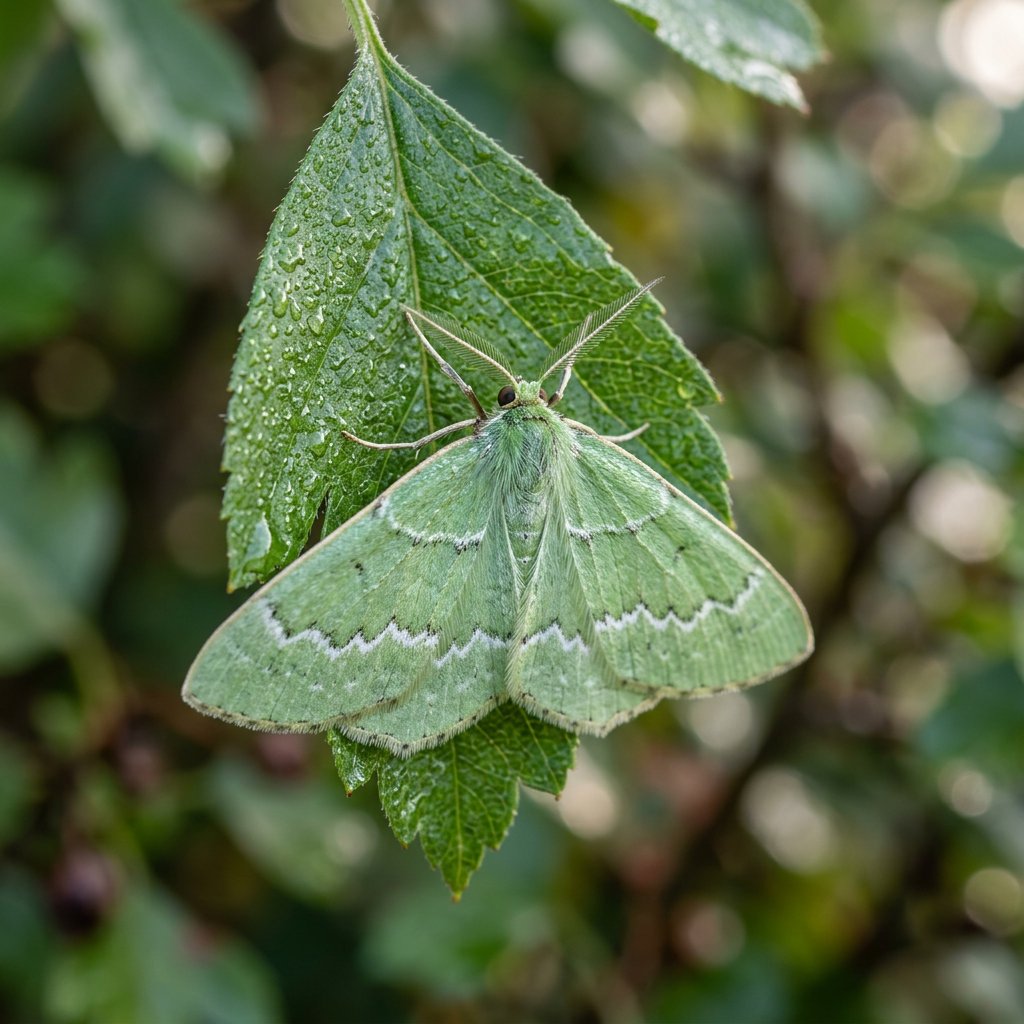
Often called the Common Emerald, this moth is a master of camouflage, blending perfectly with the foliage of midsummer nights. Unlike many drab, brown moths, it carries the vibrant hue of a fresh leaf, looking more like a delicate scrap of paper than a living creature. It is a gentle, beneficial presence in the garden, acting as a minor pollinator and a vital part of the local food web.
🔍 How to Identify
- 🟢 Emerald Wings: The wings are a soft, sea-foam green when the moth is young, providing perfect cover among deciduous leaves.
- 🏁 Checkered Fringes: The very edges of the wings feature a distinct alternating pattern of dark and light spots, resembling a tiny checkered border.
- 📏 Straight Cross-Lines: Look for two thin, pale white lines (fasciae) running across the wings; in this species, these lines are notably straight and crisp.
🌲 Habitat & Ecology
- 🌳 Hedgerow Resident: These moths thrive in gardens, woodland edges, and hedgerows. They are particularly fond of areas with Hawthorn, Blackthorn, or Oak trees, which serve as "nurseries" for their young.
- 🍂 Master of Disguise: The larvae (caterpillars) are incredible mimics. They have slender, brownish bodies and a stiff posture that makes them look exactly like a small, broken twig to any passing predator.
- 🌙 Night Owl: While they are strictly nocturnal and attracted to artificial lights, you might accidentally "flush" one out of a bush during the day, causing it to take a short, erratic flight to a new hiding spot.
⚠️ Safety & Toxicity
- ✅ Harmless Friend: The Common Emerald is completely safe. It possesses no sting, no bite, and no irritating hairs.
- 🐶 Pet Neutral: They are non-toxic to cats and dogs. If a curious pet manages to catch one, there is no risk of poisoning or chemical irritation.
✨ Fun Fact
The Common Emerald is a bit of a "vanishing beauty." Its green pigment is chemically unstable; as the moth ages or is exposed to bright sunlight, the vibrant emerald fades away, eventually turning the moth a dull yellowish-white or cream color.
More Details








