Info
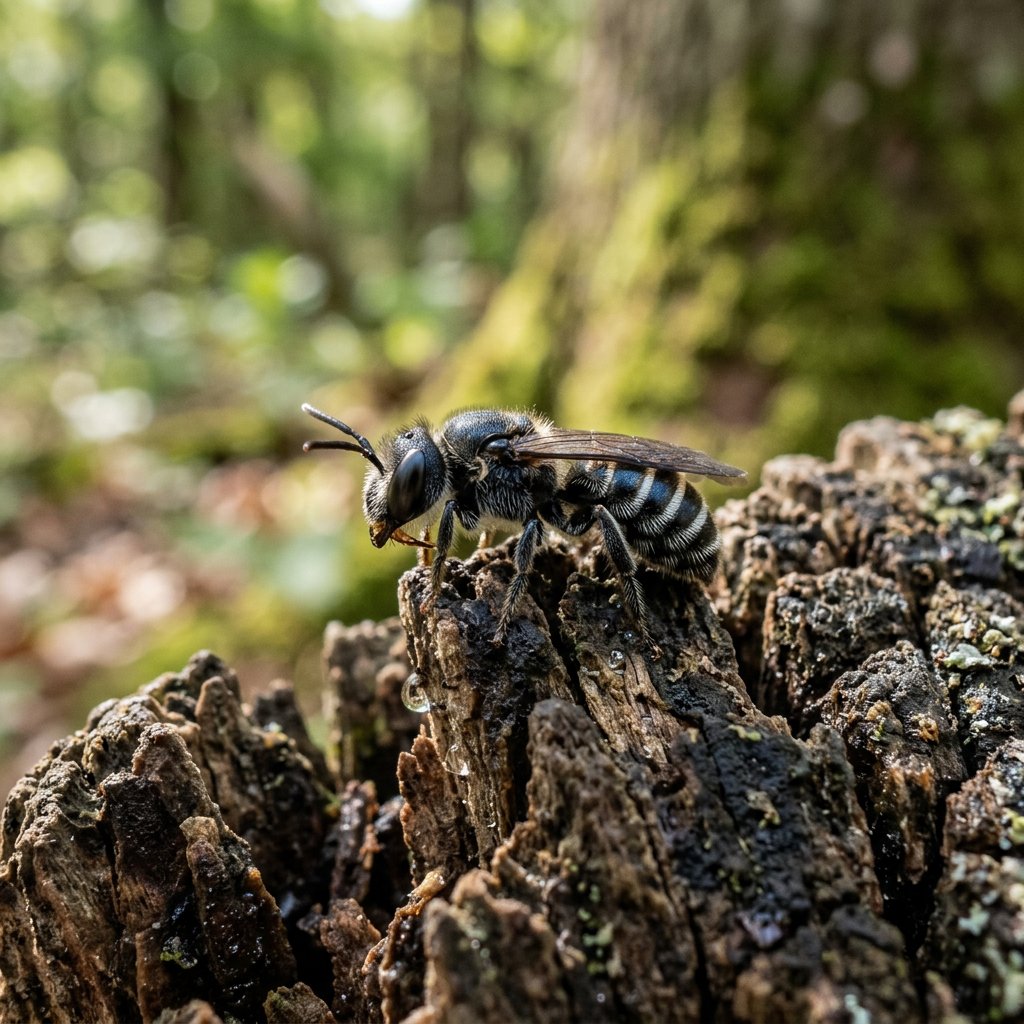
Meet the Large-headed Resin Bee, a tiny but incredibly hardworking architect of the insect world. Often found inspecting old logs or garden "bee hotels," these solitary bees are the ultimate recyclers, turning old beetle holes into cozy nurseries. They are widely beloved by gardeners for their specialized pollination skills and their fascinating "construction" habits using sticky tree sap.
🔍 How to Identify
- 🕳️ Pitted Texture: Their bodies have a unique "matte" look because they are covered in tiny, deep punctures, making them look a bit like a dark, metallic golf ball under a magnifying glass.
- ⚪ Abdominal Bands: They feature very narrow, crisp white bands of hair on their dark, cylindrical abdomens, which often tuck slightly downward at the tip.
- 🍯 Belly Brushes: Unlike honeybees that carry pollen on their legs, the female Resin Bee has a "scopa" (pollen-carrying hairs) on the underside of her abdomen, which she stuffs full of bright yellow pollen.
🌲 Habitat & Ecology
- 🪵 The Apartment Hunter: True to its Latin name (truncorum refers to tree trunks), this bee doesn't dig its own nest. Instead, it hunts for pre-existing tunnels left behind by wood-boring beetles in dead trees, fence posts, or logs.
- 🌼 Asteraceae Specialist: They are "oligolectic," meaning they are very picky eaters. They almost exclusively visit yellow "daisy-style" flowers, such as Ragwort, Fleabane, and Hawkweeds, to gather provisions for their young.
- 🌲 Sticky Architecture: They earn the name "Resin Bee" by collecting sticky sap from pine or other conifers. They use this resin as a waterproof glue to build internal walls and a hard, protective front door for their nest.
⚠️ Safety & Toxicity
- 🐝 Status: A gentle garden friend.
- 🛡️ Details: Because they are solitary bees, they have no hive or queen to defend, making them extremely non-aggressive. They will only sting if physically squeezed or stepped on, and even then, their sting is significantly milder than that of a wasp or honeybee. They are perfectly safe to have around children and pets.
✨ Fun Fact
The Large-headed Resin Bee is a master of "bio-concrete." When sealing their nests, they often mix tiny grains of sand or grit into the wet tree resin. Once it dries, this mixture creates a rock-hard barrier that is nearly impossible for parasitic wasps to penetrate!
More Details








