Info
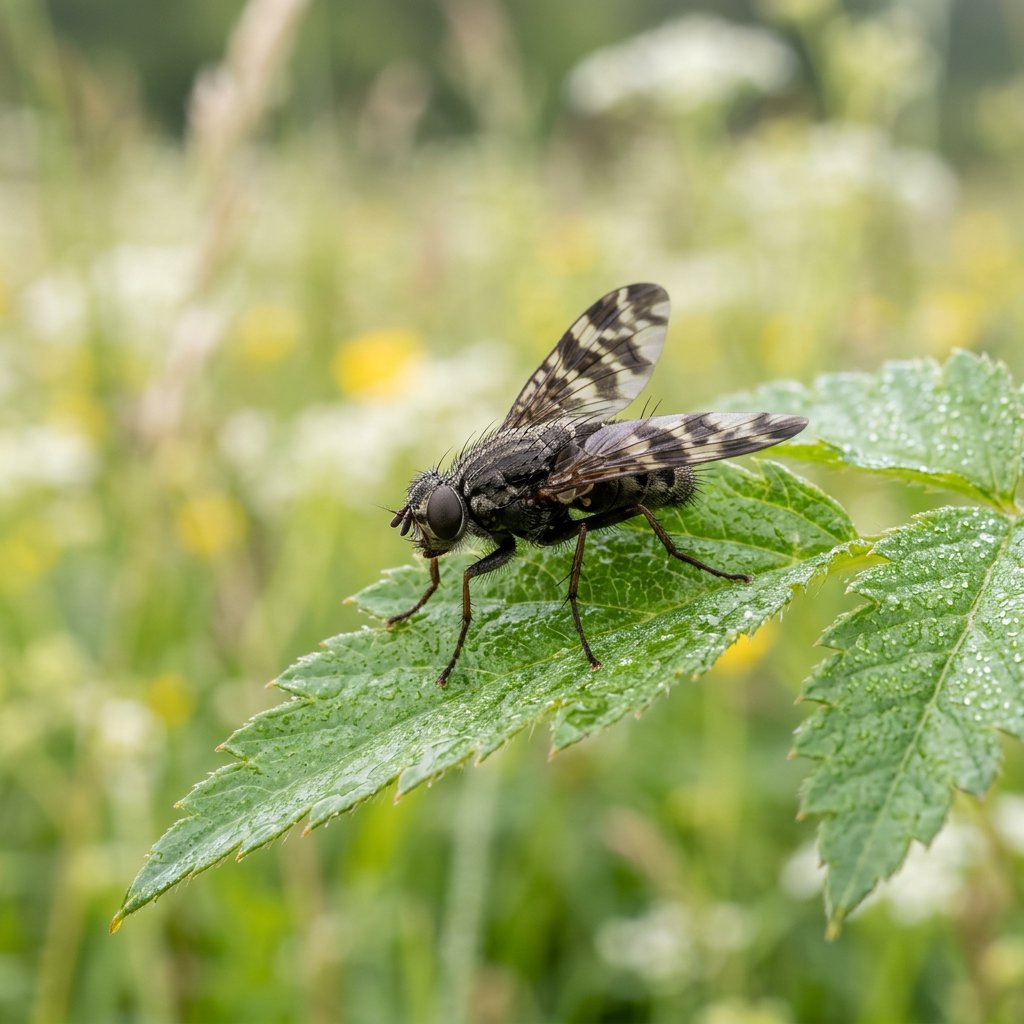
Often called "Picture-winged flies," members of the Herina genus are small, elegant insects that look as if their wings were detailed by a miniature painter. Commonly found in meadows, wetlands, and gardens across Europe and North America, they are the "dancers" of the fly world. While they might look like common houseflies at a glance, their intricate patterns and rhythmic movements set them apart as sophisticated garden residents.
🔍 How to Identify
- 🪟 Wing Patterns: Their most striking feature—transparent wings decorated with distinct dark brown or black bands, spots, or "pictures" that vary by species.
- 🖤 Body Appearance: Typically small (about 3–5mm) with a sleek, glossy black or dark metallic body that provides a sharp contrast to their patterned wings.
- 💃 Wing Flicking: They are famous for a unique behavior where they rhythmically wave or "flick" their wings while walking, which helps them communicate with other flies.
🌲 Habitat & Ecology
- 🌾 Meadow Dwellers: These flies love damp environments. You’ll often find them sunning themselves on the leaves of tall grasses, nettles, or near the edges of ponds and streams.
- ♻️ Soil Recyclers: While the adults are often seen on flowers or foliage, their larvae live underground or in decaying vegetation, playing a quiet but vital role in breaking down organic matter into nutrient-rich soil.
⚠️ Safety & Toxicity
- 🛡️ Non-Threatening: Herina flies are completely harmless to humans. They do not possess a stinger, and they are not known to bite.
- 🐾 Pet Safe: They carry no known toxins or diseases that pose a risk to curious cats or dogs. They are simply part of the natural backyard food web.
✨ Fun Fact
The wing-flicking "dance" of the Herina fly is actually a complex language! Scientists believe these movements are used as a visual "handshake" to identify members of their own species and to establish territory without having to fight.
More Details








