Info
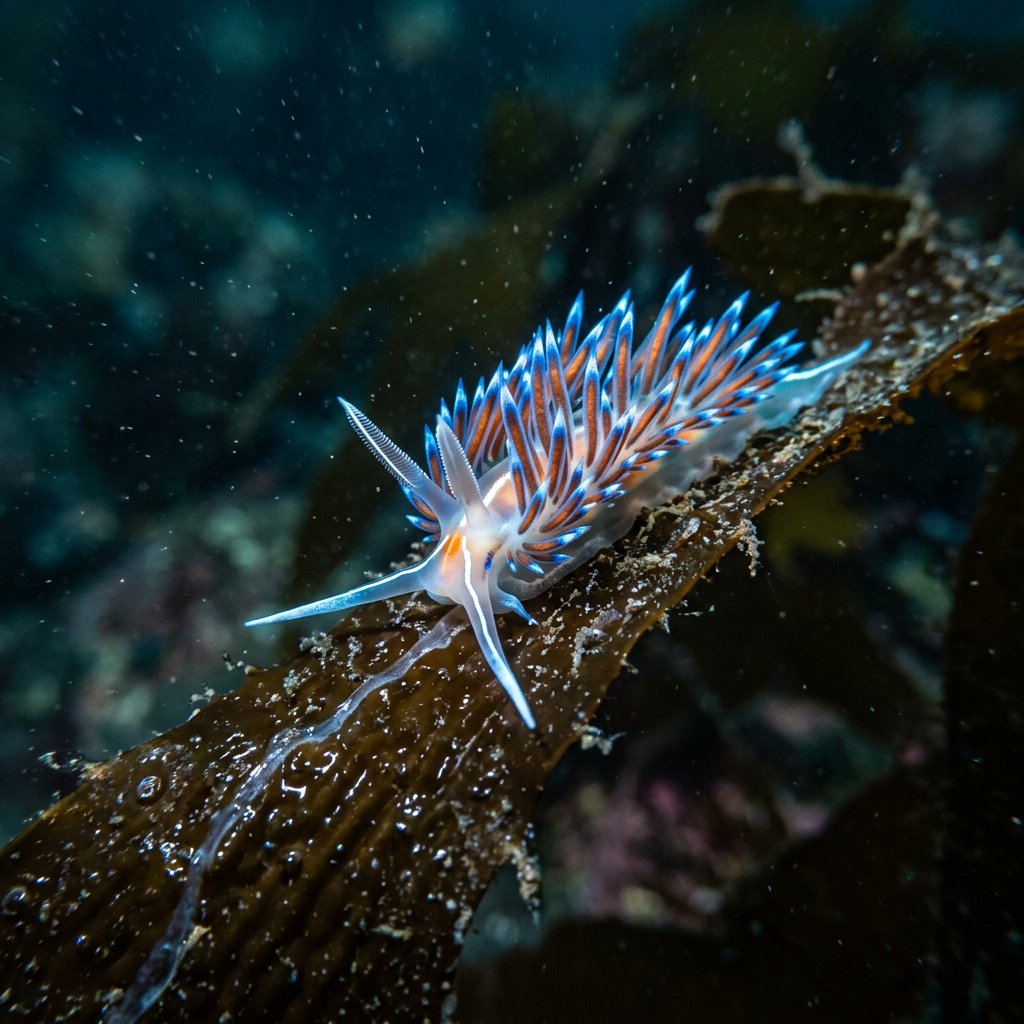
While it might look like a colorful, multi-legged alien bug, Hermissenda crassicornis is actually a Thick-horned Nudibranch, a type of shell-less marine snail. Often called the "Opalescent Nudibranch," it is one of the most vibrant and aggressive hunters found in Pacific tide pools. This "punk rock" slug of the sea is famous for its neon colors and its fiery, competitive personality.
🔍 How to Identify
- 🔥 The "Mohawk" (Cerata): Its back is covered in numerous long, finger-like plumes called cerata. These are usually translucent with white tips and contain a core of orange or brown digestive glands.
- ⚡ Neon Racing Stripes: Look for a distinctive glowing blue line running down the center of its back, often flanked by bright orange or gold stripes.
- 🐂 Thick Horns: At the front of the head, it sports two prominent, "thick" sensory stalks called rhinophores, which it uses to "smell" chemicals in the water to find food or mates.
🌊 Habitat & Ecology
- 🐚 Tide Pool Prowler: You won’t find this in a garden! It lives along the Pacific Coast of North America, from Alaska to Mexico. It is frequently seen by beachgoers in shallow tide pools, on dock pilings, or clinging to kelp forests.
- ⚔️ Aggressive Hunter: Don't let the beauty fool you; this nudibranch is a fierce predator. It eats hydroids, sea anemones, and bryozoans. Interestingly, it is highly territorial and will "fight" or even cannibalize other nudibranchs if they get too close.
⚠️ Safety & Toxicity
- 🛡️ Status: Generally safe for humans to observe, but "armed" with stolen weapons.
- 🪼 Stolen Stings: This creature has a fascinating defense mechanism: it eats stinging anemones and "steals" their undischarged stinging cells (nematocysts), moving them into its own cerata for protection. While it likely won't hurt a human finger, it can provide a nasty surprise to a hungry fish!
✨ Fun Fact
Because this nudibranch has a relatively simple nervous system with large, easily identifiable neurons, it has been a superstar in scientific laboratories for decades, helping researchers understand the basic biological mechanics of learning and memory.
More Details








