Info
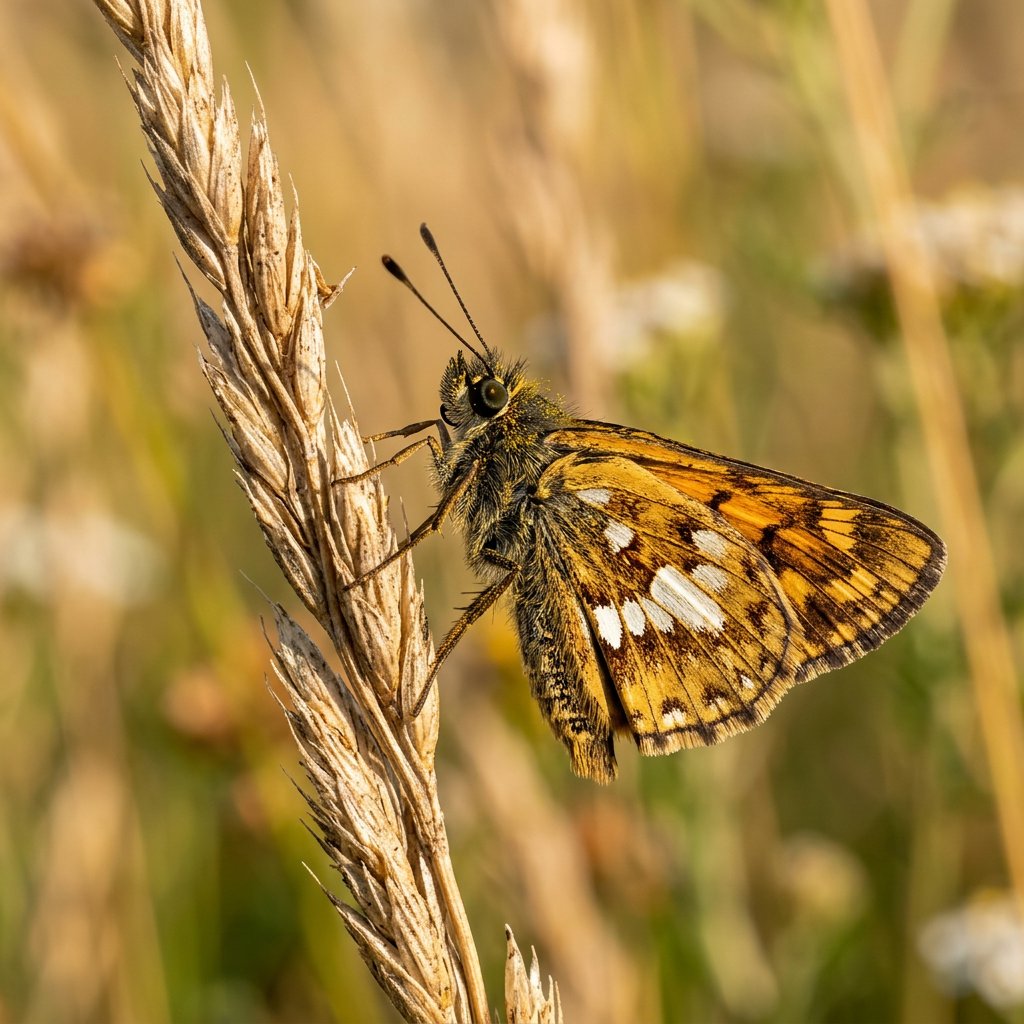
Known as the Silver-spotted Skipper, this little butterfly is a golden-brown flash of energy often found darting across sun-drenched hillsides. While its thick, fuzzy body and hooked antennae make many people mistake it for a moth, it is a true butterfly that thrives in the heat of midsummer. In many regions, it is considered a symbol of high-quality, untouched chalk grasslands.
🔍 How to Identify
- 🦋 The "Jet" Profile: Unlike most butterflies that fold their wings flat or shut, the Skipper often holds its forewings upright and its hindwings flat, resembling a tiny fighter jet.
- ✨ Signature Silver: The underside of the hindwing features distinct, bright pearly-white or silver spots arranged in a "comma" or "C" shape, which gives the species its name.
- 🎨 Rich Coloring: The upper wings are a deep, warm orange-brown with jagged dark borders and pale golden rectangular patches near the tips.
🌲 Habitat & Ecology
- ☀️ Sun Seeker: These insects are "thermal specialists," meaning they are rarely seen on cloudy days. They require short, sparse vegetation where the soil can bake in the sun, providing them the warmth they need to fly.
- 🌾 The Sheep's Fescue Connection: The female is very picky about where she lays her eggs. She searches for tiny clumps of Sheep’s Fescue grass growing in bare or rocky ground, ensuring her larvae have the perfect microclimate to survive the winter.
- 🌸 High-Energy Diet: Because they fly so fast, they have a high metabolism. You will often find them refueling on purple flowers like Thistles, Knapweed, and Wild Marjoram.
⚠️ Safety & Toxicity
- ✅ Harmless Friend: The Silver-spotted Skipper is completely harmless to humans. It does not bite, sting, or carry any diseases.
- 🐕 Pet & Garden Safe: They are non-toxic to dogs and cats. Having them in your garden is a sign of a healthy, chemical-free ecosystem.
✨ Fun Fact
The name "Skipper" describes their unique flight style. Instead of the slow, graceful flapping seen in Garden Whites or Swallowtails, Hesperia comma zips from flower to flower with such incredible speed and erratic "skipping" movements that it can be nearly impossible for a predator—or a photographer—to track!
More Details








