Info
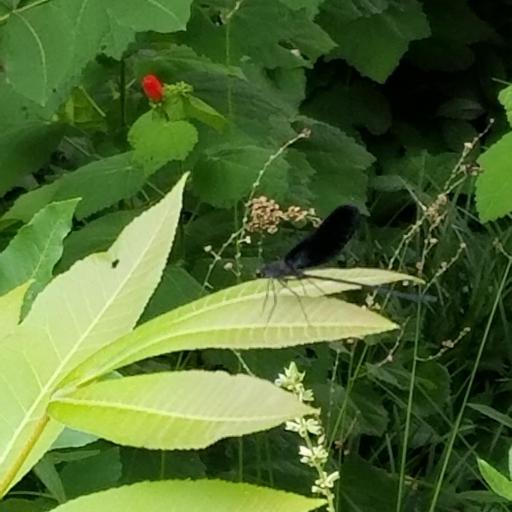
Often referred to as the Smoky Rubyspot, this damselfly looks like a piece of gothic stained glass dancing over the water. With its dark, moody wings and a flash of brilliant crimson, it is one of the most sophisticated-looking insects in the river ecosystem. While its "smoky" appearance might seem mysterious or intimidating to some, it is a graceful "friend" that spends its day keeping the local gnat and mosquito populations in check.
🔍 How to Identify
- 🎨 The Rubyspot: Males possess a signature deep-red patch at the base of their wings, which looks like a drop of wet paint against the darker membrane.
- 🖤 Smoky Wings: Unlike many clear-winged damselflies, this species has wings that fade into a dark, brownish-black "smoke" toward the tips, especially in older males.
- 🎋 Thread-like Body: They have an incredibly slender, metallic-bronze or black abdomen that stays perfectly still while they perch on riverside vegetation.
- 🧚 Resting Posture: When at rest, they typically hold their wings together vertically above their body, a classic trait that distinguishes damselflies from dragonflies.
🌲 Habitat & Ecology
- 🌊 Moving Water Lovers: You won't usually find these in a backyard pond. They are specialists of flowing water, preferring the sun-dappled banks of rivers and medium-sized streams.
- ⚔️ Perch-and-Pounce: They are "sit-and-wait" predators. A male will claim a specific leaf or twig as his kingdom, darting out with lightning speed to snatch midges and small flies out of the air before returning to the same spot.
- 🌿 Seasonal Shift: They are most active from late spring through autumn, and their wing coloration can actually vary slightly depending on the temperature when they emerge.
⚠️ Safety & Toxicity
- ✅ Harmless Observer: The Smoky Rubyspot is completely non-toxic and lacks any form of stinger. They are safe to observe closely and pose no threat to humans or pets.
- 👄 Biting Facts: While they have mandibles for eating other bugs, they are far too small to bite a person. They are beneficial garden guests because they eat the insects that do bite us.
✨ Fun Fact
The "smokiness" of their wings isn't just for show—it's believed to help them blend into the shadows of riverbank foliage, making them nearly invisible to predators like birds until they take flight!
More Details








