Info
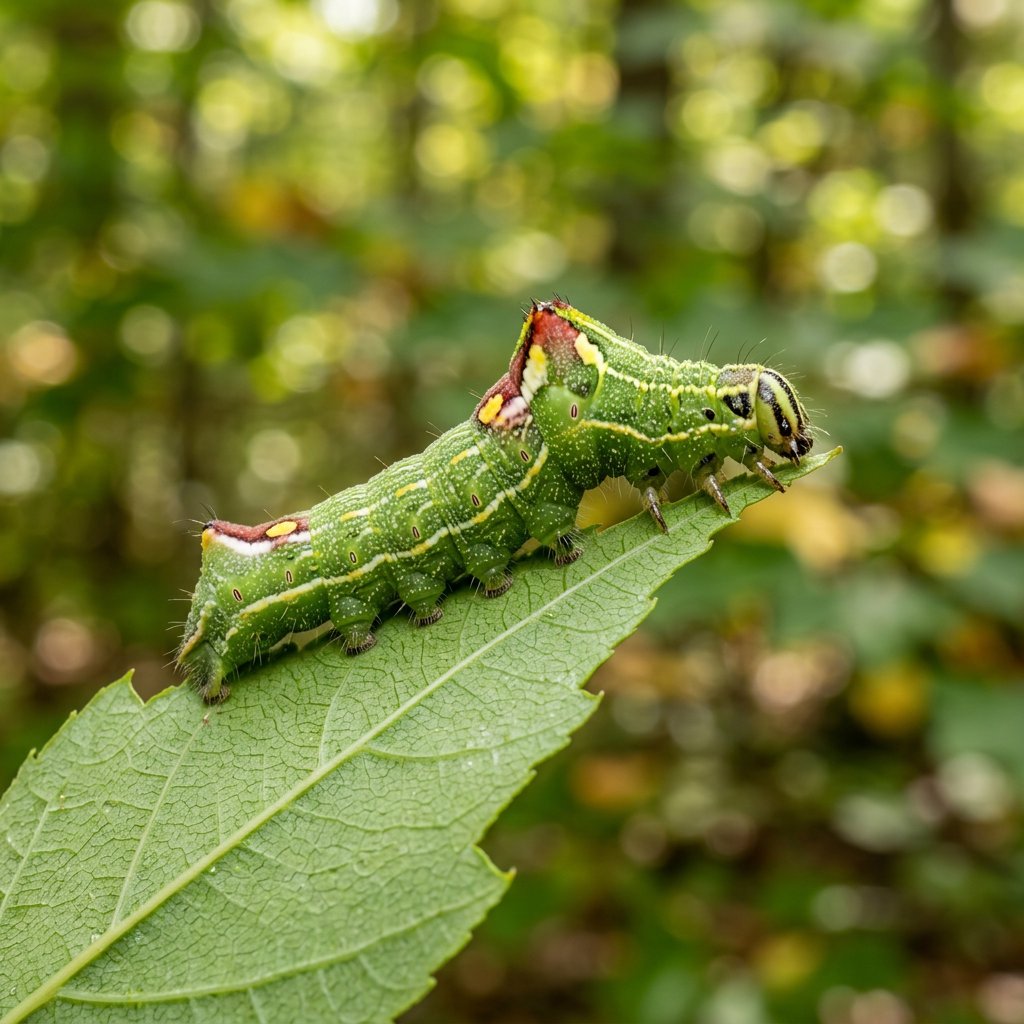
The Heterocampa genus, commonly known as the Prominent Moths, consists of master mimics that spend their lives blending perfectly into the woodlands of North America. Often called "Saddled Prominents" in their larval stage, these insects are famous for their remarkable transformations—starting as bizarre, multi-colored caterpillars and ending as sophisticated, lichen-patterned moths. While they may appear "scary" or alien as caterpillars, they are generally peaceful forest dwellers that play a vital role in the woodland ecosystem.
🔍 How to Identify
- 🦋 The Wings: Adult moths feature mottled patterns of grey, olive green, and brown. When resting on a tree trunk, their wings mimic the texture of lichen or tree bark so perfectly they become nearly invisible.
- 🐛 The "Saddle": The caterpillars are often more recognizable than the adults, frequently sporting a bright "saddle" mark on their backs in shades of purple, red, or yellow against a green body.
- 📐 Angular Shape: Many species in this genus have caterpillars with strange, angular humps or "horns" on their segments, which help break up their silhouette against the veins of a leaf.
🌲 Habitat & Ecology
- 🍂 Hardwood Lovers: You will most likely find these insects in deciduous forests or suburban backyards with plenty of Maple, Beech, Oak, and Apple trees, which serve as the primary food source for the larvae.
- 🌙 Night Owls: As adults, they are strictly nocturnal. If you see a grey, furry-looking moth resting near your porch light in the morning, it’s likely a Prominent waiting for the sun to go down.
- 🔄 Forest Recyclers: While they eat leaves, they rarely cause permanent damage to healthy trees. Instead, they serve as a massive food source for migratory birds and predatory wasps.
⚠️ Safety & Toxicity
- 🟢 Harmless Neighbors: Heterocampa moths and caterpillars do not possess stingers and are not considered venomous. They are safe to observe and do not bite.
- ✋ Skin Sensitivity: While they lack "stinging hairs" (unlike some other moth families), some people with very sensitive skin may experience mild irritation if they handle the caterpillars excessively. It is always best to "look but don't touch."
✨ Fun Fact
The name "Prominent" comes from a peculiar habit of the adult moth: when at rest, many species have a small tuft of scales on the edge of their forewings that pokes upward, creating a "prominent" bump on their back that mimics a broken twig!
More Details








