Info
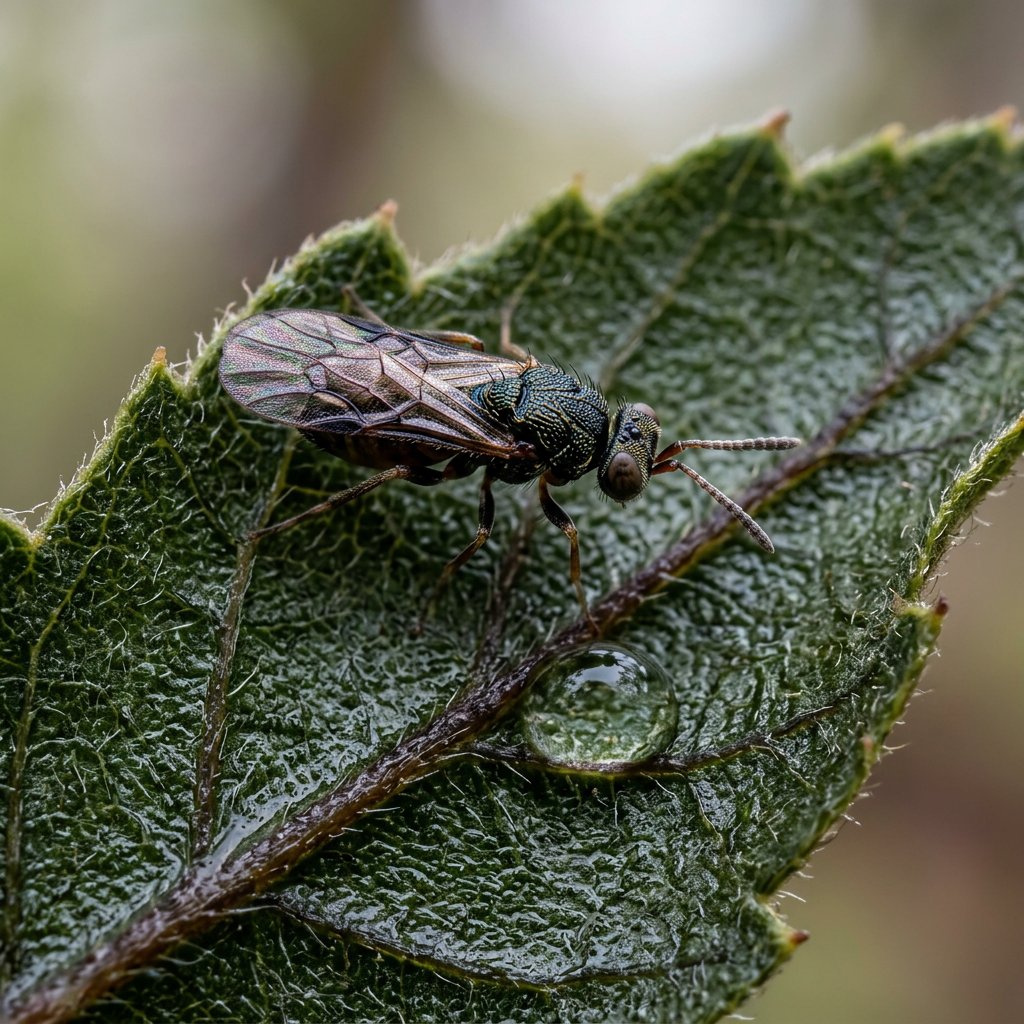
Often called the "Turban Gall Wasp" or "Oak Architect," members of the Heteroecus genus are the master engineers of the insect world. These tiny wasps don't just live on oak trees; they manipulate the tree's own DNA to grow elaborate, mushroom-shaped nurseries for their young. Found predominantly in the western United States, they are more famous for their bizarre "buildings" than for their actual physical appearance.
🔍 How to Identify
- 🧚 The Wasp: The adult is a minute, non-threatening wasp, usually dark brown or black and only a few millimeters long. You are unlikely to see the insect itself without a magnifying glass.
- 🍄 The Gall: Look for small, distinctive growths on the underside of oak leaves. These often look like tiny, fleshy turbans, star-shaped mushrooms, or even little pinched dumplings.
- 🍂 Color Palette: The galls change color as they mature, starting as a creamy white or pinkish hue and hardening into a woody, tan "nut" once the larvae have pupated.
🌲 Habitat & Ecology
- 🌳 Oak Specialists: Heteroecus wasps are highly specialized. They almost exclusively inhabit the Quercus genus, specifically favoriting evergreen oaks like the Canyon Live Oak.
- 🏗️ Induced Growth: The female wasp injects a chemical cocktail along with her eggs into the leaf tissue. This "tricks" the tree into growing a protective structure (the gall) that provides the larvae with both shelter and high-protein food.
- 🔄 Seasonal Cycle: In late summer or fall, the mature wasps chew a tiny exit hole in the gall and fly away, leaving the empty "turban" attached to the leaf as a hollow shell.
⚠️ Safety & Toxicity
- ✅ Harmless to Humans: Despite being "wasps," Heteroecus species do not possess a stinger meant for defense. They cannot sting humans or pets.
- 🌿 Tree Health: While a heavy infestation of galls might look alarming or cause some leaves to drop early, they rarely cause permanent damage to a healthy, mature oak tree. They are a natural part of the oak's ecosystem.
✨ Fun Fact
The galls produced by these wasps are so rich in tannins that, historically, similar oak galls were used to create "Iron Gall Ink"—the very same ink used to write the Magna Carta and the United States Constitution!
More Details








