Info
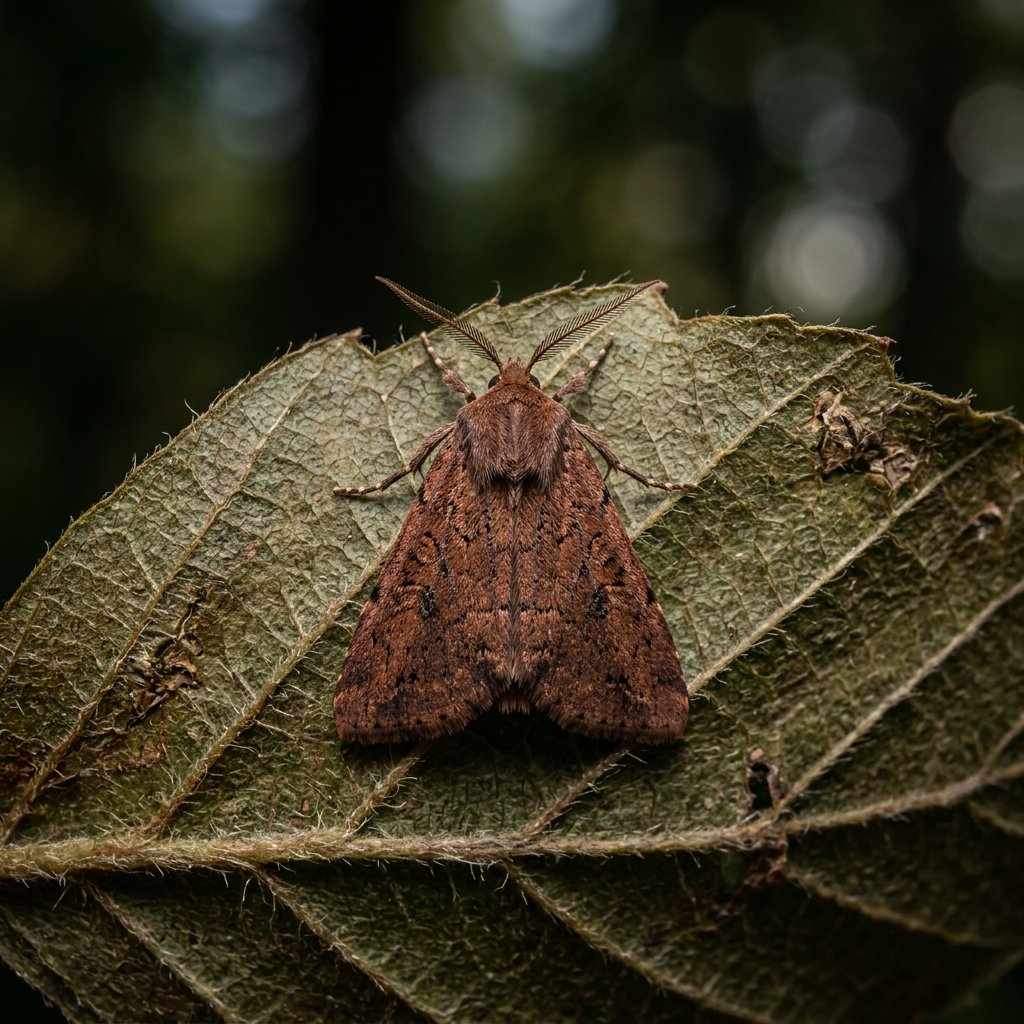
Known as the Triangle Moth, this subtle creature is a master of architectural camouflage. It belongs to the "Slug Moth" family, a group famous for caterpillars that lack prolegs and glide across leaves like tiny mollusks. While the adult moth looks like a discarded piece of bark or a triangular scale, its life cycle is one of the most peculiar in the insect world.
🔍 How to Identify
- 📐 Wing Shape: The wings are notably short, broad, and held in a steep, tent-like triangle over the body when at rest.
- 🤎 Coloration: A muted, silky grayish-brown or ochre. It lacks bold patterns, relying on its "dead leaf" color to vanish against tree trunks.
- 🐌 The Larva: The caterpillar is the most distinct phase—it is lime-green, flattened, and lacks visible legs, looking exactly like a small, moving blister on a leaf.
🌲 Habitat & Ecology
- 🌳 Woodland Preference: This moth is a specialist of ancient deciduous forests, showing a strong preference for Oak, Beech, and Hornbeam trees.
- 🌙 Night Life: Adults are strictly nocturnal and are most active during the mid-summer months. They are often drawn to light traps set by nature enthusiasts.
- 🍃 Feeding Habits: The "slug" larvae feed on the underside of leaves. Instead of chewing holes, they often "skeletonize" the leaf, eating the soft tissue and leaving the veins behind.
⚠️ Safety & Toxicity
- 🤲 Status: Generally safe, but "look but don't touch" is the best policy for the larvae.
- 🩹 Details: Many moths in the Limacodidae family have caterpillars with stinging hairs. While Heterogenea asella is not as potent as its tropical cousins, the larvae can still cause mild skin irritation or a prickly sensation for people with sensitive skin. The adult moths are entirely harmless.
✨ Fun Fact
The species name asella is derived from the Latin word for "little donkey." This is thought to be a whimsical reference to the sturdy, slightly humped shape of the moth's thorax when viewed from the side.
More Details








