Info
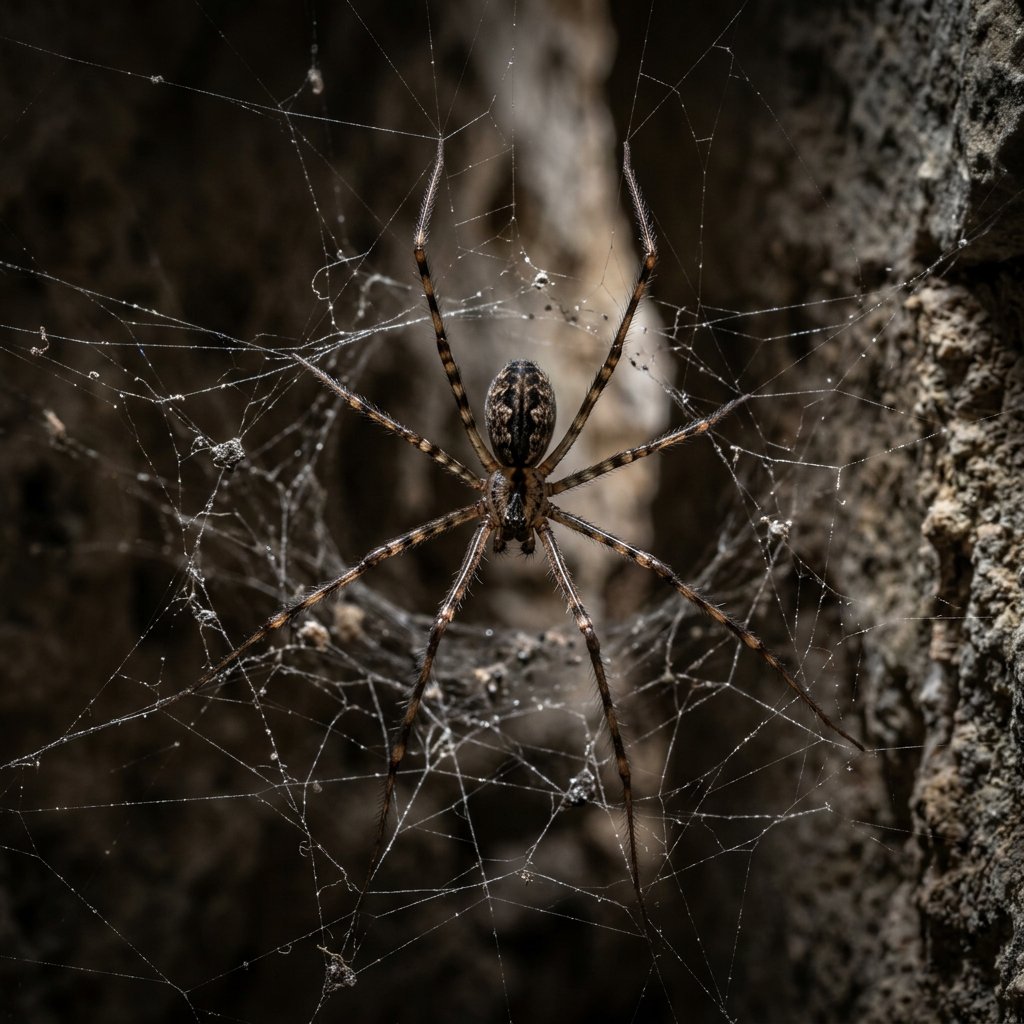
Often referred to as the Marbled Cellar Spider, this elegant, long-legged architect is a frequent guest in homes around the world. Though it might look like a delicate piece of lint caught in a breeze, it is actually a highly efficient predator of household pests. Originally from the Mediterranean, it has traveled the globe, earning a reputation as a quiet, harmless "roommate" that keeps the fly population in check.
🔍 How to Identify
- 🎨 Marbled Pattern: Unlike its plain-colored relatives, its abdomen features a distinct mottled or "marbled" pattern of gray, tan, and cream splotches.
- 🕷️ Extreme Proportions: It possesses incredibly long, thin legs that can be up to five times the length of its small, cylindrical body.
- 🕸️ Messy Webs: They don't build the classic "spiral" web; instead, they create irregular, tangled "cobwebs" in dark corners or ceilings.
🏠 Behavior & Habitat
- 📳 The Whirling Defense: When threatened, this spider performs a unique trick: it vibrates its body so rapidly in its web that it becomes a blur, making it nearly impossible for a predator to strike.
- 🦟 Pest Control Specialist: They are "friend" bugs through and through. They dine on mosquitoes, gnats, and even other spiders much larger than themselves, such as the formidable hobo spider.
- 📦 Indoor Preference: While they can survive outdoors in warm climates, they prefer the stable environment of garages, basements, and closets where the air is still and dry.
⚠️ Safety & Toxicity
- 🛡️ Non-Threatening: Despite the urban legend that "daddy long-legs" are the most venomous spiders in the world, the Marbled Cellar Spider is harmless to humans.
- 🤏 Weak Fangs: Their fangs are tiny and generally incapable of piercing human skin. Even if they did, their venom is extremely mild and poses no risk to people or pets.
- 🐈 Pet Safety: They are safe to have around curious cats and dogs, though a playful paw might accidentally destroy their hard-earned web.
✨ Fun Fact
The Marbled Cellar Spider is a bit of a "hoarder"—unlike many other spider species that recycle their silk by eating it, this spider simply keeps building on top of its old web, which is how those giant, dusty "cobwebs" eventually form!
More Details








