Info
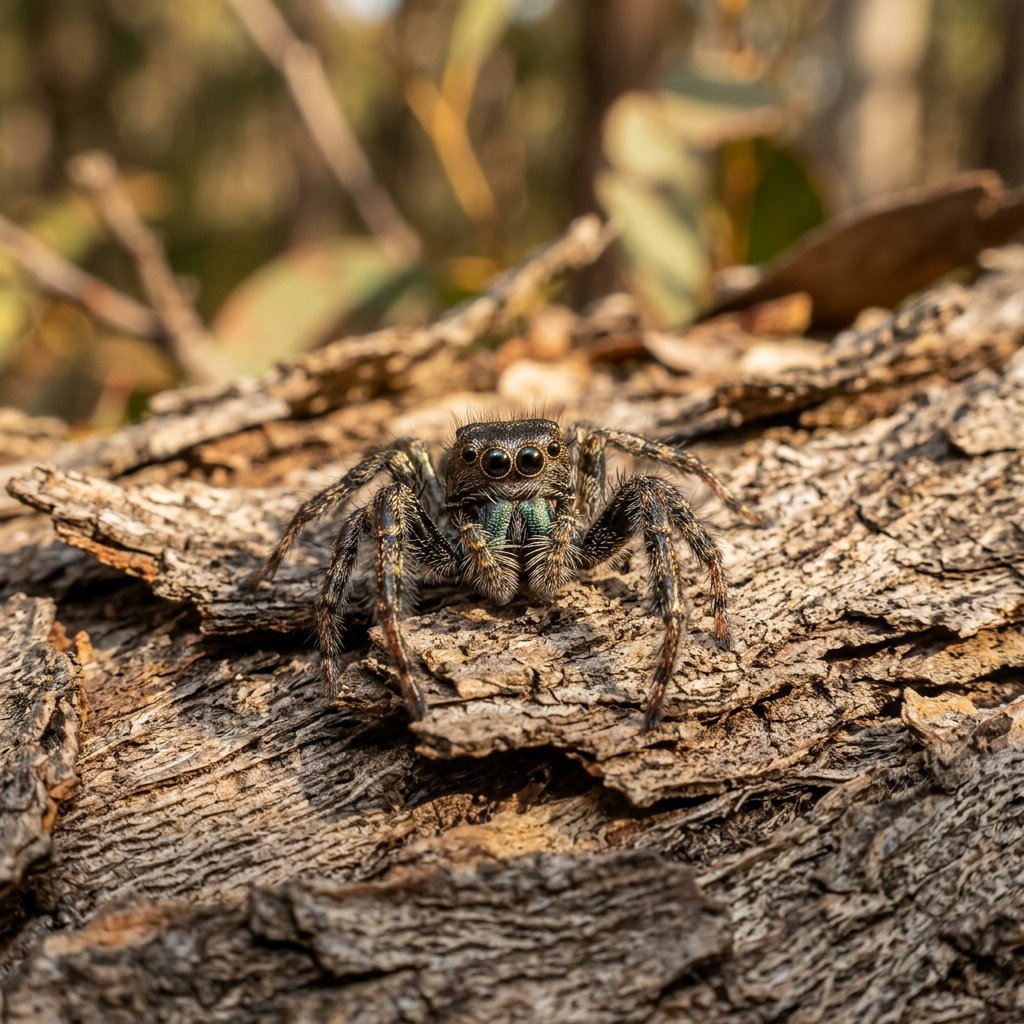
Meet the "Flat Jumping Spider," a tiny architectural marvel designed for the tightest of spaces. Unlike their round, fuzzy jumping spider cousins, Holoplatys species look as though they’ve been carefully pressed flat by a heavy book. Often found patrolling the trunks of Eucalyptus trees in Australia, these clever arachnids are the ultimate masters of hide-and-seek in the bark.
🔍 How to Identify
- 🪟 The "Pancake" Body: A remarkably compressed, elongated profile that allows them to slide into cracks thinner than a credit card.
- 👀 Headlight Eyes: Like all jumping spiders, they possess two massive, forward-facing primary eyes that give them incredible 3D vision and a "curious" expression.
- 🧥 Bark Mimicry: Their bodies are typically patterned in mottled greys, silvers, and blacks, making them nearly invisible against weathered wood or lichen.
🌲 Habitat & Ecology
- 🌳 The Crevice Specialist: You won’t find these spiders in the middle of a garden path. They live almost exclusively under loose bark or in the narrow gaps of wooden fences and walls.
- 🎯 Active Stalkers: They do not spin webs to trap food. Instead, they use their superior eyesight to track flies and ants, pouncing on their prey with lightning speed before the victim even knows they are there.
⚠️ Safety & Toxicity
- 🟢 Harmless Neighbor: Holoplatys is considered a "friend" in the garden. They are not aggressive and provide excellent natural pest control by eating small insects.
- 🩹 Low Risk: While they do have venom (to subduing prey), it is not medically significant to humans. A bite is extremely rare and usually occurs only if the spider is pinched; it typically results in nothing more than minor, temporary redness.
✨ Fun Fact
Even though they don't build webs to catch dinner, these spiders always wear a "safety bungee." Before every jump, they anchor a silk thread to the surface so that if they miss their target or fall, they can simply climb back up their silk lifeline!
More Details








