Info
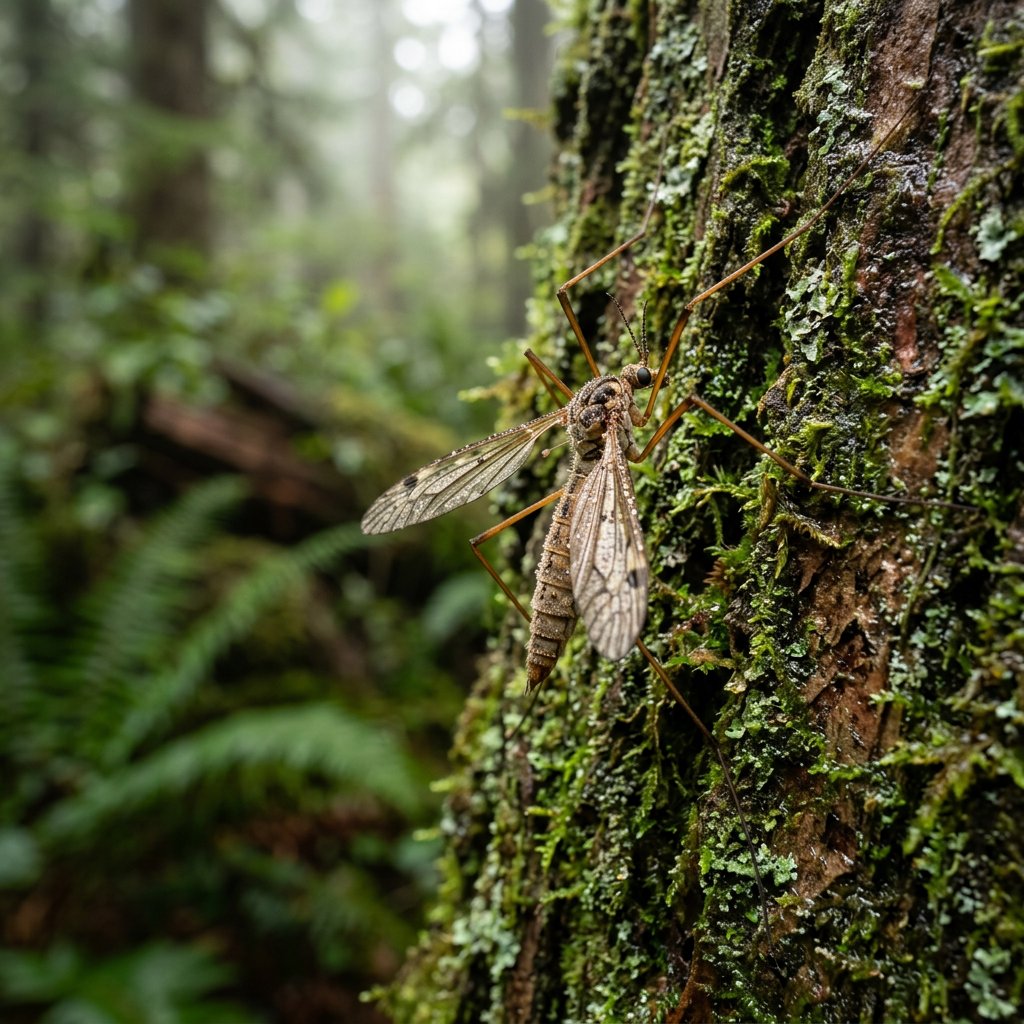
Meet the "Golly-whopper," the largest crane fly in North America. Often mistaken for a giant, prehistoric mosquito, Holorusia hespera is actually a gentle giant of the insect world that couldn't bite you even if it wanted to. Despite their somewhat alarming size and "leggy" appearance, they are essential members of the ecosystem, helping to recycle nutrients in damp environments.
🔍 How to Identify
- 📏 Impressive Size: These are the titans of the crane fly family, with wingspans reaching up to 3 inches (7-8 cm) and bodies that can exceed 1.5 inches.
- 🦵 Stilt-like Legs: They possess six incredibly long, fragile legs that seem almost too thin to support their bodies. These legs are designed to help them navigate tall grass and vegetation.
- 🪽 Smoky Wings: Their wings are long and narrow, often featuring a subtle brownish or smoky tint with distinct vein patterns that distinguish them from smaller flies.
🌲 Habitat & Ecology
- 💧 Moisture Seekers: You’ll most likely find them near streams, marshes, or heavily irrigated gardens. Their larvae, known as "leatherjackets," live in moist soil or decaying leaf litter where they feed on decomposing organic matter.
- 🦟 The "Mosquito Hawk" Myth: Contrary to popular belief, they do not eat mosquitoes. In fact, adult Holorusia hespera rarely eat at all, focusing their short lives almost entirely on finding a mate and laying eggs.
- ☁️ Awkward Aviators: Their flight is often described as "bouncy" or clumsy. They are frequently attracted to porch lights at night, where they might accidentally tumble into your home.
⚠️ Safety & Toxicity
- 🛡️ Completely Harmless: Holorusia hespera is a 100% "friend." They do not possess a stinger, and their mouthparts are either non-functional or capable only of sipping nectar.
- 🐶 Safe for Pets: If your cat or dog decides to chase one of these "flying noodles," there is no need to worry. they are non-toxic and do not bite or irritate the skin.
✨ Fun Fact
- 🦎 Losing a Leg to Live: Like some lizards, these crane flies practice "autotomy." If a predator grabs them by a leg, the leg can easily snap off, allowing the fly to wobble away and survive another day!
More Details








