Info
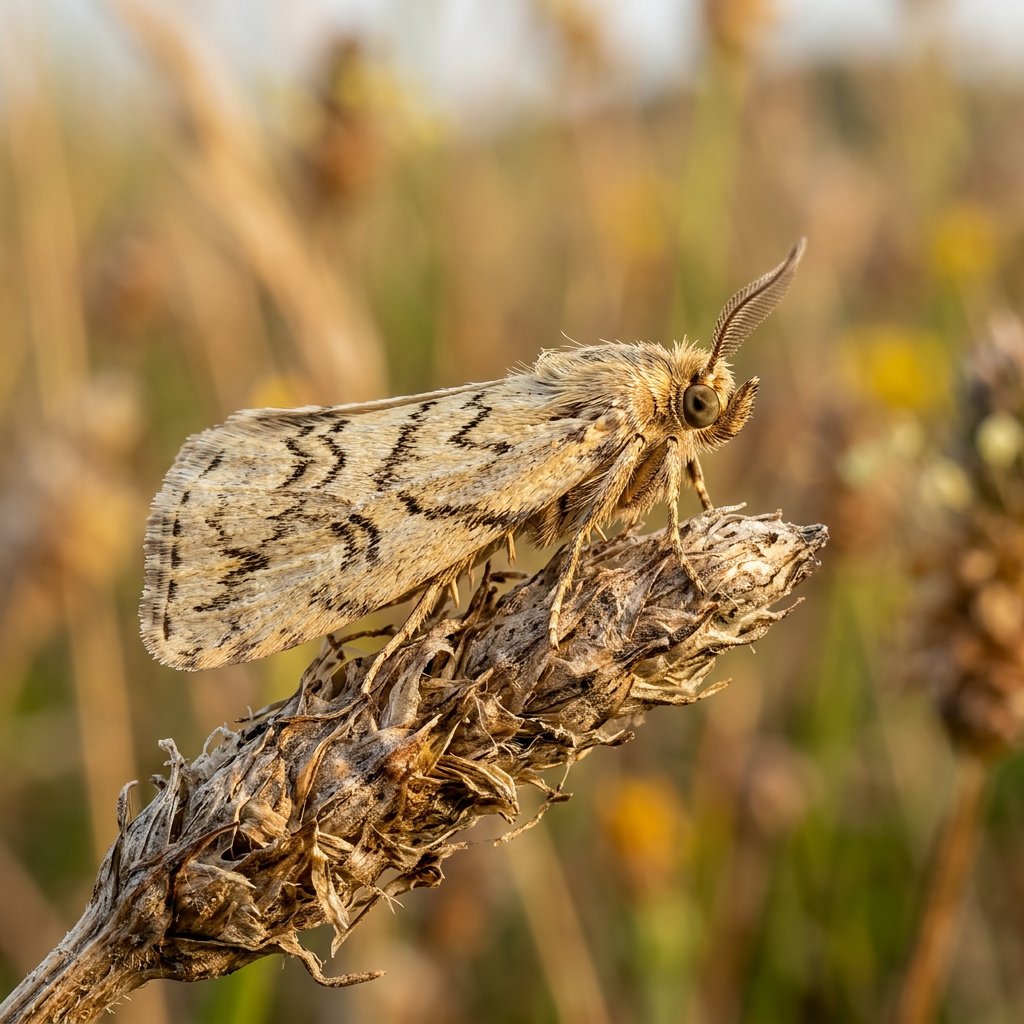
Known as the Twin-barred Knot-horn, this delicate moth is a master of camouflage within the dry grasslands of Europe and North Africa. Though it might look like a simple piece of dried grass at first glance, a closer look reveals a sophisticated pattern of ochre and burnt-orange. It is a quiet, nocturnal resident of coastal dunes and wild meadows, often found resting head-down on the stems of its favorite wildflowers.
🔍 How to Identify
- 🦋 The Wings: Its forewings are long and narrow, typically a pale creamy yellow or ochre. The most defining features are two distinct, slightly slanted, brownish-orange bars (fasciae) that cross the wing.
- 📏 The Silhouette: When at rest, the moth holds its wings tightly against its body, creating a very slender, cigar-shaped profile that helps it blend in with dead grass.
- 🔍 The Head: Like many knot-horns, the males have a small, thickened "knot" or swelling at the base of their antennae, which is a key microscopic identifier for the family.
🌲 Habitat & Ecology
- 🍽️ The Larval Diet: This insect is a specialist. Its caterpillars live underground or at the very base of plants, feeding on the roots and lower stems of Ribwort Plantain and Sheep’s-bit.
- 🌙 Night Moves: While the adults are primarily nocturnal and will frequently visit garden light traps, they are also known to take short flights during sunny afternoons if disturbed from their grassy hiding spots.
- 🌾 Ecological Role: As a native species, it serves as a vital food source for bats and spiders. It is a "neutral" garden guest, as its feeding habits rarely cause noticeable damage to ornamental plants.
⚠️ Safety & Toxicity
- ✅ Harmless: The Twin-barred Knot-horn is completely safe for humans and pets. It does not bite, sting, or carry any known diseases.
- 🌿 Plant Health: While the larvae feed on plant roots, they prefer wild, uncultivated plants. You don't need to worry about them destroying your prized flower beds or vegetable patches.
✨ Fun Fact
The "Knot-horn" name (family Phycitinae) sounds like something out of a fantasy novel, but it actually refers to a very specific anatomical trait: a dense tuft of scales at the base of the male's antennae that hides a complex scent-producing organ used to woo females!
More Details








