Info
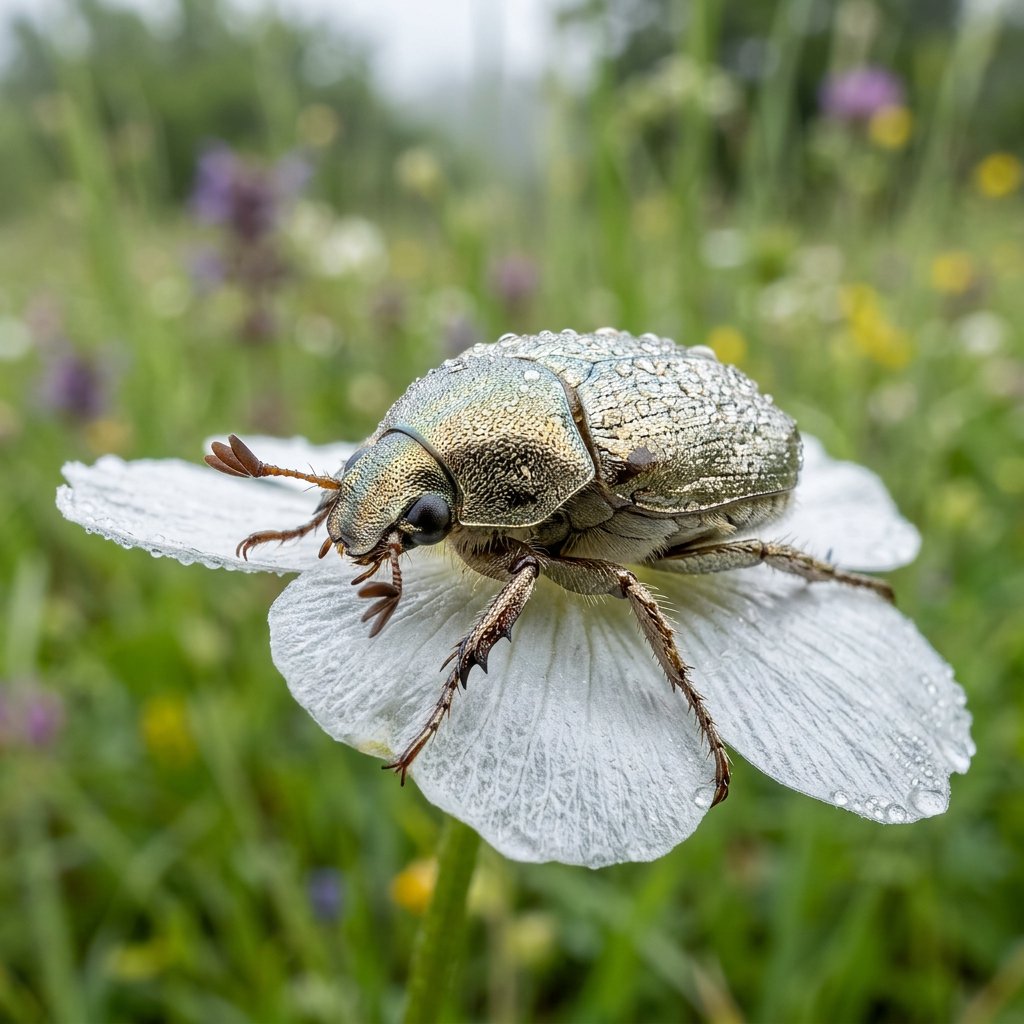
Known as the "Silver Scarab," the Hoplia argentea looks like a tiny piece of jewelry brought to life. These glittering beetles are a summer staple in the mountainous regions of Europe, where they can be seen shimmering on flowers like living sequins. While they belong to the scarab family, they are more like "flying gems" than the pests many gardeners fear.
🔍 How to Identify
- 🎨 Metallic Scales: The body is covered in dense, rounded scales that create a stunning iridescent effect. While they are most famous for a brilliant silver-blue or gold hue, they can also appear in shades of minty green or pale yellow.
- 📏 Stout Shape: They have the classic "chafer" build—stout, oval-shaped, and relatively small, usually measuring between 9 and 12 millimeters.
- 🦵 Powerful Hind Legs: The males are particularly easy to spot due to their oversized, thickened hind legs equipped with a single large claw, which they use to anchor themselves to flower petals in the wind.
🌲 Habitat & Ecology
- 🍽️ Flower Visitors: Adult Silver Scarabs are gentle pollinators. You will often find them buried head-first in roses, daisies, or thistles, feasting on pollen and nectar during the sunniest parts of the day.
- 🏔️ Mountain Lovers: They favor sunny, open meadows and alpine valleys, especially those near streams or damp soil. They are most active from late May through July, disappearing as the cooler autumn air arrives.
- 🐛 Soil Dwellers: Before they earn their silver "armor," they spend their youth underground as C-shaped grubs. They live in the soil, feeding on roots and decaying organic matter before pupating and emerging as the shiny beetles we see in summer.
⚠️ Safety & Toxicity
- 🛡️ Status: Completely harmless.
- 🚫 No Threat: These beetles do not bite, sting, or carry any toxins. They are safe to observe and handle gently. If they land on you, you might feel the "prickly" sensation of their grippy feet, but they are purely ornamental friends for nature lovers.
✨ Fun Fact
The stunning metallic color of the Hoplia argentea isn't actually a pigment like the paint on a car. It is "structural color"—the tiny scales on their bodies are shaped in a way that reflects light to create a shimmering effect, much like the surface of a CD or a soap bubble!
More Details








